
The Royal Observatory in Greenwich
The Place Where Time Begins
We’d crossed numerous lines of longitude during our adventures, so we were very keen on visiting Greenwich, a district in Greater London that's home to the Prime Meridian — that imaginary line on the Earth’s surface which has the distinction of being 0° longitude and stands as the demarcation point between the western and eastern hemispheres.
One day we took the train out to Greenwich and walked toward the Royal Observatory, a site selected by Sir Christopher Wren (the architect who designed, among other things, St. Paul’s Cathedral) in 1674.
Victory in a Bottle
Along the way, we couldn’t help but notice a giant ship in a bottle, placed high on a pillar, in front of at the National Maritime Museum.
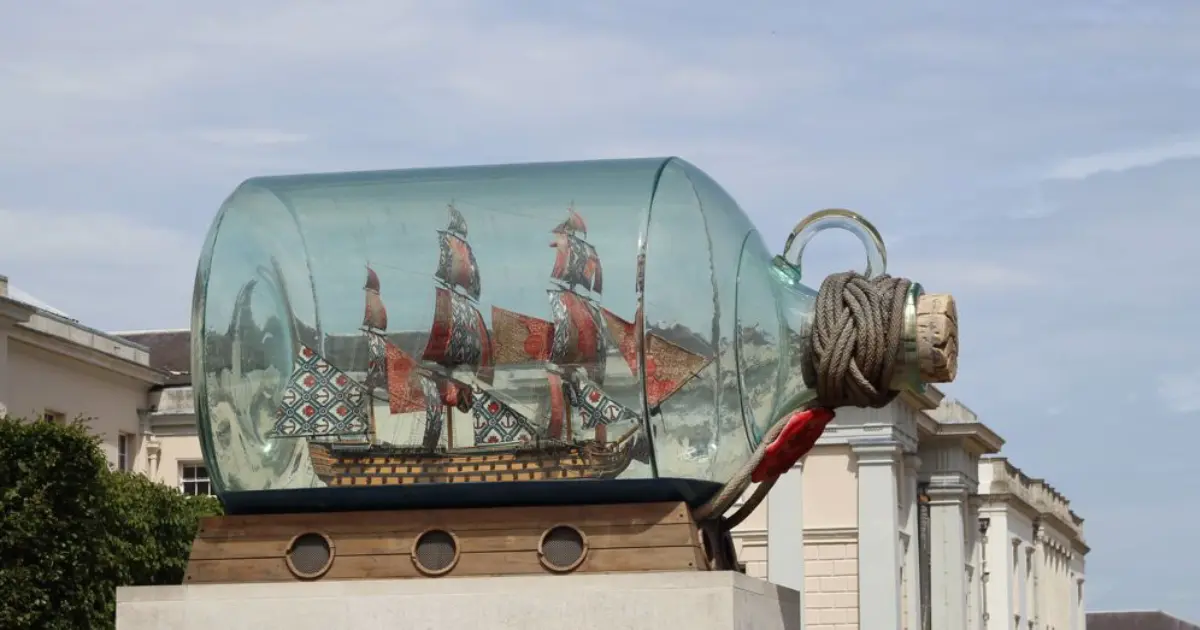
This is scale replica of Lord Nelson’s ship Victory and is the creation of artist Yinka Shonibare. The striking sculpture was first unveiled in 2010 as a temporary display in Trafalgar Square, but proved to be so popular it was relocated to this permanent location in 2012.
The Royal Observatory
We continued on, making our way up the hill from the National Maritime Museum to the Royal Observatory, part of the Maritime Greenwich Unesco World Heritage Site. In addition to being the location of 0° longitude, the Royal Observatory was, for centuries, the place people — particularly mariners at the nearby port — looked when they needed to set their clocks to Greenwich Mean Time.
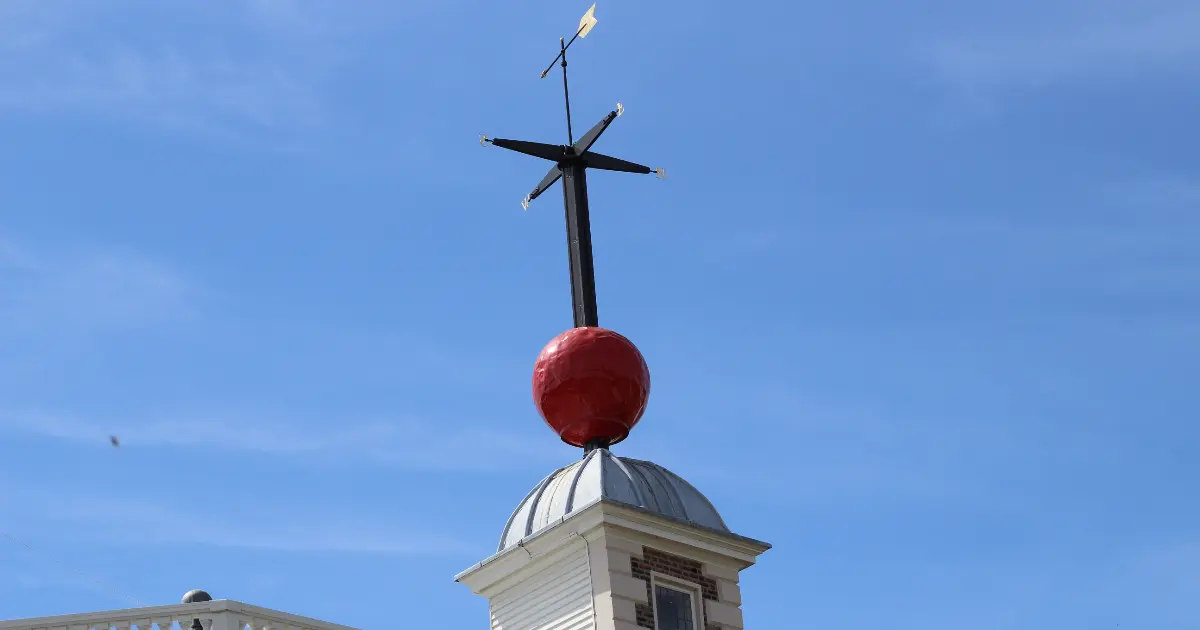
Every day, a giant red “time ball” drops at 1:00 p.m. (that's 13:00 for most of the world). This method of establishing accurate time started in 1833 and has happened nearly every day since.
The ball works in conjunction with the Shepherd Gate Clock, a giant 24-hour electric timepiece mounted in the brick facade of the (you guessed it) Shepherd Gate (named for engineer and clockmaker Charles Shepherd) outside the Royal Observatory. It was installed in 1852 and is likely the first timepiece to display Greenwich Mean Time in a public location.
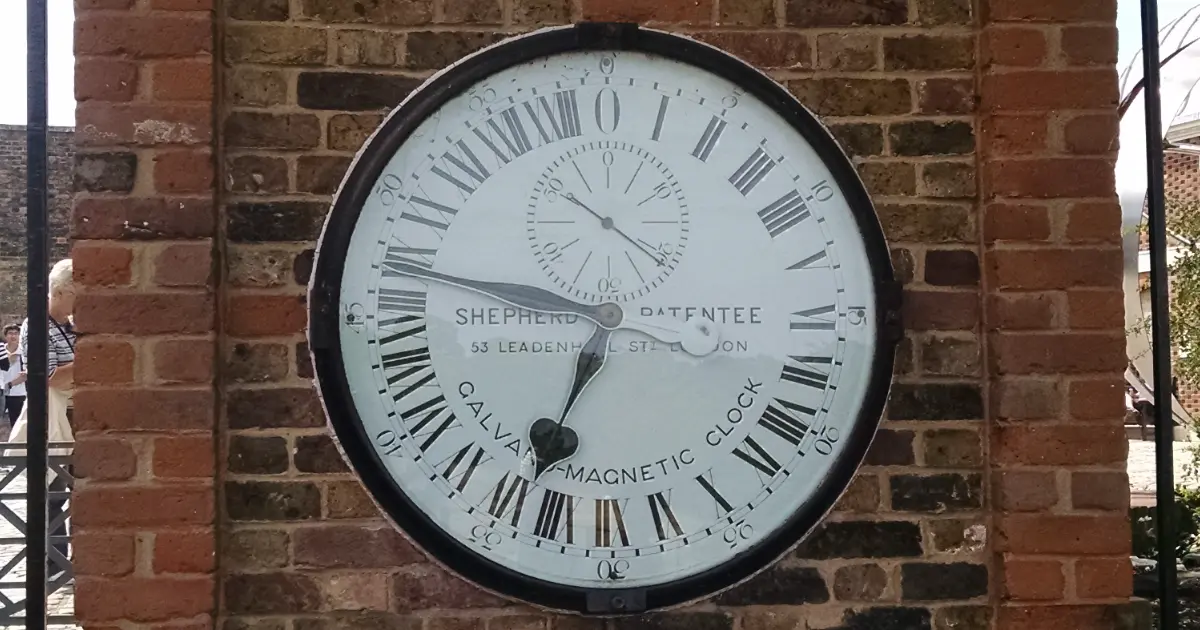
It’s still ticking along today, The dial was replaced after it was damaged in World War II, but the internal mechanism is the same.
The Prime Meridian
So of course the big draw at Greenwich is the Prime Meridian. We learned a lot about how this imaginary line was established and the different iterations it went through.
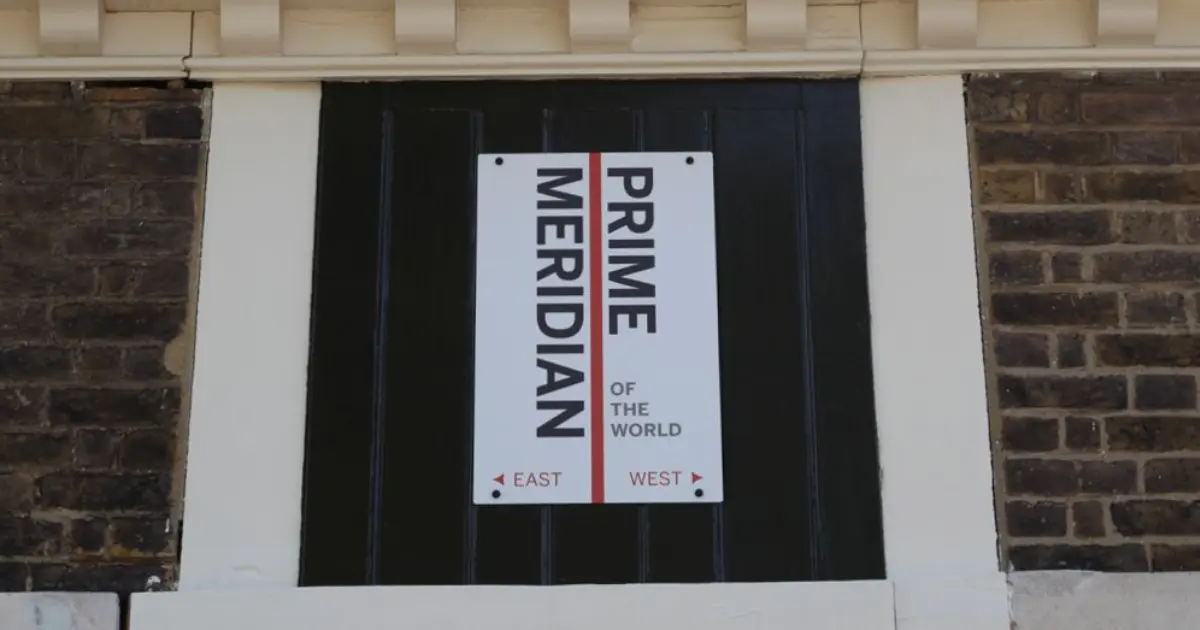
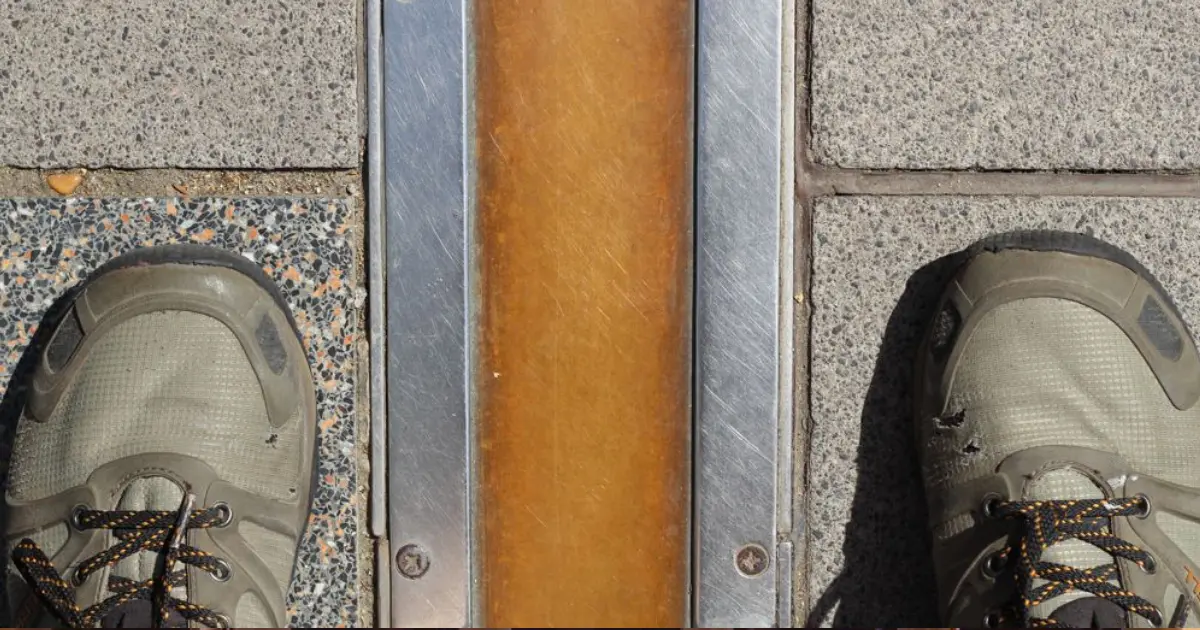
But today, there's a stainless steel line embedded in the ground outside the Observatory so you can literally stand with one foot in the eastern hemisphere and one foot in the western hemisphere. The line to enjoy this experience was long, but we waited anyway. It was a strangely satisfying moment.
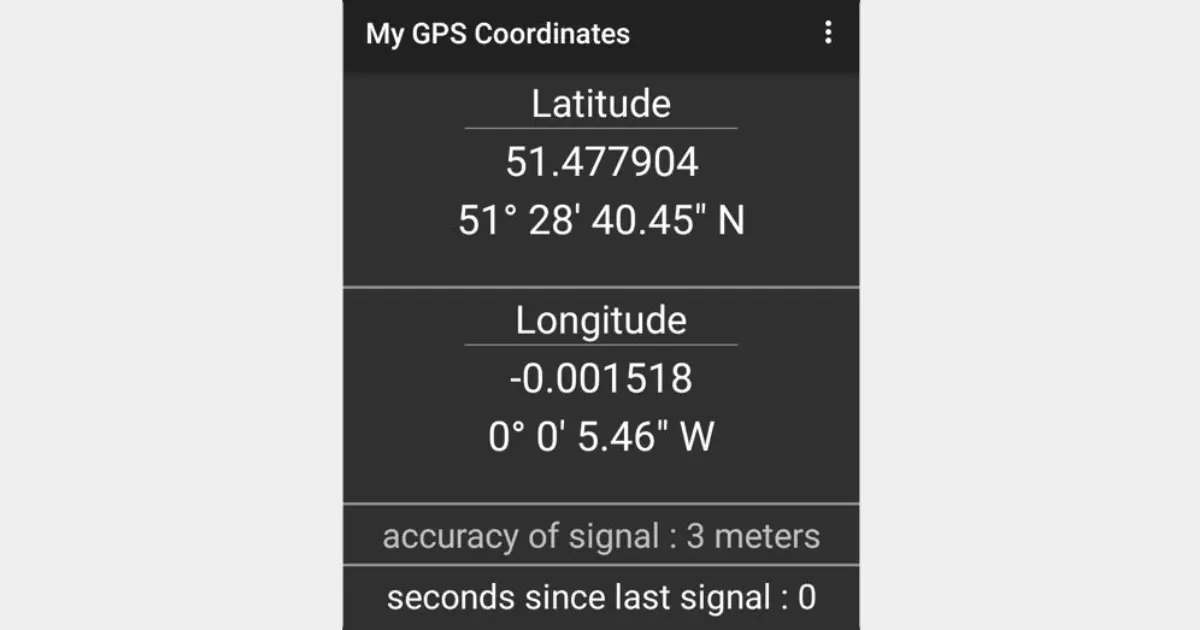
Naturally, being a bit of a geo-location nut myself, I had to take a reading as I straddled the Prime Meridian. I couldn't dial in to exactly 0° (and there's a plaque nearby explaining why), but I got pretty close.
There's also a green laser that shoots out from the Observatory along the Prime Meridian. It's sort of hard to see during the day (and difficult to photograph), but at it can be seen for miles at night.
Longitude
As you probably know, the Earth is crossed by a series of imaginary lines. Latitude lines run east to west and longitude lines run north to south. Any point on the earth is located at the intersection of two of these lines.
This system was important to early maritime navigation. Latitude is reasonably easy to determine using the stars, but finding an accurate longitude reading proved to be a bit trickier.
Basically, if you know what time it is at a fixed point (say, Greenwich, London), a navigator can determine longitude. But the clocks of the day couldn’t keep accurate time at sea due to a variety of factors (such as variations in humidity, temperature, and atmospheric pressure).
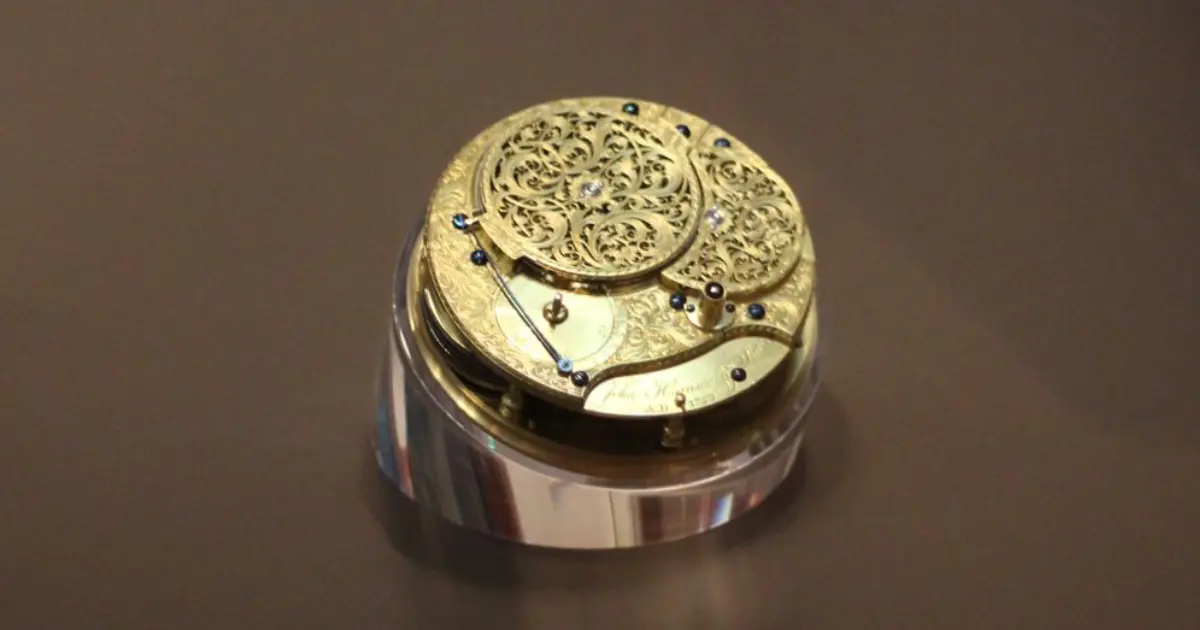
Enter John Harrison, the English clockmaker who finally solved this problem by making a clock both reliable enough and accurate enough to keep Greenwich Time on ocean-going ships.
Harrison designed a number of iterations of this clock, and finally got it right on the fifth try. The watch, known as the H5, keeps time accurate to within one-third of one second. All five sea watches are on display at an exhibit inside the Observatory.
Taking on the World is an Amazon Associate and earns from qualifying purchases.

Header Image: The Royal Observatory. All images from the author's collection.