
Deciding to Travel the World for a Year
Most people think that taking a family of four on a trip around the world for an entire year would require a long discussion and some careful consideration, but for us, the decision was made with the speed of a single text message.
Okay, so it wasn’t quite that simple, but it was pretty close. Read more about how we arrived at this big decision at Boing Boing.
Traveler’s Mindset
On Building Ships
As we prepare to embark upon this journey and think back to the mindset that might have inspired such an endeavor, this quote from Antoine de Saint-Exupéry was certainly an inspiration.

We also adopted two other concepts that framed how we, as a family, approached the adventure.
-
Get comfortable being uncomfortable.
It was important for all of us to understand from the outset that not every day would be filled with joy and whimsy; that some days would be decidely not fun. This mindset helped us make it through some of the more challenging portions of the trip, like spending 32 hours on a train in Vietnam and enjoying the hospitality of the Yunting Holiday Hotel in Shanghai, China.
-
Wherever you are, that’s what time it is.
An oft-mentioned bane of the modern traveler is jet lag. We were going to be crossing a lot of time zones (all of them, in fact — even the International Date Line), and we wanted to avoid getting hung up on what time it was from where we'd left. So we’d implement a mental shift to our destination time zone the instant we got on the plane.
Travel Vaccinations
This is gonna hurt (the pocketbook, that is)
World travel opens you up to many new experiences, not the least of which is exposure to a variety of diseases, some more dangerous than others.
So when we decided it was time to travel around the world, we knew there would be some vaccination involved. We just didn't know the volume of vaccinations we’d need ... or how much it would set us back.

Over the course of a month, the two adults received 10 vaccinations — seven of them on the first day (it would have been eight, but we opted for the oral Typhoid fever vaccine).
Kids today are much better vaccinated than back in the day, so the two kids only needed to get four vaccines, but we opted to get them vaccinated for rabies. Our kids love animals, so after much discussion, the rabies vaccine seemed like a good idea, although it was a series of three shots that totaled almost $1,000 (but a rabies vaccination is good for life). This brought the total shots for the kids to seven over the course of a month.
34 shots and $5,000 later, we were covered against Yellow fever, Typhoid fever, and Japanese Encephalitis. The doctor told us that last one is really rare, but if contract it and manage to survive it, you’ll almost certainly suffer from neurological damage. We were also covered against Hepatitis A & B, Polio, Measles, and, of course, Tetanus.
The clinic also provided us with few kits to help treat Malaria, should we be unfortunate enough to contract it, and a few kits to treat diarrhea.
Luggage
Gotta carry that weight
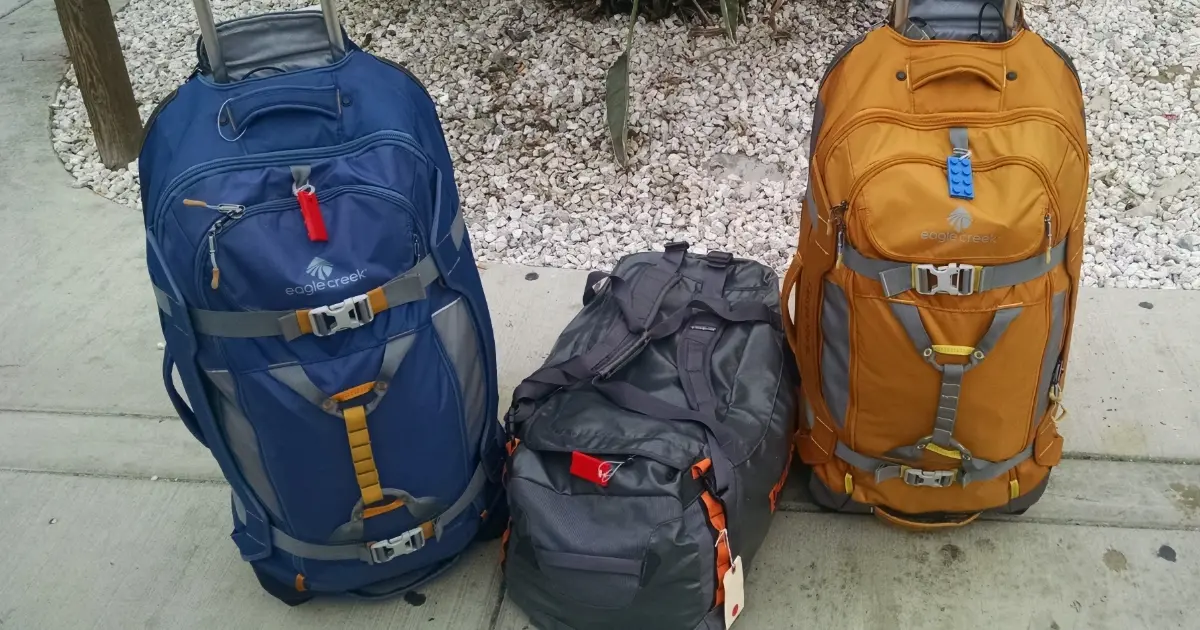
Everything we will be using for an entire year fits into these three bags (plus we each have a backpack). Combined, they weigh 112 pounds (51 kilograms) total (37, 35, and 40). We were surprised that we didn't get hit with heavy bag charges, because they feel a lot heavier than that.
Taking on the World is an Amazon Associate and earns from qualifying purchases.
Keep it organized
We also used packing cubes to great effect. Each member of our traveling party had their own color.
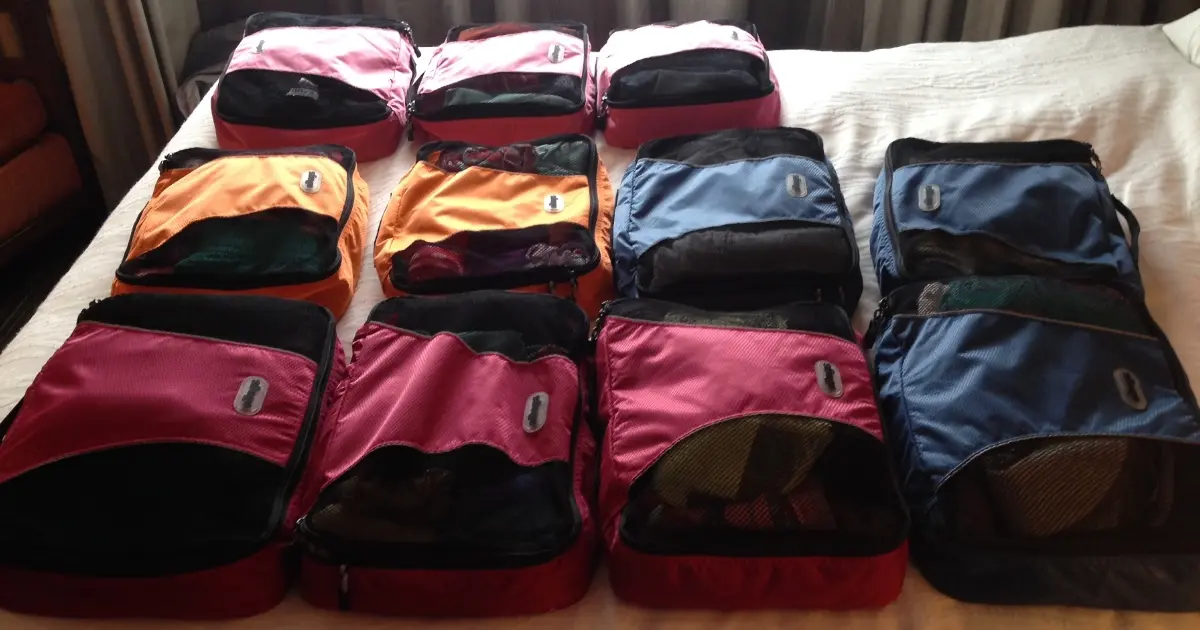
In addition to a general tidiness of luggage, this system minimized misplaced and lost items of clothing.
Each member also carried their own backpack. These held day-to-day essentials and leisure items (like books and snacks and games) and served as a carry-on for flights. So counting the backpacks, we really had seven pieces of luggage total for an entire year of round-the-world travel. Not bad.
Thinking in Celsius
Despite all my gradeschool teachers telling me to get ready because the metric system was coming (this was back in 1980), the United States still uses Fahrenheit to tell temperature.
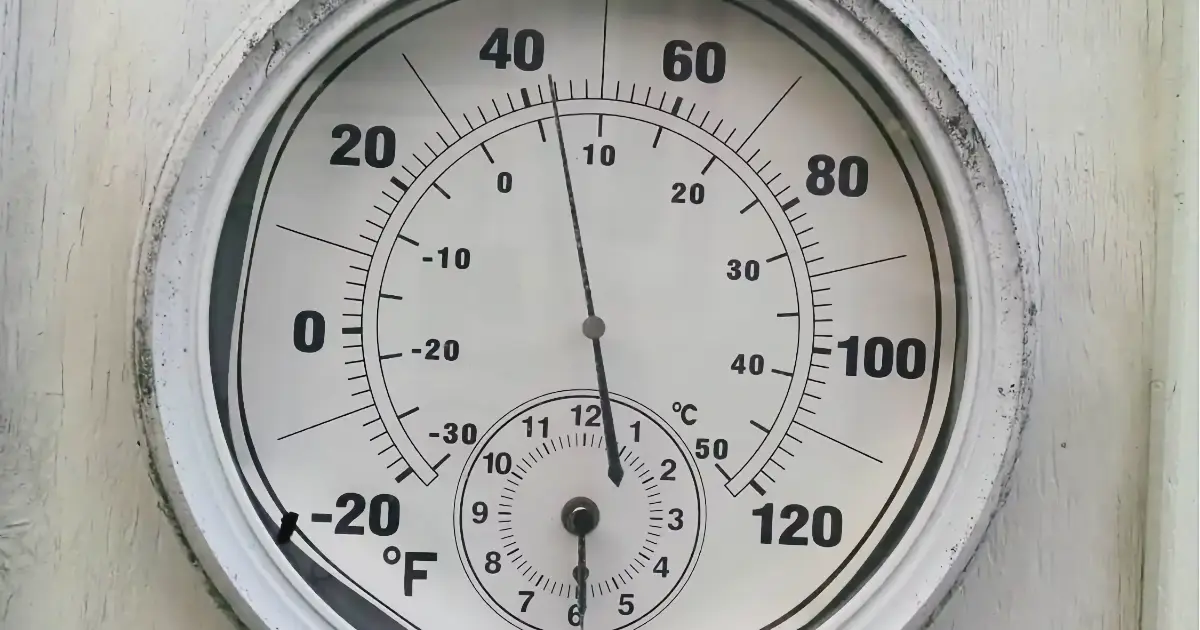
The rest of the world, however, uses Celsius. So a few months back, we all started thinking in Centigrade.
The “official” formula to convert between Fahrenheit and Celsius is sort of complex for on-the-fly conversions:
[°C] = ( [°F] - 32 ) × 5/9
Maybe some people can easily multiply by 5/9 without a calculator, but I'm not one of them. But there's an easier method, and it's one most people can determine relatively quickly:
[°C] = [°F]-30/2
So, using that formula, if it's 70°F, it's 20°C. That is:
[ 70-30 = 40. 40/2 = 20 ]
This isn't an exact conversion (the official conversion puts 70°F at 21.1°C), but it's close enough to know if you need a jacket or a T-shirt.
Here's what you need to know about Celsius.
- 0: Cold. Jacket required. And maybe some layers.
- 10: Chilly. A jacket is a good idea.
- 15: Cool. You might want to bring a jacket just in case.
- 20: Temperate. No jacket necessary unless you get cold easily.
- 25: Warm. You should be fine in a T-shirt.
- 30: Hot. Definitely T-shirt weather.
And there's another trick for converting Fahrenehit to Celsis that'll put you in the right temperature ballpark. It has to do with moving osme digits around, like this:
- 04 degrees Celsius is 40 degrees Fahrenheit — wear a jacket.
- 16 degrees Celsius is 61 degrees Fahrenheit — wear a sweatshirt.
- 28 degrees Celsius is 82 degrees Fahrenheit — wear a T-shirt.
- 40 degrees Celsius is 104 degrees Fahrenheit — too hot to venture outside ... unless you’e in Thailand.
There you have it. A simple way for those of us raised on Fahrenheit to gauge the temperature in Celsius.
Taking on the World is an Amazon Associate and earns from qualifying purchases.

Header Image: Airplane wing coming in to Costa Rica. All images from the author's collection.