
Hussite Wars, Half-Blind Priests, Silver Miners
A Chapel Built from the Bones of 40,000 People
During one of our days in Prague, we drove to the nearby small town of Kutná Hora, which is part of the UNESCO World Heritage Site that goes by the name of Kutná Hora: Historical Town Centre with the Church of St Barbara and the Cathedral of Our Lady at Sedlec. We didn’t actually visit the town center, though — we were there to see the Sedlec Ossuary, which is in the suburb of Sedlec.
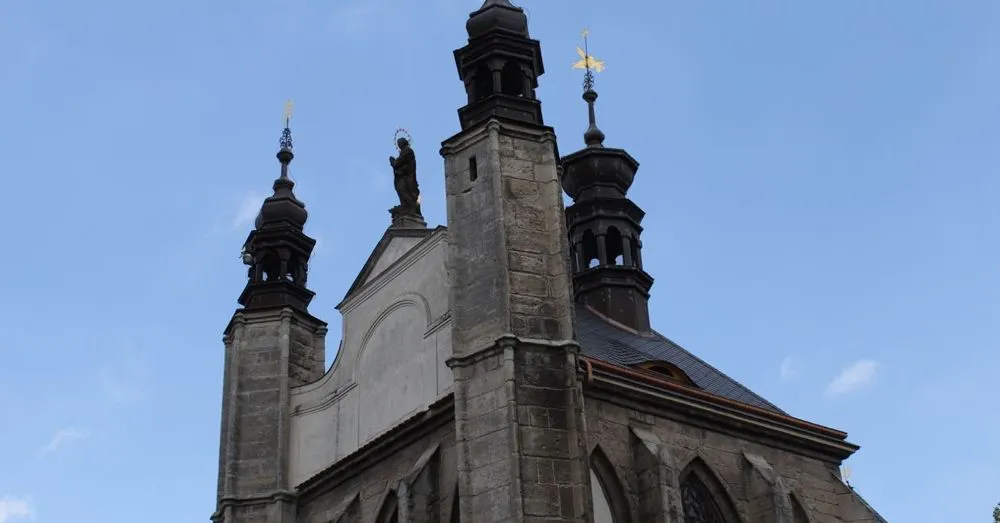
In the 1300s, Kuntá Hora, an area rich in silver mines, became a favorite spot of several Kings of Boehmia. For centuries the city competed with Prague as a cultural and economic center until the 16th century, when the Habsburgs took over the region and the whole city fell apart. The mines flooded and were abandoned, the Hussite Wars raged through the region, and waves of plague took countless lives.
Sedlec Ossuary
Those countless claimed lives had to be buried, of course, and many people wanted to be buried at the Cemetery Church of All Saints, where the namesake cemetery allegedly contained a small amount of dirt from Golgotha (the site when Jesus Christ died on the cross).
In 1400, the church was built atop the cemetery and a lot of bodies were exhumed during the construction. A half-blind priest (who's name has been lost to time) took all those bones, allegedly of 40,000 people, and stacked them in the basement Ossuary. As the legend goes, after his work was complete, his eyesight was restored.
A Chamber Filled with Bones
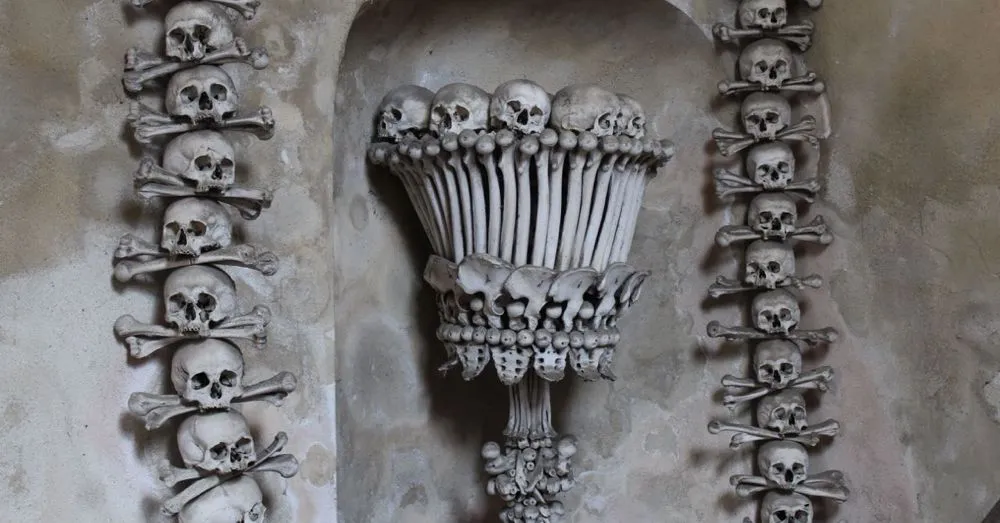
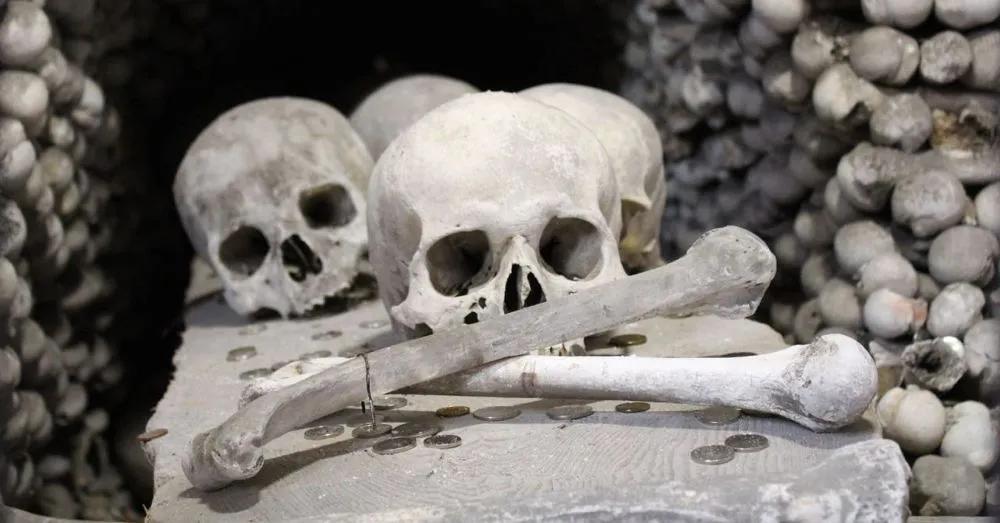
In the small ossuary, there are bones everywhere. Large numbers of bones are stacked in bell-shaped towers in each of the four corners, and along the back wall, between two of the bell-shaped towers of bones, there’s a small alcove that contains a chapel with a large crucifix.
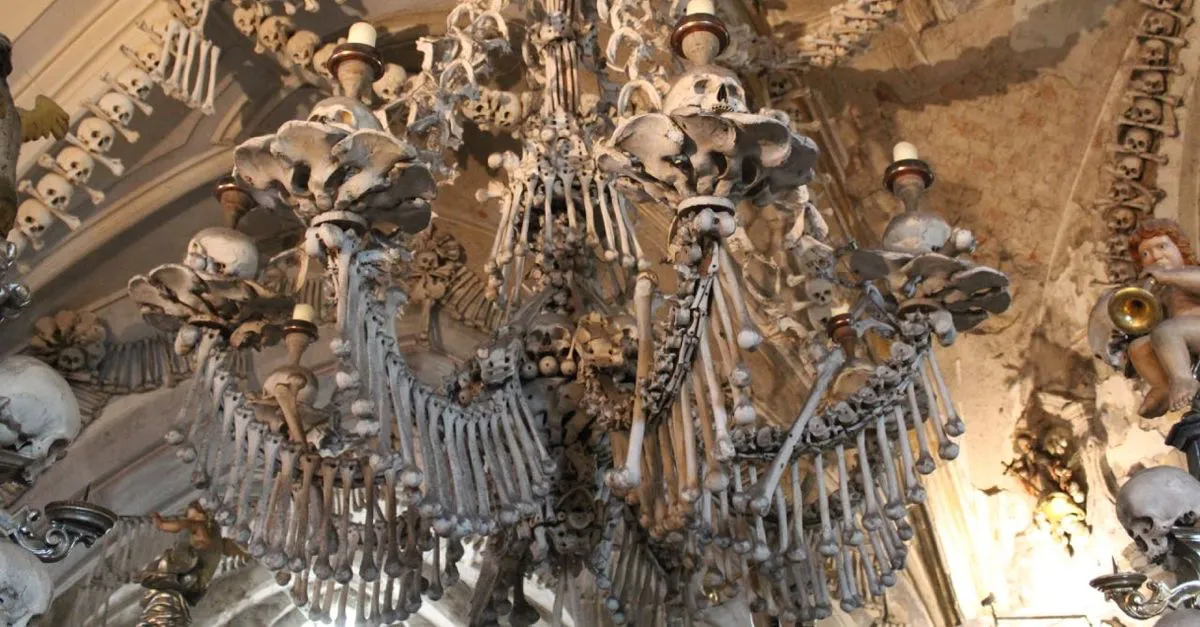
Dominating the center of the chamber hangs a chandelier, said to contain at least one type of bone in the human body.
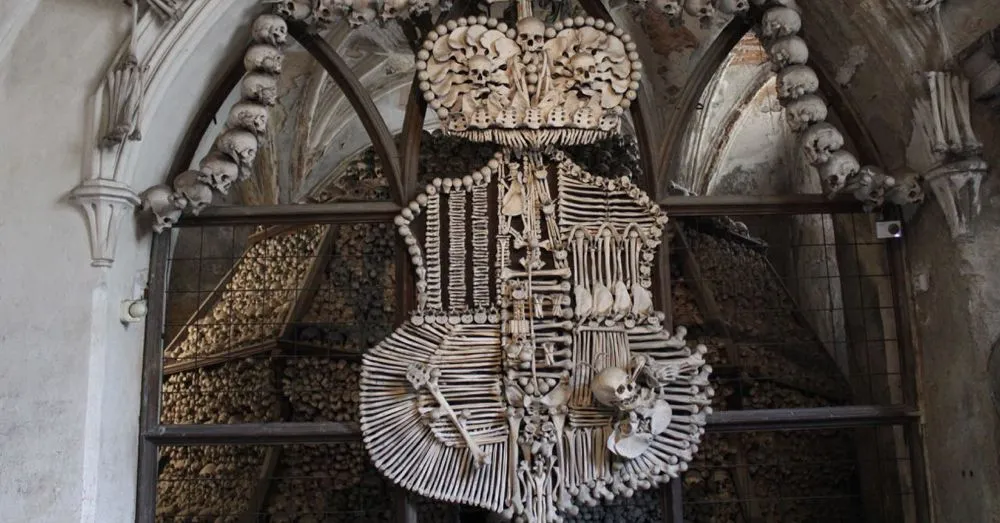
Most notably, in one corner there’s a large elaborate heraldic crest of the House of Schwarzenberg made up entirely of human bones.
It’s believed that the initial, simple collections of bones were arranged by the half-blind priest in simple patterns, like the bells in the corners.
But the ossuary didn't acheive its more macabre displays until 1870 when the influential Schwarzenberg family (who still owns the abbey) hired František Rint, a Czech woodcarver, to contribute his talents to decorate the bone-filled room. He's responsible for the more outlandish arrangements, including the shield and the chandelier.
The Sedlec Ossuary is a fascinating place. If you find yourself in Prague, a daytrip to this fantastic place is worth your time, especially if you enjoy macabre and interesting historical sites.
And if you enjoy learning about unusual funerary practices involving the skeletons of the dead, check out the Catacombs of Paris and the Church of the Dead.
Taking on the World is an Amazon Associate and earns from qualifying purchases.
Header Image: Carefully assembled bones at Sedlec Ossuary. All images from the author's collection.