The Journey Begins
Entering Costa Rica
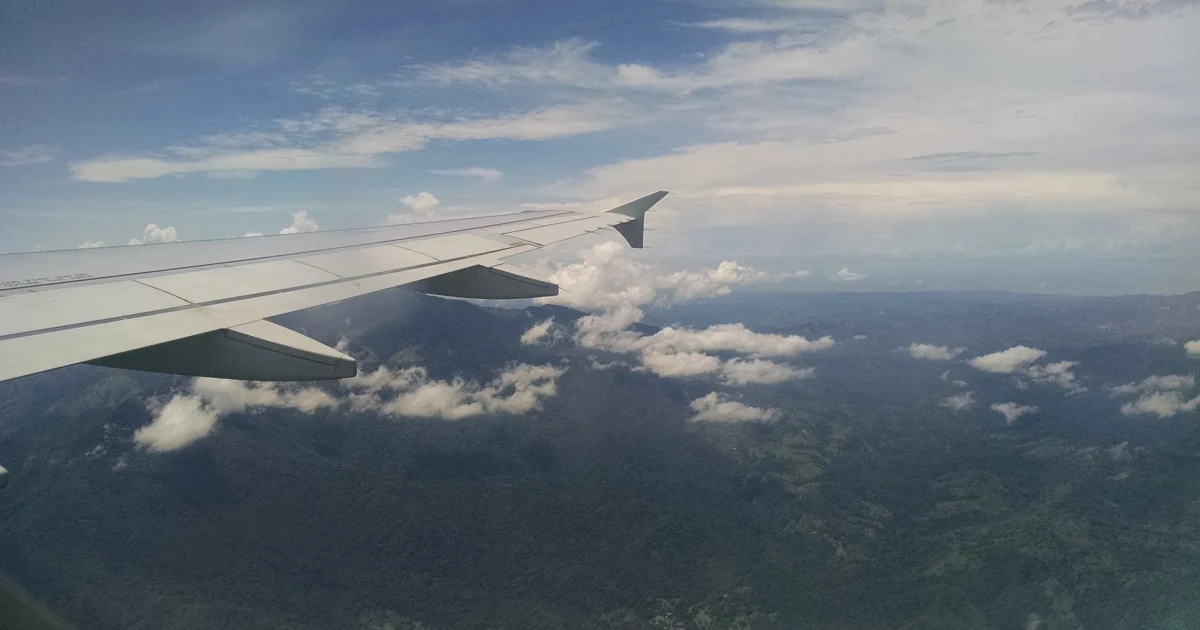
Our plane left Los Angeles at 10:00 PM and, after a layover in Fort Lauderdale, we arrived in Costa Rica. Our first (of many) trips through customs went very smoothly, but we made a few rookie mistakes.
Mistake Number One. We didn't have a good handle on how common credit card use was in Costa Rica, so we figured it was a good idea to have a few colónes on hand. We still had some American dollars, so we changed some of them at the Global Exchange, which is always a questionable idea. We knew we were going to get dinged (the exchange rate at these places are always much lower than the going rate). But at least we has local currency.
Mistake Number Two. When we picked up our rental car, a Daihatsu Torios with four-wheel drive (we took to calling her Dorothy), we opted to add liability insurance (not covered by the credit card), an additional $5 per day for an additional driver, and $65 for pre-paid gasolina. This put us over budget almost before we even got started.
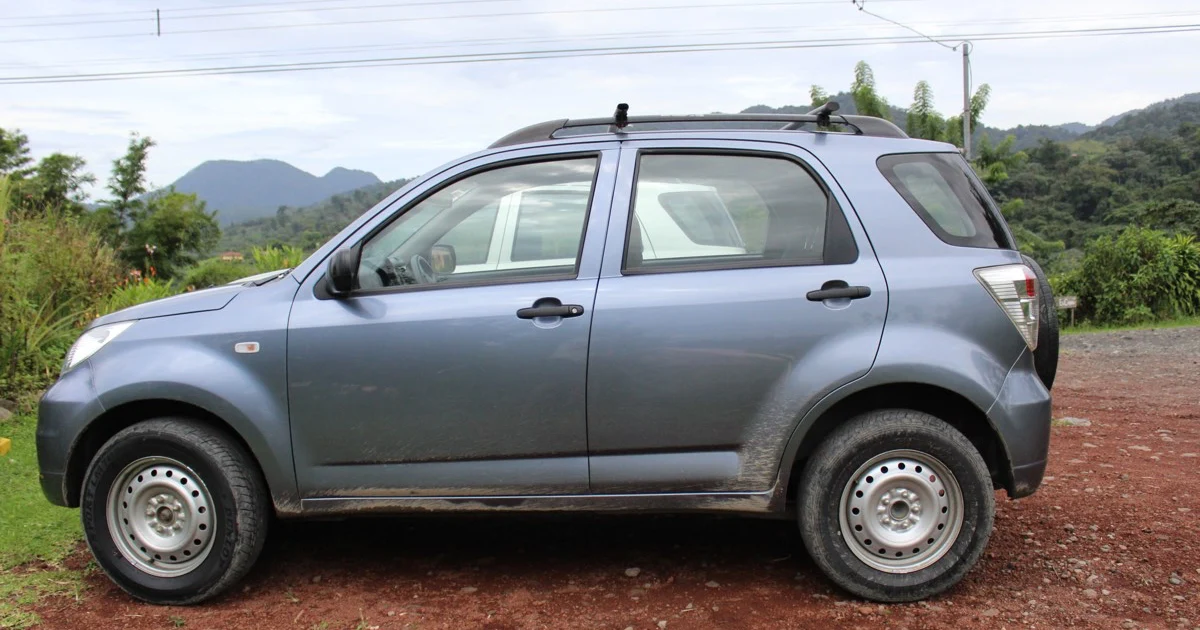
But with the tourist shuttle services at $39 per person from location to location, plus local shuttles at 3,000 colónes per person per trip (at the time of our adventure, 530 colónes was about $1.00 USD), the rental car was still cheaper for our family of four, a rental was more economical—and it gave us a little more freedom to explore.
And, because the car was more expensive than we'd planned for, we opted out of the $15 a day GPS, figuring we could rely on our phones for navigation. This would prove to be a questionable decision.
Getting Lost in San Jose
Driving in central San Jose felt very familiar and was pretty easy to pick up, but once we got to the Santa Ana area, the roads were narrower with a good amount of traffic. We were glad we changed those dollars into colónes, because we needed 340 colónes for the toll into Santa Ana.
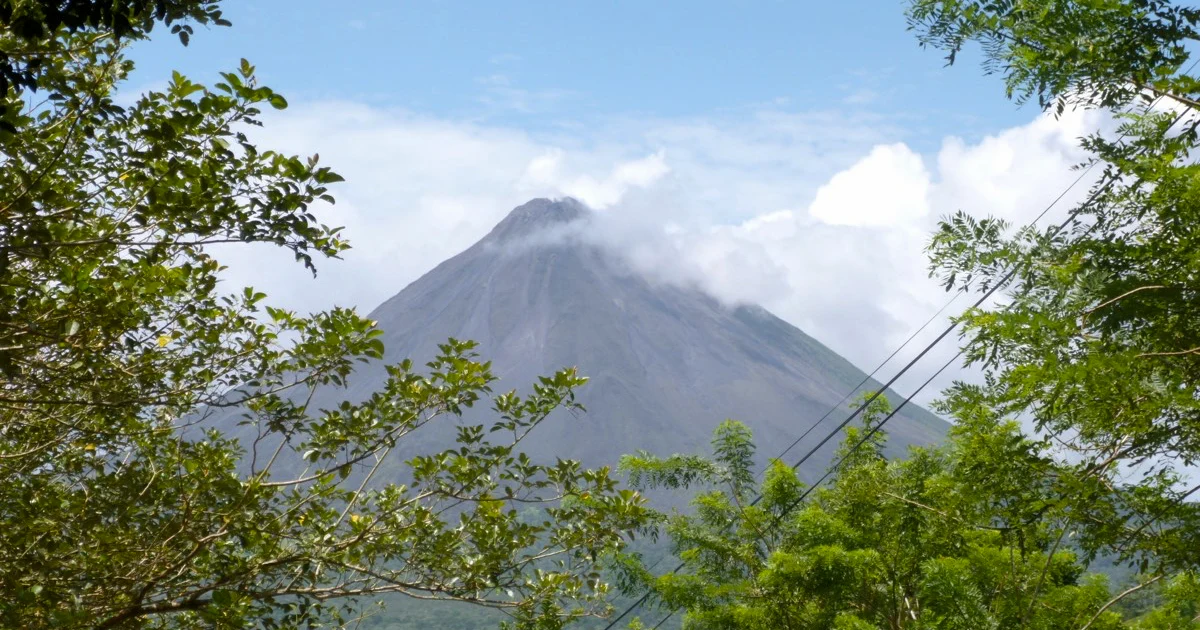
We'd decided to spend our first night at the Studio Hotel in San Jose rather than drive to the town of El Castillo near Volcán Arenal where we'd be spending the next few days.
We had switched all out phones over to T-Mobile to take advantage of the T-Mobile Simple Choice Plan, allowing for free texting and data in most of the countries we'd be traveling to. (Alas, T-Mobile no longer offers this plan.)
Mistake Number Three. Not testing our gear. Shortly after we started driving through San Jose, we were surprised and frustrated to learn we weren't able to use our phones for navigation. As we'd learn a bit later, we didn't have the data roaming set up right on the phones.
We had an email with directions to the hotel that said it was located "50 meters north of the red cross." This seemed like it would be an obvious landmark, but as we drove around we saw a Hooters, a Walmart, an Office Depot, and a Backcountry store. But no red cross.
We regretting not getting the GPS for the car, and we considered picking one at up at the Office Depot (likely cheaper than renting one for eight days). Instead we played a crazy game of cartographic telephone via text with family members back in the U.S. (It wasn't a winning strategy.)
Perseverence Wins the Day
After too long, and a few stops at other hotels asking directions in broken Spanish, we finally found the Studio Hotel, a nice place just 50 meters north of the Red Cross, as advertised. Our problem was we hadn't gone far enough down the road to see the giant red cross on the Red Cross building.
After our initial experience with navigation, we decided to purchase a pair of prepaid SIM cards. from the Claro store across the street from hotel. Each rechargeable card cost 11,000 colónes (about $20 at the time) for 1 GB of data. We figured that would cover us for a week in Costa Rica. And it was cheaper than the $120 a rented GPS would have cost us.
And after a call to T-Mobile, we figured out that we didn't have data roaming enabled. We fixed that, so the prepaid SIM cards were redundant. For the rest of the trip, the T-Mobile Simple Choice Experience was pretty solid.
Road Trip to a Volcano
After we checked out of the hotel and visited the local market where we used an ATM. We were charged a service fee of 2,850 colónes (about $5 USD), which beat the heck out of 13% at the airport the day before. We avoided Global Exchange for the rest of the trip.
But before we got underway, we stopped a the Tica Bus station in downtown San Jose to buy our tickets for Panama on August 27. But more on that later...
Driving to Arenal
We hopped on the Pan-American Highway (Highway 1) to 156 into San Ramon, then got on the long and winding 702. An early section of 702 was called the Los Angeles Cloud Highway, and there were stretches of the road where visibility was limited to just a car length or two.
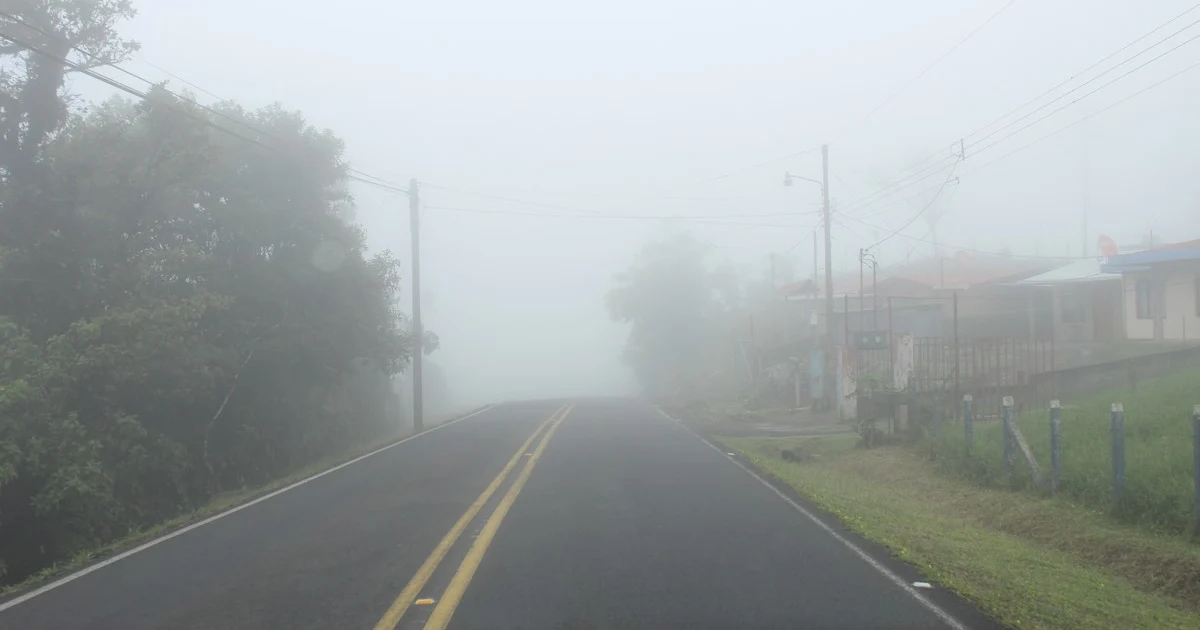
During this drive we saw a soda (Costa Rican lunch counter) or a road side supermarket every kilometer or so. Whatever happened, we weren't going to starve on this portion of our adventure.
100 kilometers later, we arrived at La Fortuna, a resort town on the edge of the Arenal Volcano National Park. Dorothy still had 3/4 of a tank of gasoline, so we jumped onto the 142 and headed toward El Castillo.
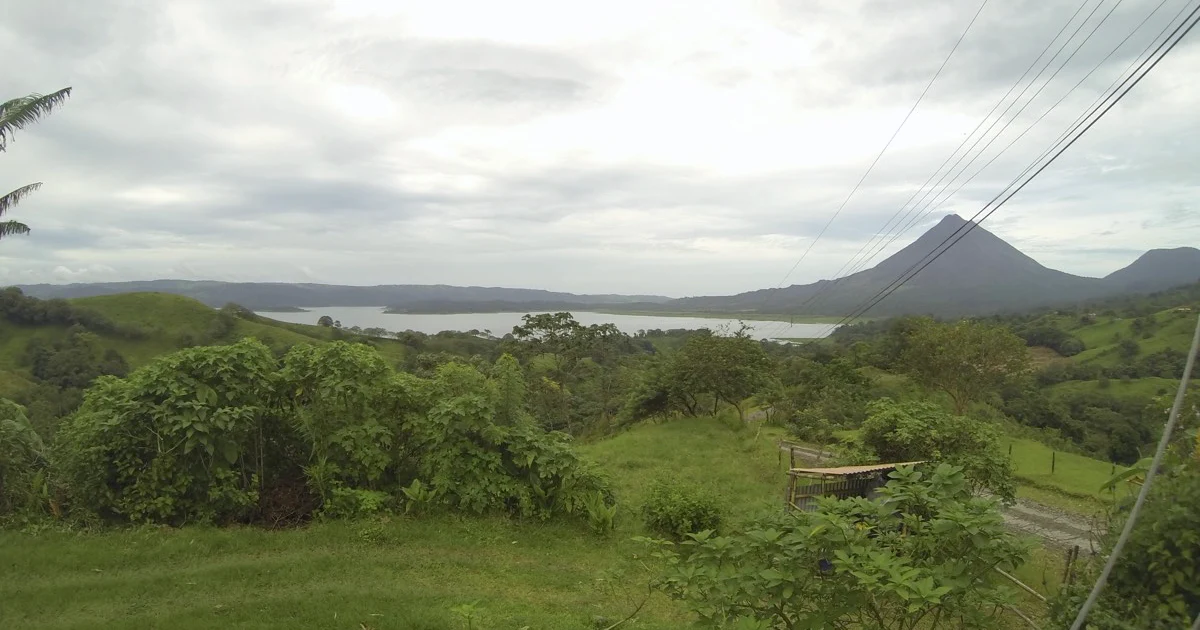
Once we turned off 142 onto the road to El Castillo (named on Google Maps as La Fortuna – El Castillo) that took us through the National Park. This road was all rocks and mud. Although it was well-packed, it still made for a rough ride. At times it felt like Dorothy was going to shake apart, but we made it to Essence Arenal, a new-age oriented boutique hostel with great views of the Arenal Volcano and Lake Arenal about 2:30 p.m.
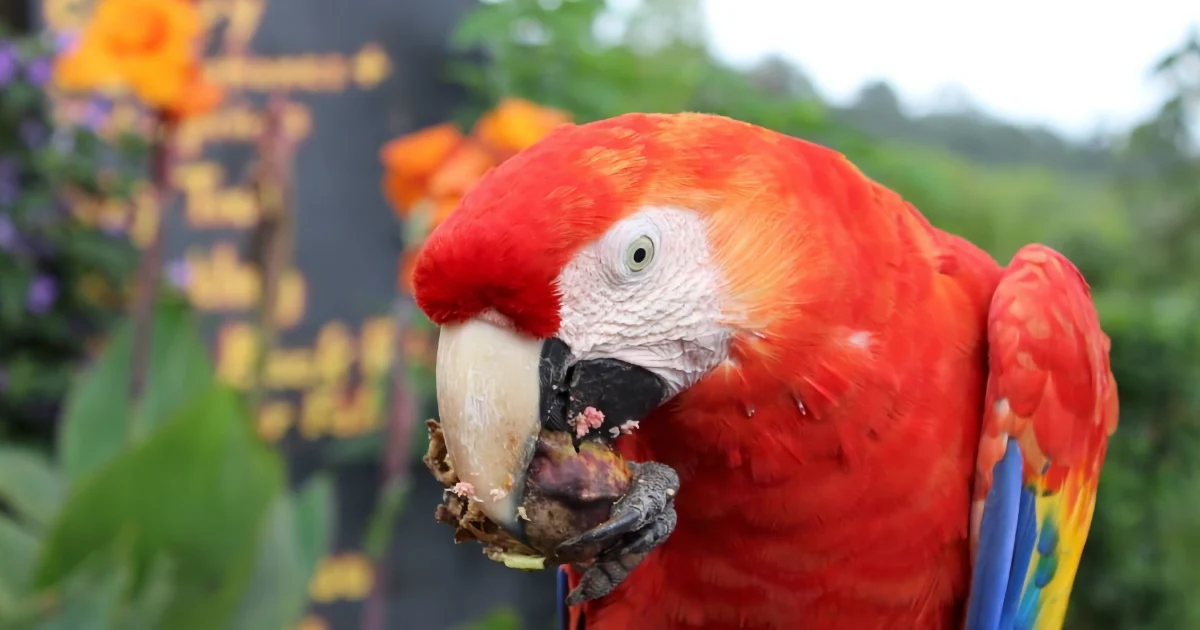
We were greeted by the resident scarlet macaw, named Banono. He could often be found hanging out on the front table eating sunflower seeds, almonds, bananas, and the occasional rock. He was friendly enough unless you tried to touch him.
Essence Arenal has plenty of wild life and plant life. It features a small farm (where the owner, yoga instructor, and some other people who work at the hostel live in tents), a coffee plantation, a tilapia pond, and a good section of rainforest to observe monkeys, toucans, and—if one is lucky — the occasional ocelot. (We did not see any ocelots).
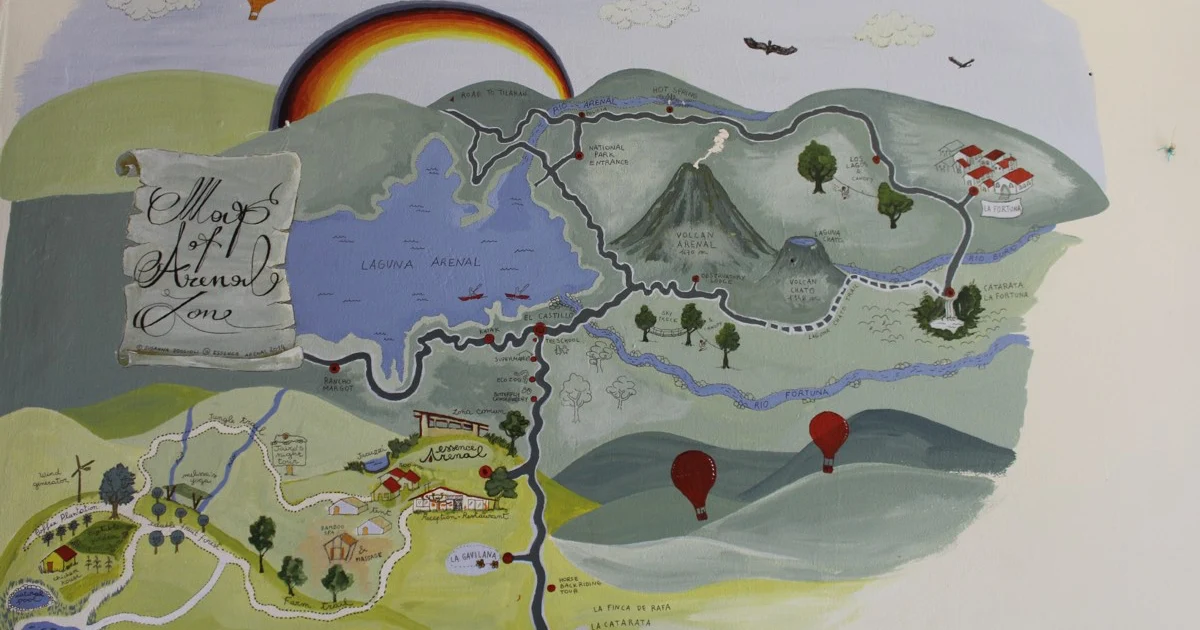
After getting settled in, we had a little time before dinner. So we wandered around El Castillo for a while. The village has a Super Mini Market about 200 meters down the road from the hostel. It was just a little building lined with shelves, but it seemed like you could find just about anything you'd need there.
One of the cool things at Essence Arenal is that all guests are invited to help make dinner. So we stepped up and, under the direction of chef Marvin, made naan bread which was then served with vegetables.
Relaxing at Essence Arenal
The day at Essence Arenal begin with the pre-dawn howl of the howler monkey. These primates make a heck of a racket, and it’s hard to not wake up when they start sounding off.
The kids wanted to go ziplining through the Costa Rican forest. We settled on the nearby Los Lagos resort. A side benefit of Los Lagos over some of the other zipline outfits is that after the zipline experience, you get to spend the rest of the day in the resort, using the hot springs and the pool.
It rains a lot in Costa Rica, especially where we were staying, so it wasn't surprising that the morning started with some light showers. But the rains stopped on the half-hour drive down to Los Lagos.
We were the only three on the hour-long excursion, and we had three guides who would leapfrog ahead of us so one would always be at the next platform to catch us coming in. We zipped along through the canopy on eight different cables, covering a total of three kilometers, with the longest run at 500 meters.
After our Los Lagos experience, we drove into La Fortuna to get some gasolina for Dorothy (she was down to half a tank). The gas stations in Costa Rica are full service. It felt odd to sit in the car while the tank was filled, the windows were washed, and the car was hosed down—all for only 17,999 colónes.
On our way back to the hostel, we drove by the Chocolate Fusión Cafe just on the outer edge of La Fortuna. It looked pretty nice, so we turned around and checked it out. We enjoyed coffee brewed with a chorreador and, of course, some chocolate.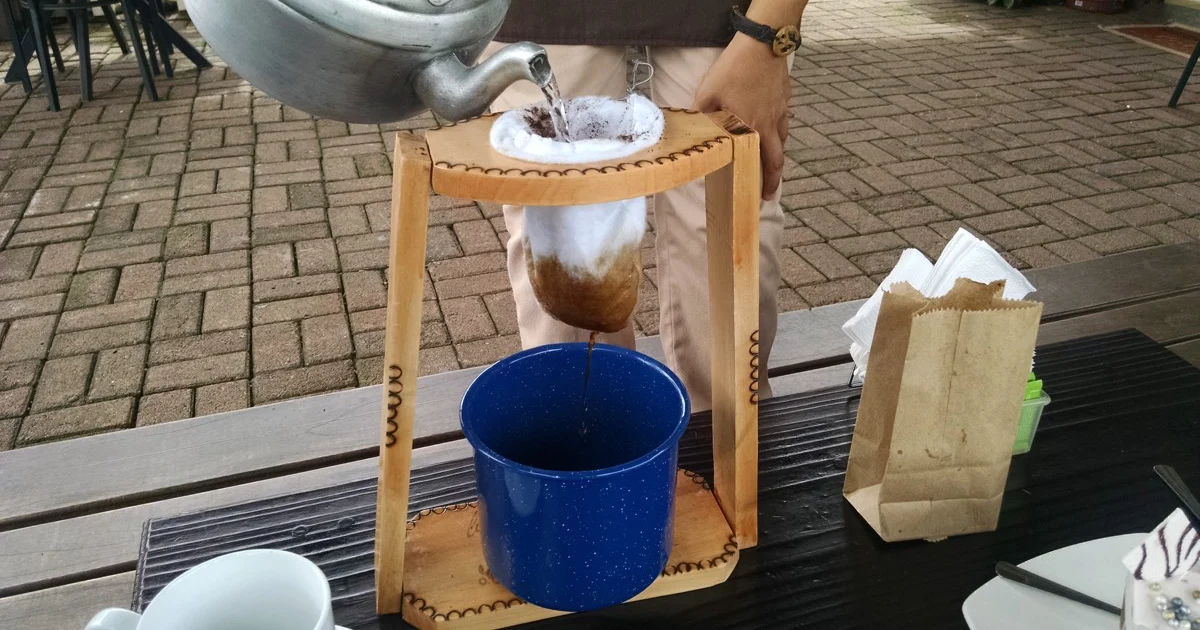
We got back to Essence Arenal just in time to take the nature walk with Jairo, a young man who lived at the farm and had deep knowledge of the regional flora and fauna as well as permaculture and medicinal herbs.
After a brief introduction to some of the animals and birds we might see (and a warning about possible encounters with jaguars and the fer-de-lance, one of Costa Rica's most venomous snakes), we toured the 27 hectares of the property.
After hiking through the rainforest where we saw some howler monkeys and toucans, we got to see all the plants they grow at the farm—everything from cucumbers to limes to almonds to cinnamon to sugar cane (which we got to try) and much more. We continued through the hostel's small coffee plantation and past the murky tilapia pool.
The whole tour took about two hours, and we got back to the kitchen just in time for dinner where we helped to make vegetarian sushi rolls.
Arenal Eco Zoo
Over breakfast, the owner of Arenal recommended that we check out the Arenal Eco Zoo (now closed), a small Tk that cared for a selection of animals and reptiles native to Costa Rica.We can take a recommendation, so after the short walk down the hill, we checked in at the zoo and met our guide, J.P., who took us on a comprehensive and educational tour of the zoo. He knew a lot about Costa Rican flora and fauna, especially the poisonous snakes.
We got to see the fer-de-lance (the snake that Jairo warned us about during the previous night's nature walk) and many other snakes, lizards (including a lot of common basilisks—the Jesus Christ lizard), and reptiles.
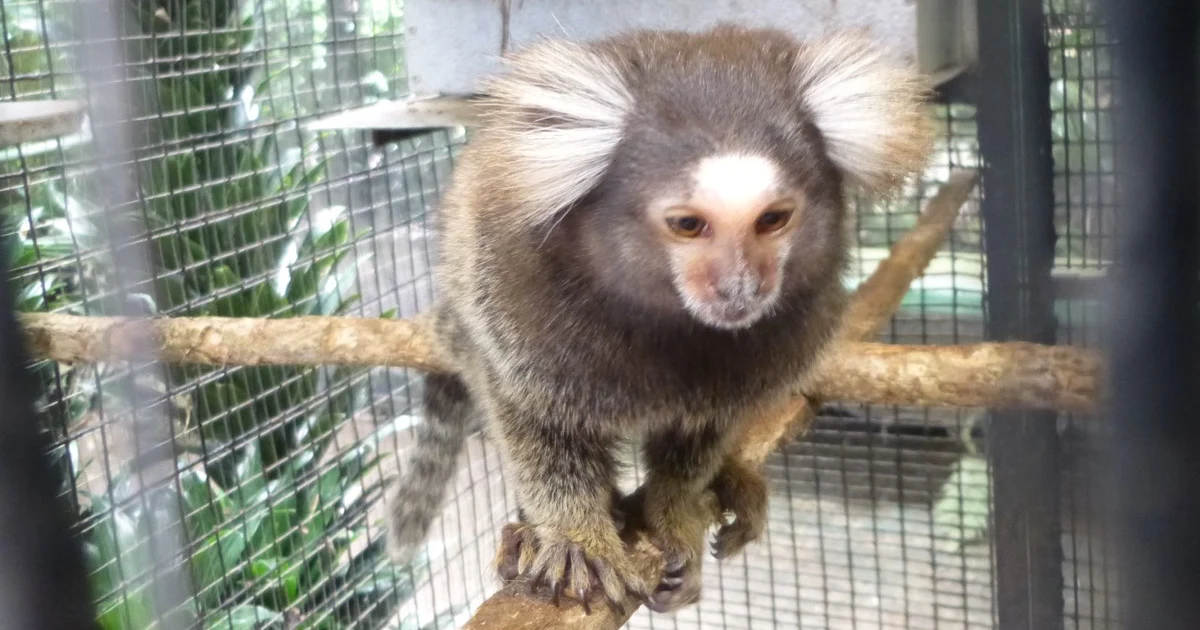
The zoo had only a few mammals: one sloth that it rescued as a baby and is nursing back to health, and a pair of common marmosets (cotton-eared monkey) that someone had been keeping as pets. The zoo was holding them until they could be relocated.
Drive to Costa de Pájaros
Our time at Essence Arenal had come to an end. We ate breakfast, packed the luggage into Dorothy, settled the bill, and headed off down the hill for the last time.
The road around Lake Arenal is anything but straight. There was also a bit of elevation gain and loss on the route, and Dorothy didn't have the best hill-climbing capability when loaded down. We were in front of a long line of cars, and there was no room to pass most of the time. Every so often a driver who was clearly in more of a hurry than we were passed us in close-call conditions. We felt lucky that we were only almost run off the road twice.
A visit to the Super-Mini takes a dark turn
We were told that Costa de Pájaros had no restaurants, so we stopped off at a place called Mini Super Leticia for groceries. We bought $45 worth of food that was enough for lunch that day, dinner that night, and breakfast the next day (a budgetary win!).
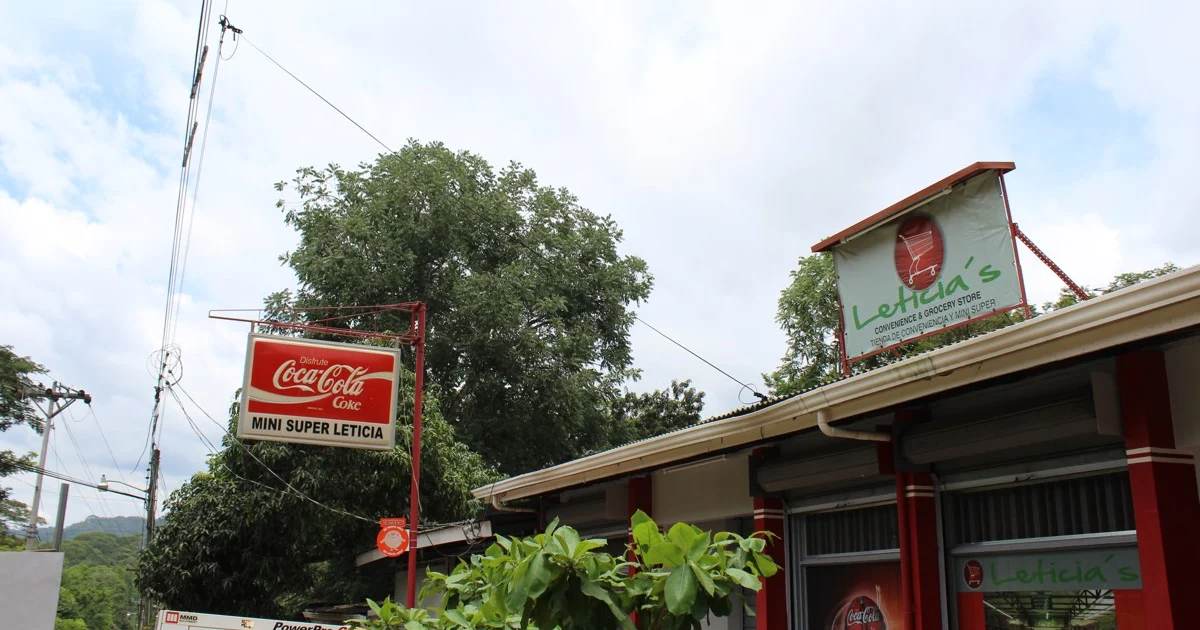
As we checked out, Osvaldo, the owner, chatted us up about our trip. After learning where we were heading, told us that, in case we need it, the chief of police in Costa de Párajos was a good friend of his. Then, twice, once as we left and once as we loaded the groceries into Dorothy, he told us to "be careful."
We couldn't be sure if we should be alarmed about this or if he was just being polite.
The house were were staying at (our first Airbnb) didn't have any internet. Our only access was via an Edge connection through Claro that occasionally teased us with 4G. But we did have television. So we ate dinner and watched Doctor Who in Spanish as geckos scurried across the walls.
Costa de Pájaros is home to a lot of dogs, and once one of them starts barking, the rest of them sound off. This goes on pretty much all night long. Add to that the regular buzz of motorbikes zipping along on the road below and you realize that, even here, in a remote fishing village on the Golfo de Morales, complete solitude isn't always easy to achieve.
Day Trip to Puntarenas
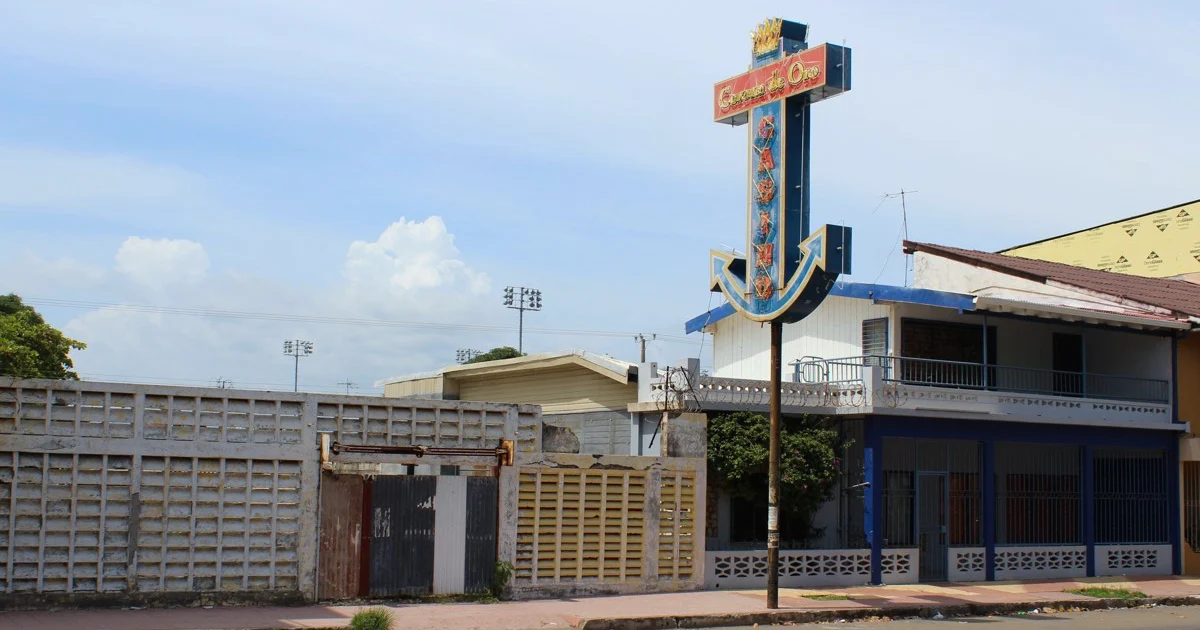
We decided to visit Puntarenas, a port city situated at the end of a peninsula about an hour's drive away from Costa de Pájaros. It’s a popular spot for surfers and ferry stops to the Nicoya Peninsula across the gulf.
It's also a port of call for cruise ships, but the pier was pretty quiet when we were there. In fact the whole town, which looks a little run down, was a bit sleepy during our visit.
We ate lunch at La Yunta then walked down the Paseo de los Turistas, where we got some granizados dos leches (translates as "slushies, two milks"), which is flavored shaved ice topped with powdered milk and condensed milk.
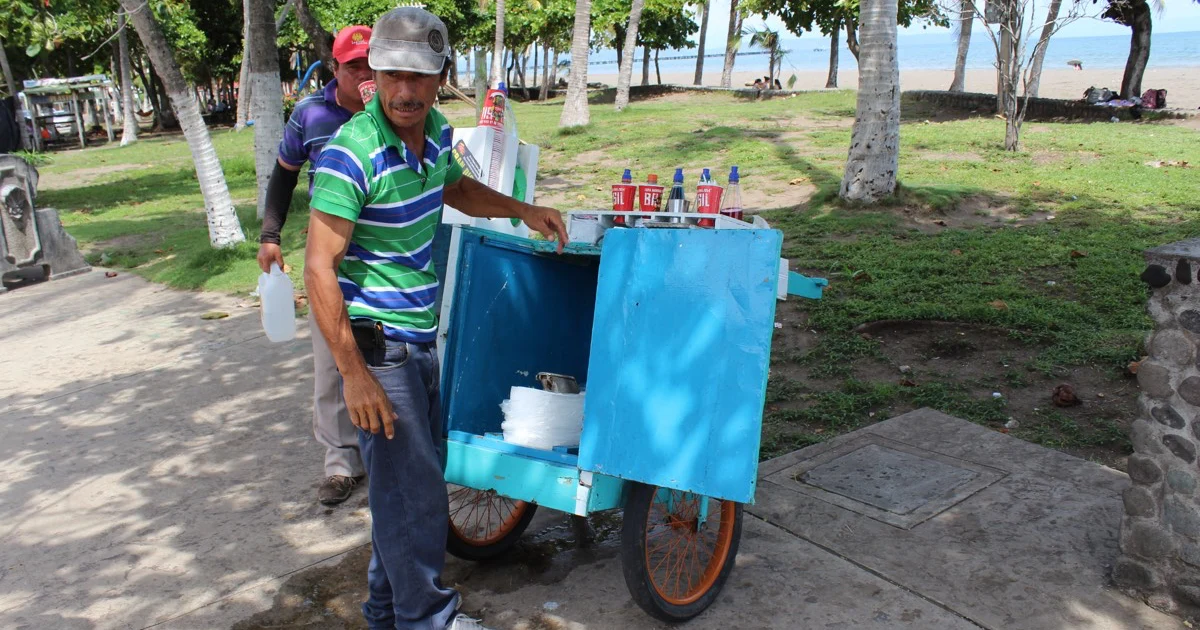
There wasn't much else going on in Puntarenas, so after a short stroll along the beach, we got back into Dorothy and headed back toward Costa de Pájaros. Along the way we stopped at Maxi Pali, which is sort of a Costa Rican Walmart to pick up some more groceries.
Thunderstorm across the gulf
We did the first load of laundry of the trip and made dinner as we watched a thunderstorm roll in across the Golfo de Morales.
It started with a low rumbling that steadily got louder. Then it got dark, the lightning started, and the rain began coming down. I had to hang the laundry around the house (there was no dryer) because, well, it was raining.
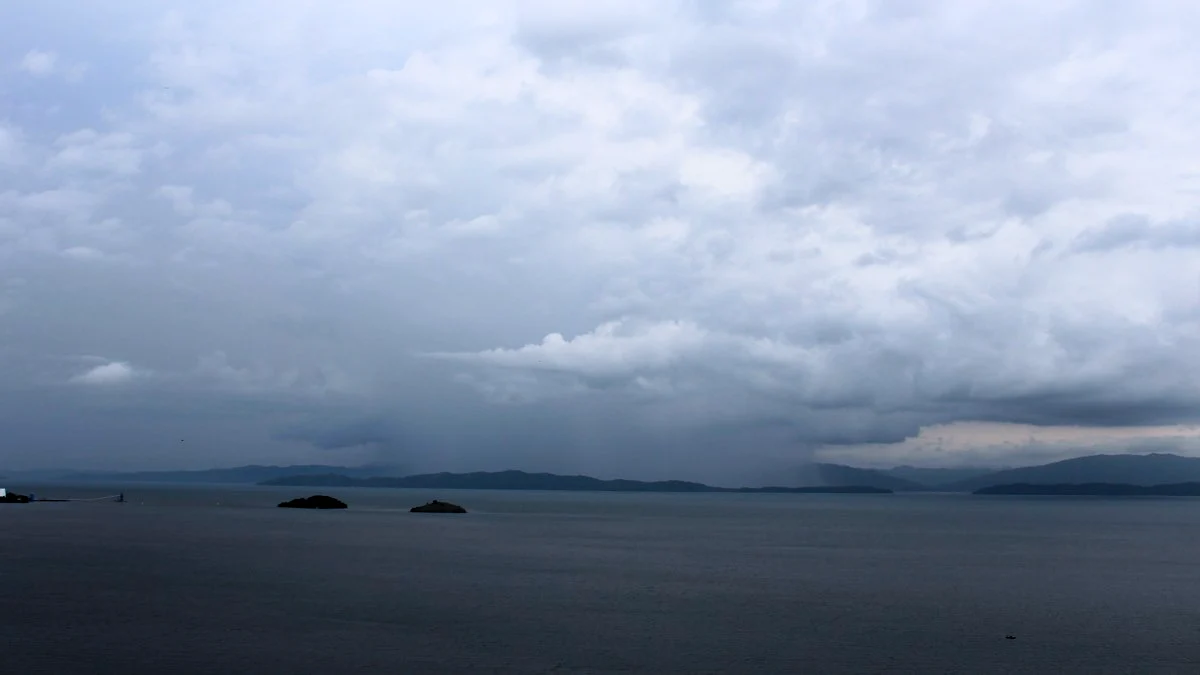
The house had a metal roof, and the sound of the rain echoed very loudly through living room as we ate pizza and watched the Emmy awards in Spanish. The Spanish voices were dubbed right over the English broadcast, which made the whole show very confusing.
At one point, as the most intense thunderstorm rolled right over us, we got the dreaded mal señal, and television was done. Then the lights flickered, so we decided it was time for bed.
Back to San Jose
I woke to crowing of roosters and falling rain—and the realization that our first week of traveling around the world has gone by. Only 51 more to go. It had rained pretty much all night, so we'd had a lot of rain in the last 12 hours. I was hoping the steep road down from the house wasn't all mud.
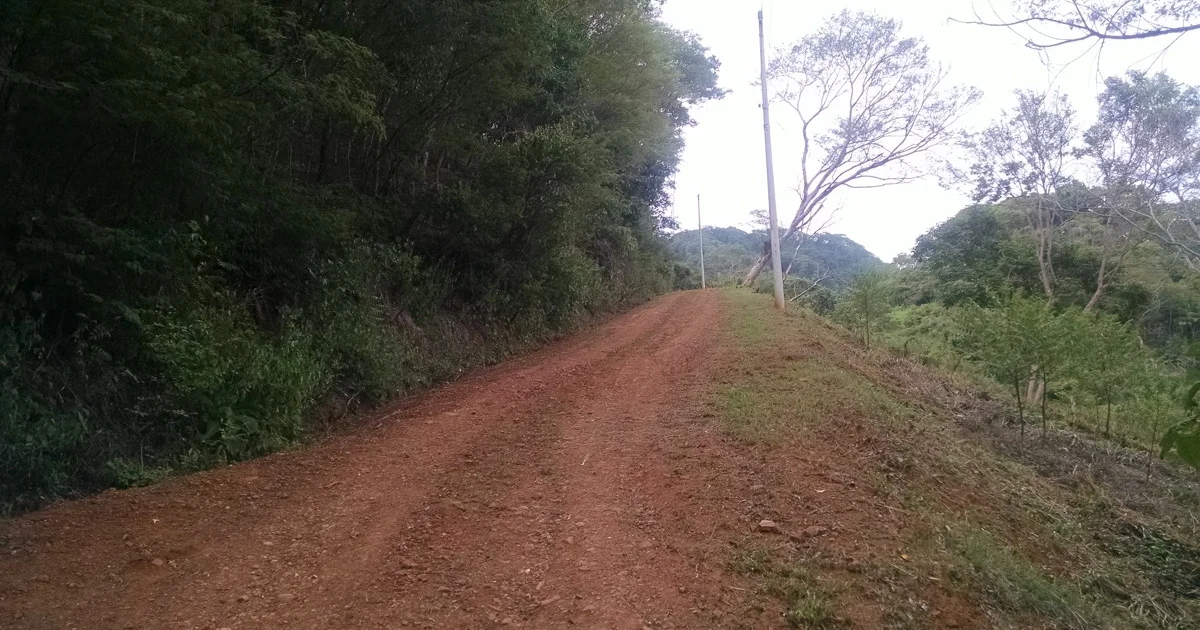
We packed up the goods and got on the road at 6:15 a.m. As we drove down the hill, Dorothy slid toward the steep cliff on the left a few times, but we made it without too much trouble.
The drive back to San Jose was frustrating. There was a lot of traffic, much of it big trucks navigating the narrow roads. Behind these trucks, traffic would crawl along at 20 kmh (even slower uphills) until there was a gap in oncoming traffic, then the huge line of cars that had built up would make a mad dash to pass the big trucks before the next wave of opposing traffic came. We had a couple of close calls.
But we made it back to the San Jose airport, said our goodbyes to Dorothy, and hopped in a cab to take us to the Tica Bus station in downtown San Jose to catch our bus to Panama. Our cab driver had family in Panama, and he once drove straight to Panama City in his cab. It took him 14 hours.
Don't forget your exit tax
We got to the Tica Bus station, handed over our luggage, bought our tickets ($42 USD each) and paid the Costa Rican exit tax.
Yes, you have to pay to leave the country. We paid with colónes (20,000), but you can also pay with dollars or with a credit card. But they charge your card as a cash advance, so there are extra fees if you do it that way.
There was a little restaurant at the bus station, so we got some food and picked up a few snacks because we weren't sure when the bus would stop for dinner.
Then we were on the bus and on the road at 12:00 — right on time.
16 Hours on a Bus
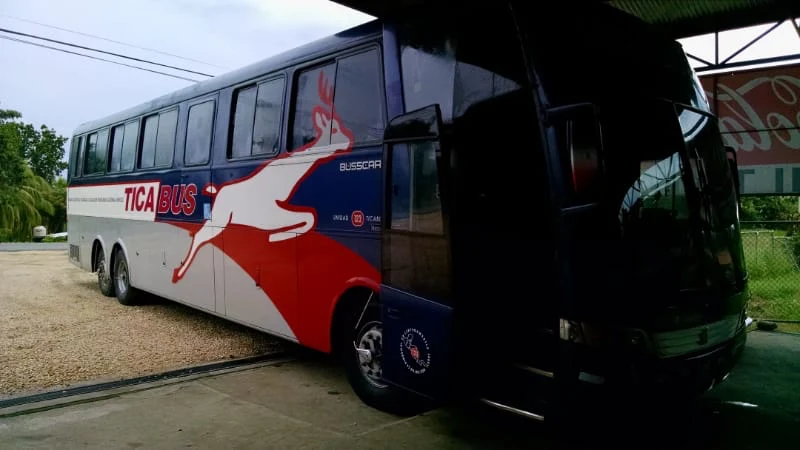
Let's be honest here. Traveling by bus for 16 hours is not a lot of fun. To keep the masses happy, Tica played movies on multiple 13" CRT screens mounted to the ceiling. Here's what we saw on the ride:
- Grown-Ups (English, subtitled in Spanish)
- The Last Passenger (English, subtitled in Spanish)
- Transporter 3 (dialog was subtitled in Spanish but with the commentary track)
- Puss in Boots (in Spanish)
- Iron Man (dubbed in Spanish)
The language didn’t really matter, though. Between the roar of the bus and the roar of the air conditioner, we couldn’t hear much of anything coming out of the televisions.
Speaking of the air conditioner, the bus gets really cold. Like icebox cold. Bring a jacket. Other notes about the bus: no power outlets; no wi-fi.
After clicking along at a good clip for a few hours, the bus stopped. It was the second stop, actually. During the first one, a few people got on, which is pretty normal bus behavior. But during the second stop, no one got on. No one got off. No one knew what was going on, but one of the passengers learned there was some sort of truck blocking the road. We weren't going anywhere.
Then the bus stopped again at 5:00 p.m. (right in the middle of Puss in Boots) for dinner at a soda near Palma Sur. We all filed off the bus, got into line, and ordered food from a buffet-style set-up. At 5:30, the driver sounded the horn and everyone scurried to get back on. A few passengers were in the bathroom and had to hoof it back to get on the bus—these boys weren't waiting for anyone. It made me wonder how often a passenger misses getting back on the bus at one of these stops.
So, now satiated and hydrated, we got back on the road, but not for long (relatively speaking) ... we were only 15 minutes into Iron Man when we arrived at the Costa Rica/Panama border.
Events of August 20–27, 2014. Days one–eight of continuous travel.
Taking on the World is an Amazon Associate and earns from qualifying purchases.
Header Image: Banono, the scarlet macaw who lived at Essence Arenal. All images from the author's collection.