
How to Visit Easter Island
A trip to the mysterious island in the Pacific
Ever since I was a kid, I've been fascinated by Easter Island. It probably started in 1977 when i saw Leonard Nimoy's In Search of ... episode about "The Easter Island Massacre."
It continued when I learned about Thor Heyerdahl's visit to Easter Island. Everyone knew about Kon-Tiki, but I was more enamored of Aku Aku.
Taking on the World is an Amazon Associate and earns from qualifying purchases.
Easter Island was always a place I wanted to visit, but I never thought I'd have the chance. But taking a trip around the world is the perfect reason to fly to Easter Island. In fact, it's safe to say that the entire South American portion of the trip was built around a visit to Rapa Nui.
Easter Island • Isla de Pascua • Rapa Nui
Easter Island (Isla de Pascua in Spanish and Rapa Nui to its native people) is a small island in the Pacific Ocean. And small means really small — just 63 square miles (163 square kilometers), which is slightly smaller than Washington D.C.
Back in the early days of global exploration, a few European adventurers managed to find the island. But, from what the scholars can tell, the island first entered the European awareness when Dutch explorer Jacob Roggeveen, sailing for the Dutch West India Company, stumbled across the vaguely triangular landmass on Easter Day in 1722.
Rapa Nui sits 2,300 miles (3.743 km) from Santiago, Chile, so it's pretty remote. In 2014, there was just one flight to Easter Island — LATAM Airlines flight 833 out of Santiago. I read somewhere there used to be flights out of Peru, but there weren't any available to us at the time.
The flight, which takes about five-and-a-half hours and then continues on to Tahiti after Easter Island, only departs Santiago a few times a week. Fortunately, one of those departure dates fit into our schedule nicely.
So after a short night at in an airport-adjacent hotel in Santiago, we headed back to spend the day at Arturo Merino Benitez International Airport until our flight at 5:40 p.m.
Flight to Easter Island
Our tickets said boarding would begin at 5:05 p.m., so we made it to our gate at 4:30 p.m. — only to find that our flight was delayed for two-and-a-half hours. The collective groan that goes up when everyone learns that their flight has been delayed sounds the same in any language.
We didn't have any connections to make, so it wasn't that big of a deal. Our main concern was that the people from our B&B on Easter Island who were picking us up knew we were going to be late. There was no free wi-fi at the airport and the roaming data connection was spotty, but we managed to send an email.
After a series of delay announcements that frustrated the gathering crowd, it was 8:00 p.m. before we were able to board the plane heading for Isla de Pascua.

Again, the late departure notwithstanding, the whole LAN Airlines experience was top-notch. Everything was free, the food was good, and the service was great. No wi-fi, though (again, this was 2014), but that was all right. They use a big plane for the flight to Easter Island, a Boeing 767-300.
Easter Island Arrival
We didn't arrive at Easter Island until midnight. About half of the passengers on the plane were continuing on to Tahiti, but we were glad we were done flying for the night.
Easter Island is home to about 6,000 people, and most of them live in Hanga Roa, the only town on the island, which is right next to the airport. Everyone on the island knows when a plane arrives, so it was no surprise that our hosts from the Cabaña Rapa Nui Orito were waiting for us with leis.
They drove us about a kilometer or so up the road to the cabaña where we quickly checked in, got to our room, and got settled in. We heard the plane depart the island for Tahiti at 1:05 a.m., then drifted off to sleep.
In the past 24 hours, we'd flown for 11 and spent eight in an airport. The thrills of international travel.
Isla de Pascua
How great is Easter Island? Pretty damn great.
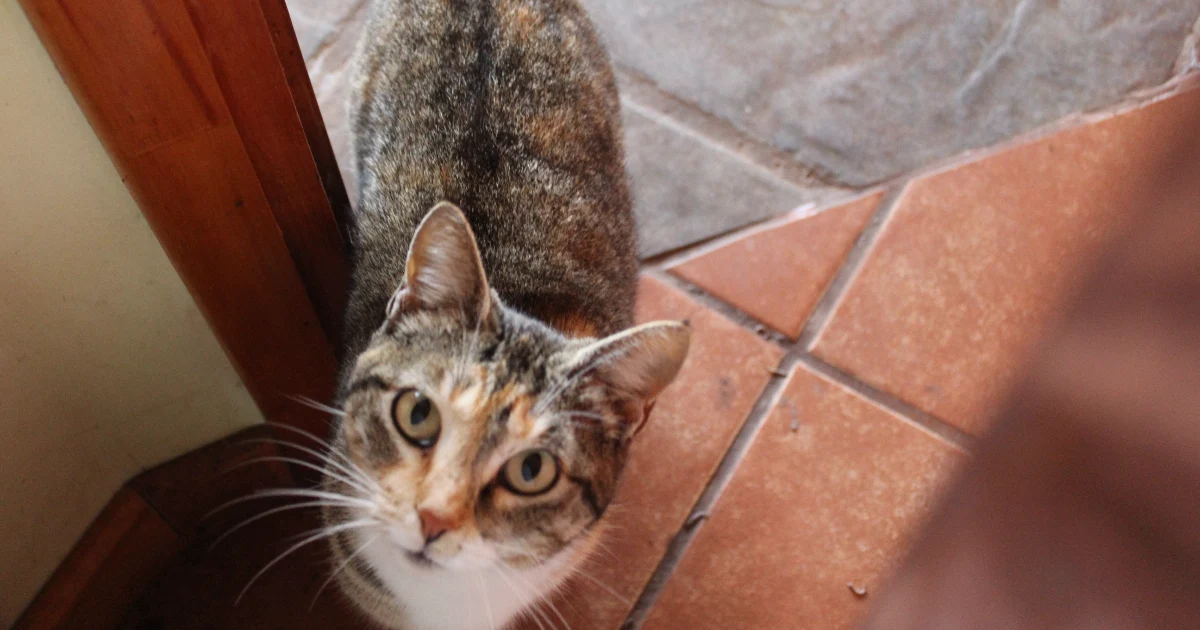
All night we were regaled by the sound of barking dogs and palm trees shaking in the strong winds. There was no heat in our room, and the air was pretty chilly when we woke up. The sun doesn't rise until after 7:00 a.m., and when I opened the door to see how warm it was outside, a cat almost strolled into our room. The kids named her Blaze (her real name was Muchi), and she would haunt our doorstep, meowing loudly at sunrise, each day we were there.
Along with Blaze, the cabaña had a dog (the kids called him Buddy, but his real name was Pulgoso, which means "he has fleas" or something close) that the kids loved to play with.
We hadn't arranged a tour before we arrived on the island, so as we waited for breakfast to be delivered, we did a little research with the fickle 3G connection (that seemed to dwindle down to Edge by mid-morning).
We were fortunate that Tiare from Easter Island Guides had an open day and was able to take us around the island. We agreed that she'd come pick us up at 10 a.m. and give us a tour of the island for the day. She was a fantastic tour guide (read our review on TripAdvisor).
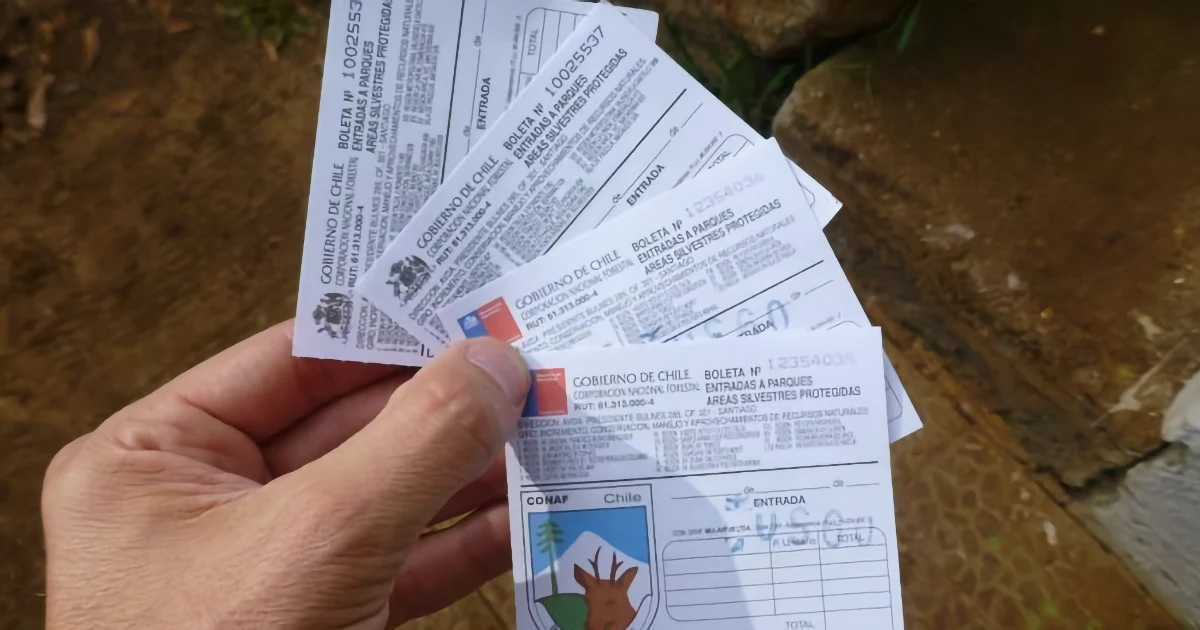
Our tour started in Rapa Nui National Park, a UNESCO World Heritage Site, so our first stop was to pick up a set of tickets.
Pro Tip: When visiting Easter Island, save yourself some time and buy your tickets to the National Park ($60 for adults, $10 for kids) at the airport. They are sold there during a short window after all arriving flights. If you don't get them at the airport (like we didn't), you have to buy your tickets from the Rapa Nui National Park's main office at Mataveri, which is on the southwestern tip of the island.
Rano Raraku
After we got our tickets, we drove back along the South shore toward Rano Raraku, the quarry where all the moai (the name for the giant heads) were carved before they were transported across the island and positioned on an ahu (platform) to watch over their people. Tiare told us that of the 877 moai on the island, there were about 400 in Rano Raraku.
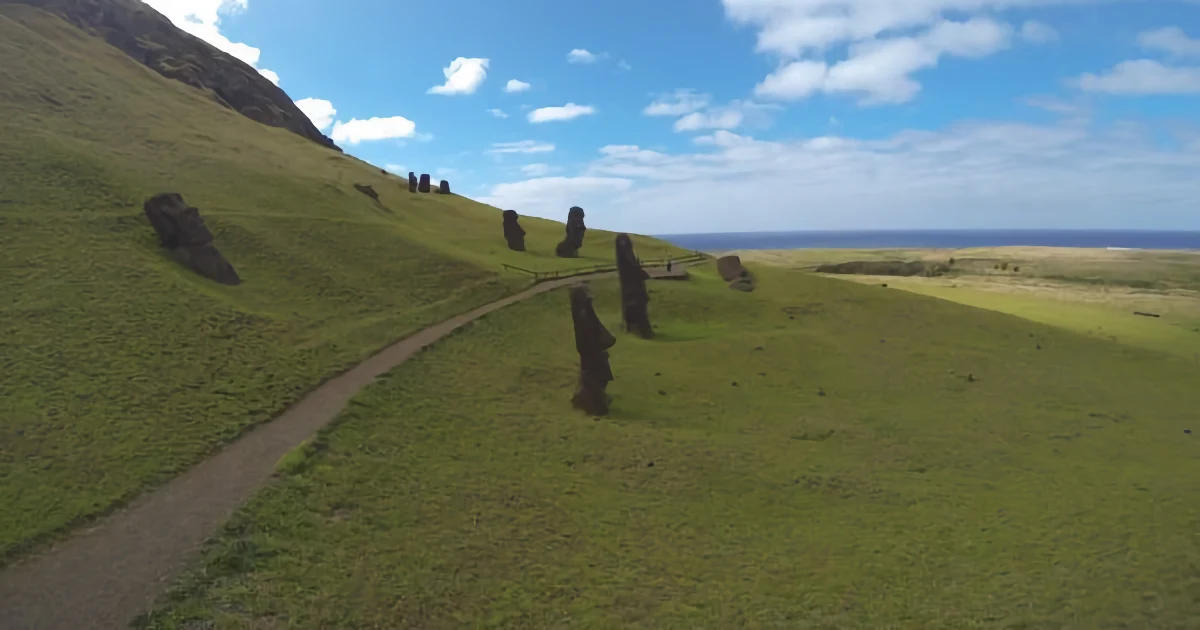
The moai were carved out of volcanic tuff, which is hardened, compressed volcanic ash. The Rapa Nui used basalt tools to hammer away at the rock, eventually cutting the carved monolith loose. Then they stood it up in a deep pit so they could finish carving the back and refining some of the details. It is estimated that it took one year just to carve each moai.
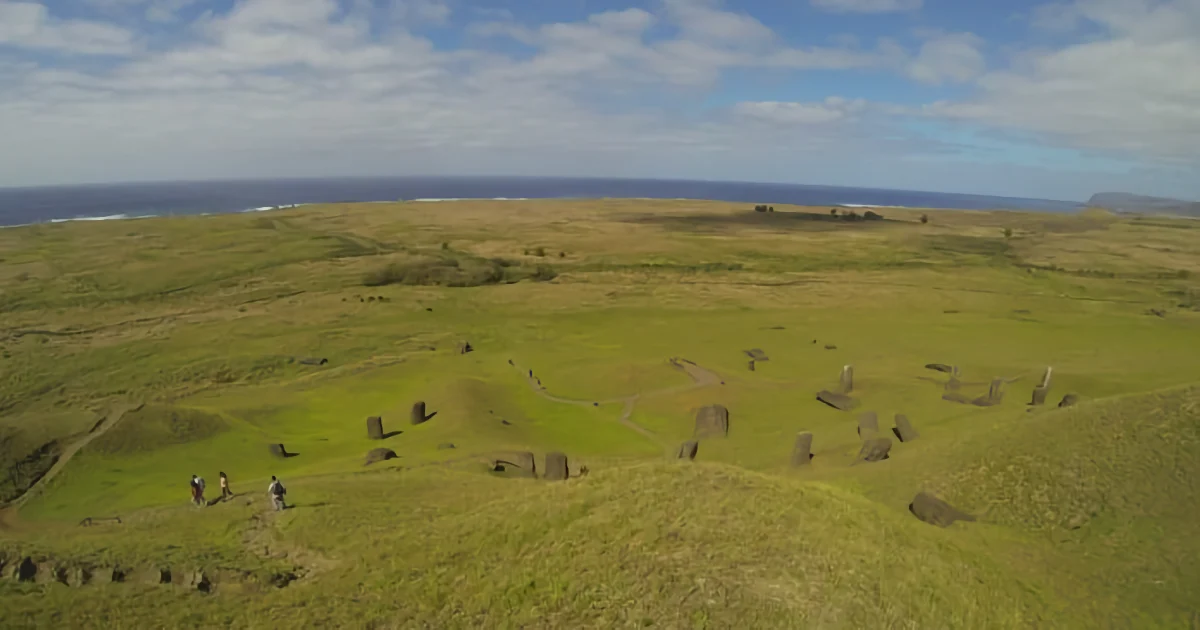
During the war between the Rapa Nui tribes that started in 1680, all the moai were pushed over and many were damaged. All the standing moai that can be seen on Easter Island have been restored by archaeologists.
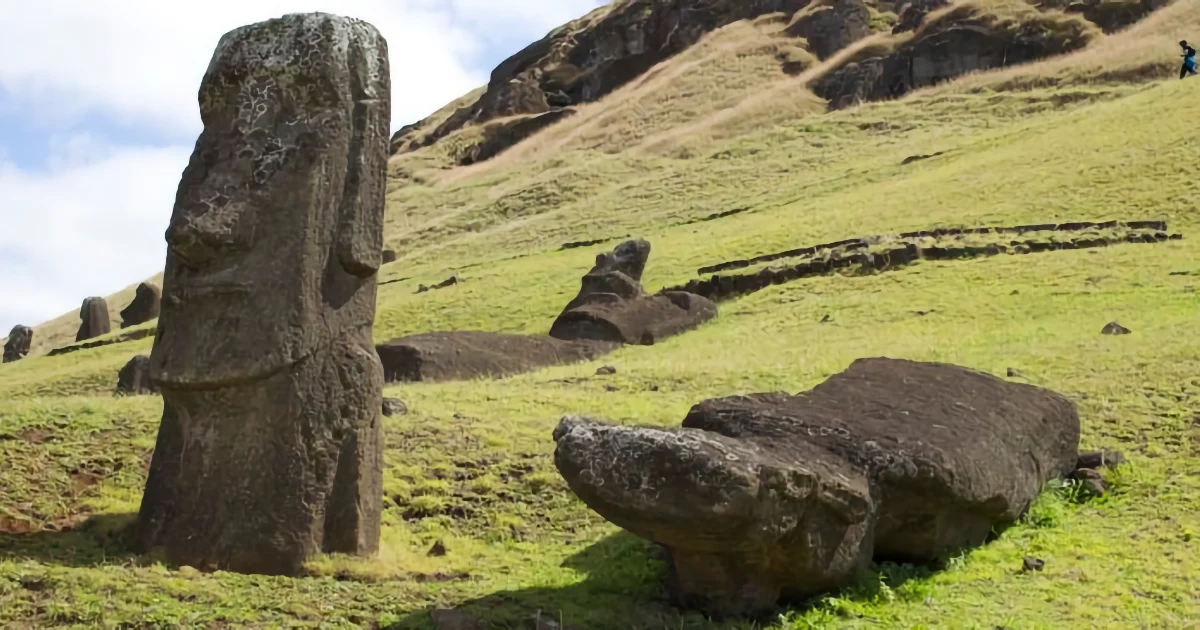
El Gigante
Although still uncarved at Rano Raraku, this moai, nicknamed El Gigante, would have been the largest stone head ever erected on the island.
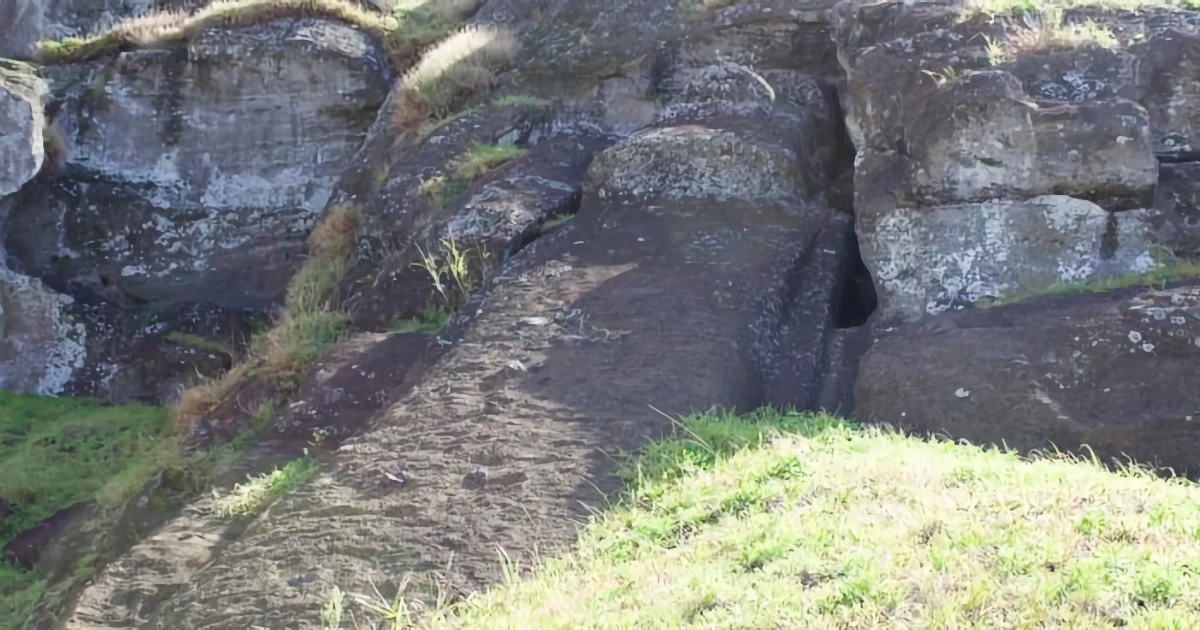
El Gigante would have towered over the others at nearly 22 meters high and weighing in at an estimated 200 tons. Tiare told us that this was the last moai to be carved before war broke out.
Crater Lake
Rano Raraku is a volcanic crater that also features one of the island's three crater lakes.
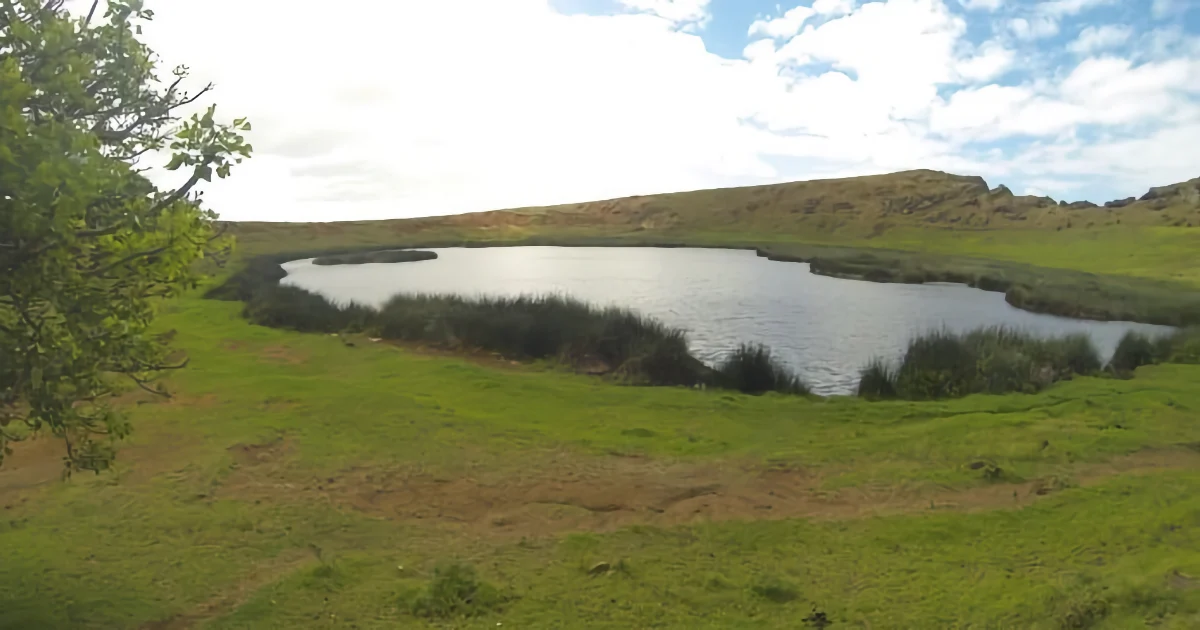
There are no rivers on Easter Island, so these crater lakes are some of the few sources of fresh water. They are also a good place to find mosquitoes, which were pretty plentiful on the island and spread the viral Dengue fever and Zika fever (which we'd never heard of prior to this visit but became a big deal in the U.S. the year after we returned from our trip).
Tongariki
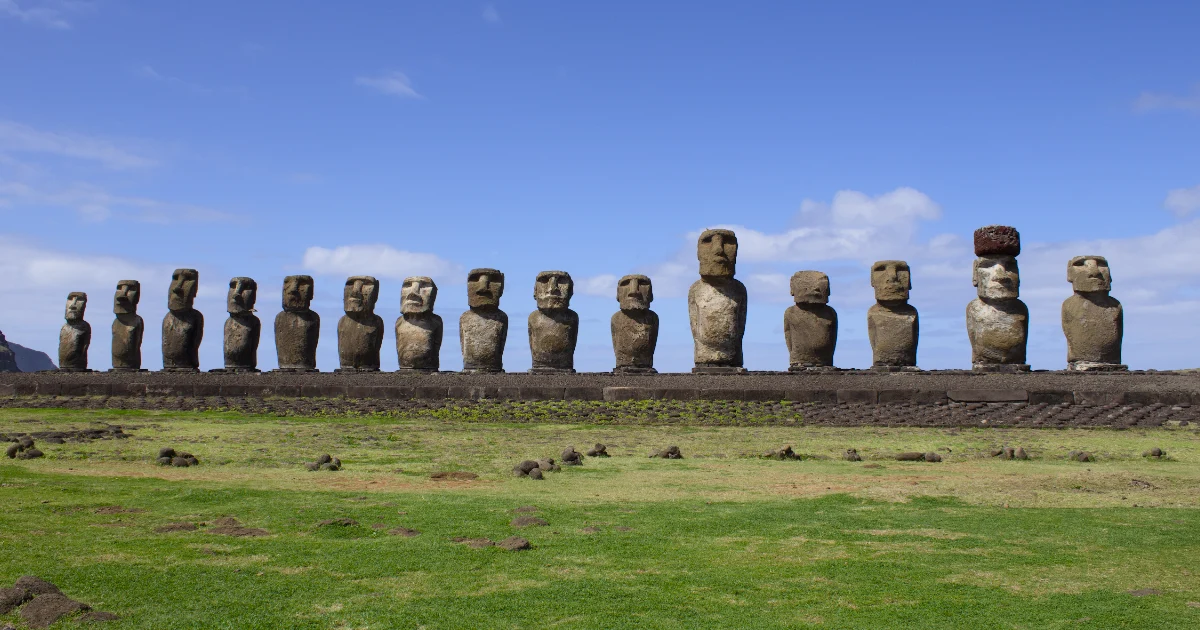
We left Rano Raraku and drove down to Tongariki, which is one of the more iconic images from the island. That's the place where 15 moai stand in a line on top of an ahu.
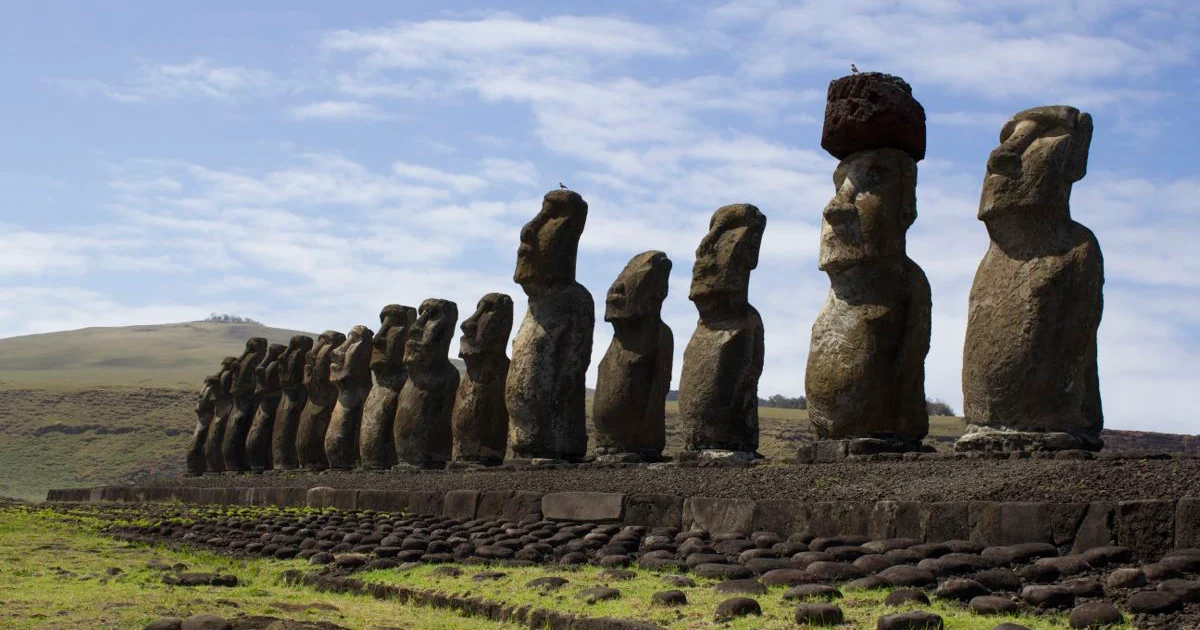
With a few exceptions, all the moai on the island face inward. Their role was to act as protectors and guardians of their people, keeping a watchful eye out for trouble.
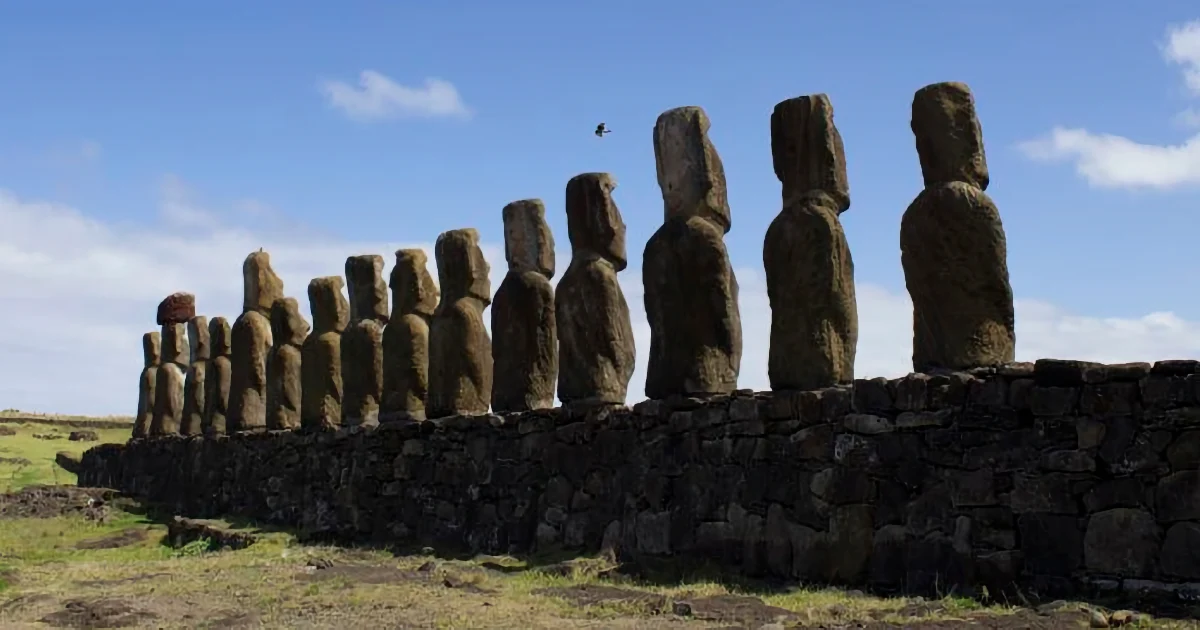
The area in front of the ahu was often a flat plain where ceremonies were held. Behind the ahu, the Rapa Nui prepared the dead for funeral rites and had burial grounds.
Te Pito Kura
We continued along the road along the southern side of the island. We stopped at one point to let a group of horses who were fighting in the road pass us by. Tiere called them the dogs of Easter Island. They were really everywhere, even in Rano Raraku, where they walked over the fallen moai, damaging the monoliths.
We stopped to see some petroglyph carvings before we arrived at Te Pito Kura, where there was a huge, round, magnetic rock.
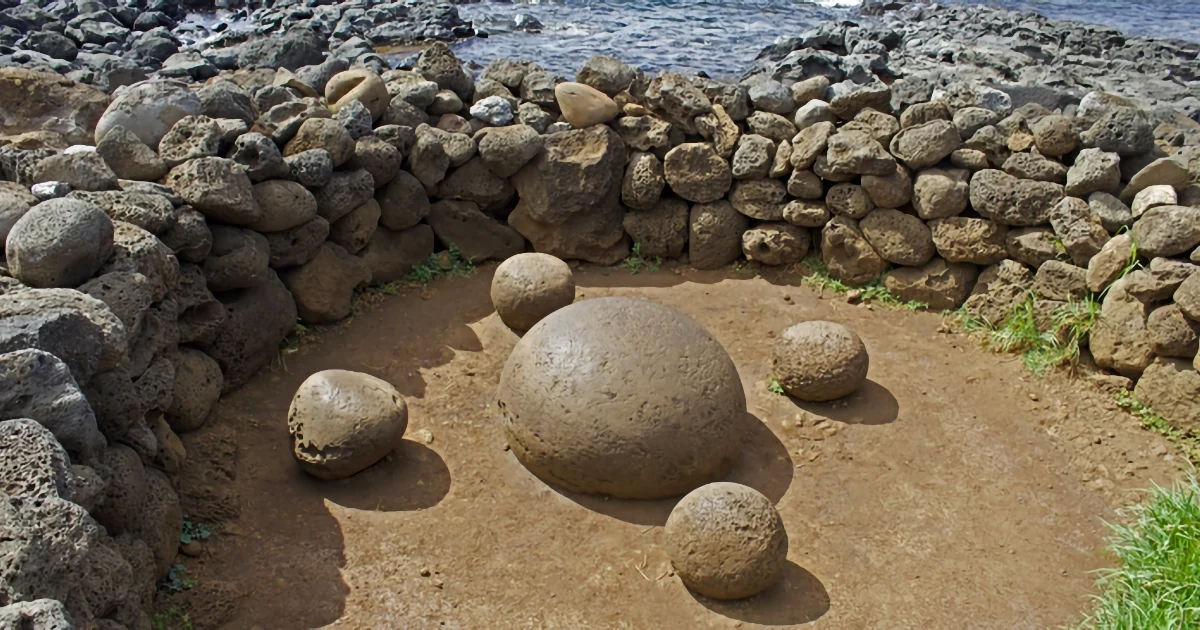
This smooth, polished rock was thought to have been brought to the island by the first Rapa Nui king around 900 C.E. because it was a source of mana. This was a magical power so sought after by the Rapa Nui people that it also drove their need to erect the moai. This iron-rich rock is infamous for making compass needles behave oddly, and there's no other rock like it on the island.
Paro
Near the magnetic rock, we saw this poor toppled moai, named Paro. It is the largest moai that was transported from Rano Raraku and placed on an ahu.
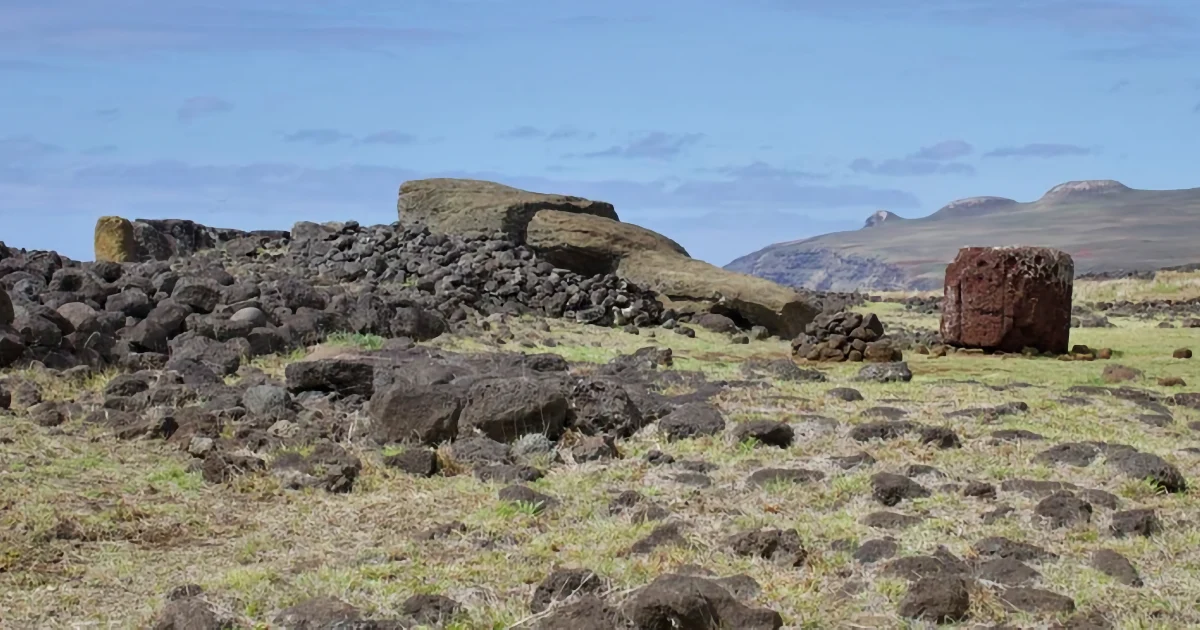
From the left you can see the flat ahu, then the moai itself face down, then the pukao, or topknot, that sits on top of some of the moai, The pukao are all made from a type of rock known as red scoria, which was quarried mainly at Puna Pau on the island's southwest side, a good distance from Rano Raraku.
Paro is thought to be the last moai to be toppled, and it is believed that British explorer Captain Cook actually saw it standing in 1774.
Anakena
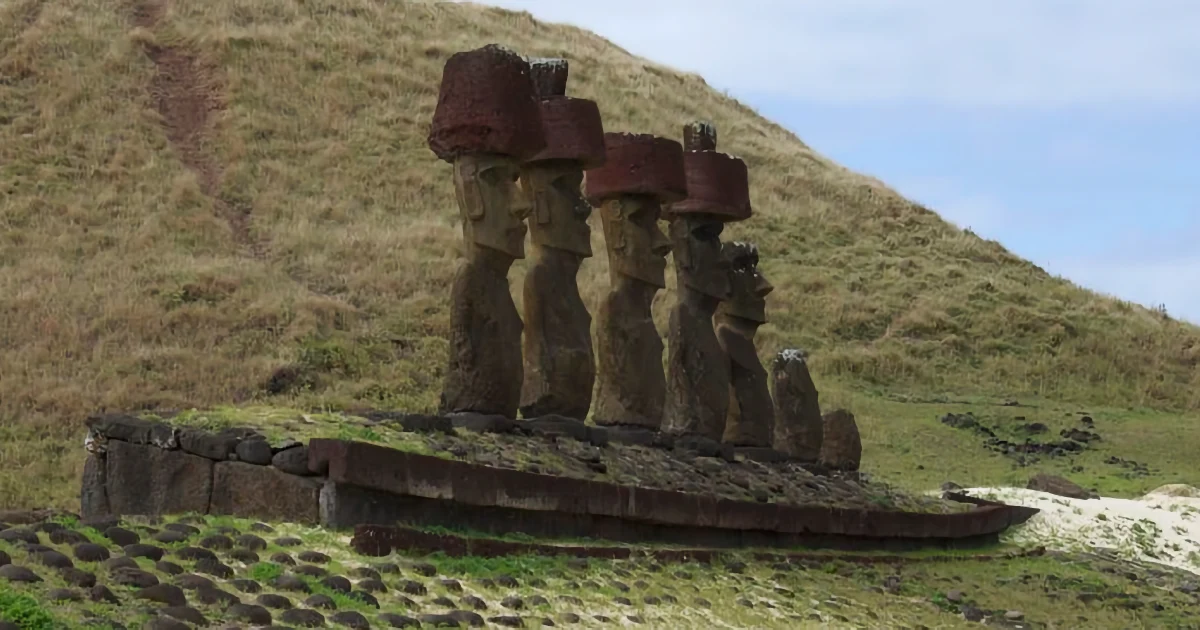
We moved up the road to Anakena, which is thought to be the place where the first king of the Rapa Nui landed about 900 C.E. However, there is debate among scientists about the landing place and the date when the first people arrived on the island.
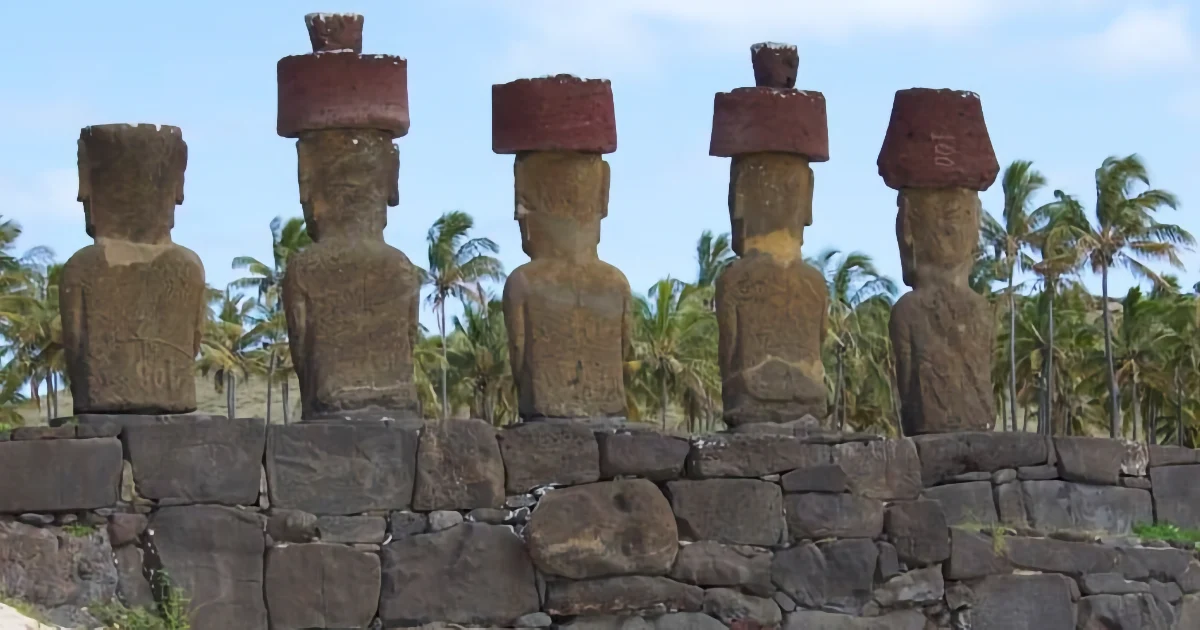
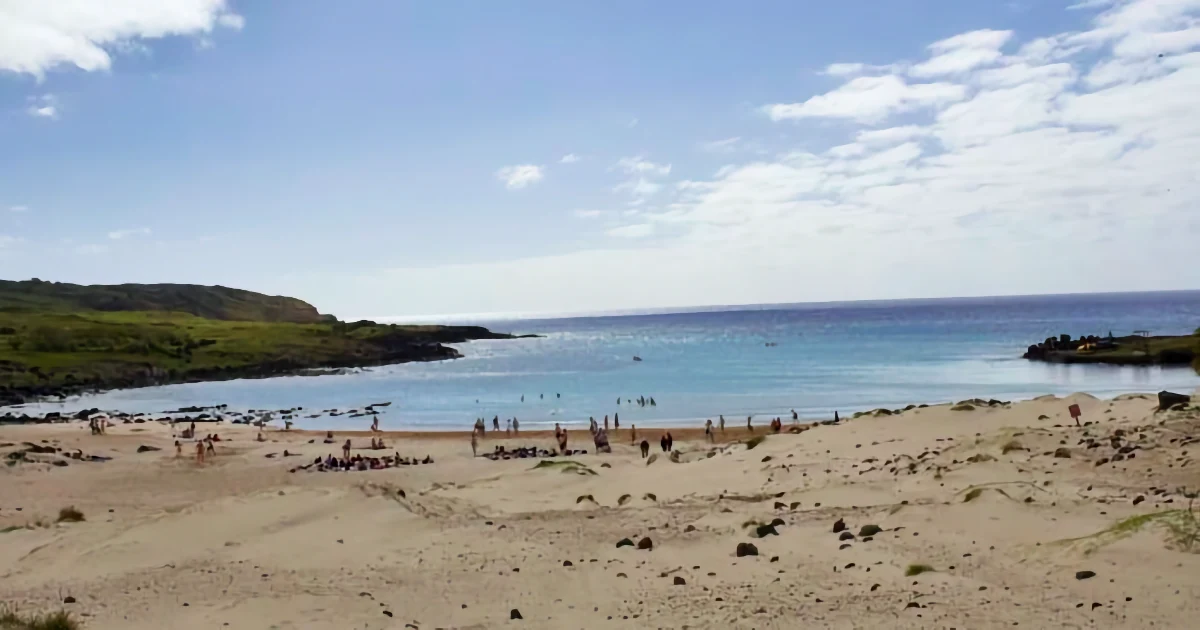
The beach at Anakena, one of two beaches on Easter Island, is surrounded by palm trees transplanted from Tahiti.
After Anakena, we went back to our hotel and arranged for dinner at Kotaro, a Japanese restaurant operated by a chef with very strict rules. It's considered by many to be the best on the island. It was quite delicious.
Driving on Easter Island
The cabaña had a few cars they rented out, and we got lucky that one was available on the second morning of our stay. Otherwise we would have to walk into town and gotten one from the rental place (side note: when we visited, the owner of the rental place had the biggest, most luxurious house on the island).
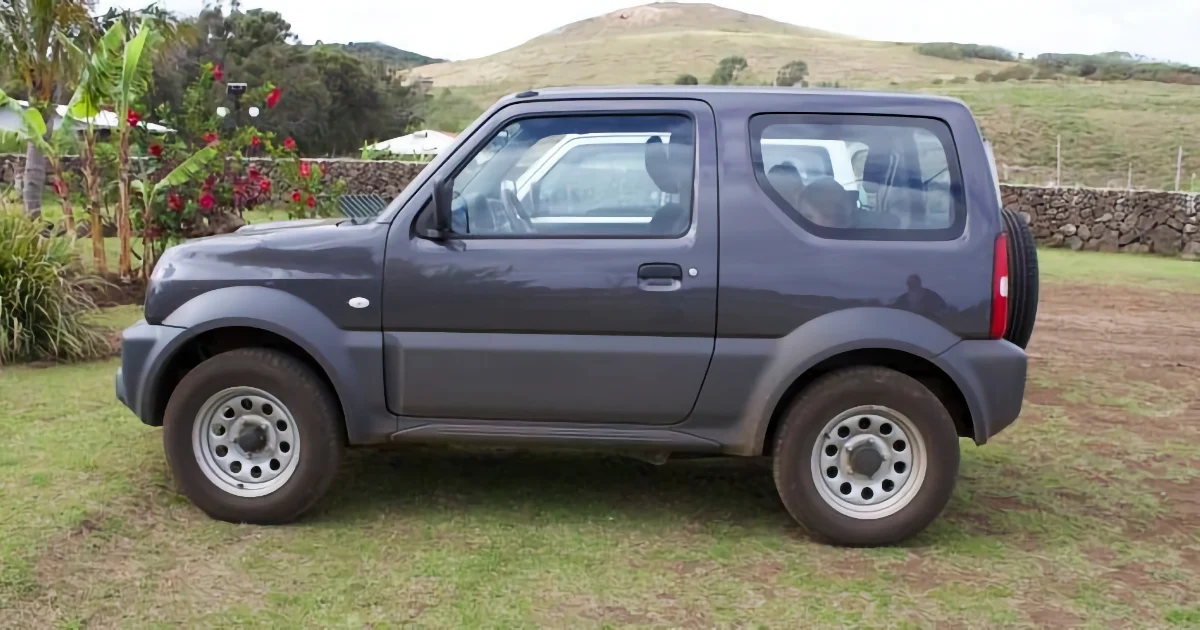
So we rented a Suzuki Jimny (we took to calling it Jimmy) for $80 so we could visit some of the moai we hadn't seen the day before. Jimmy had a couple of dents in the hood, and Sonia, our host, pointed at these and said, "Watch out for the horses."
Tahai
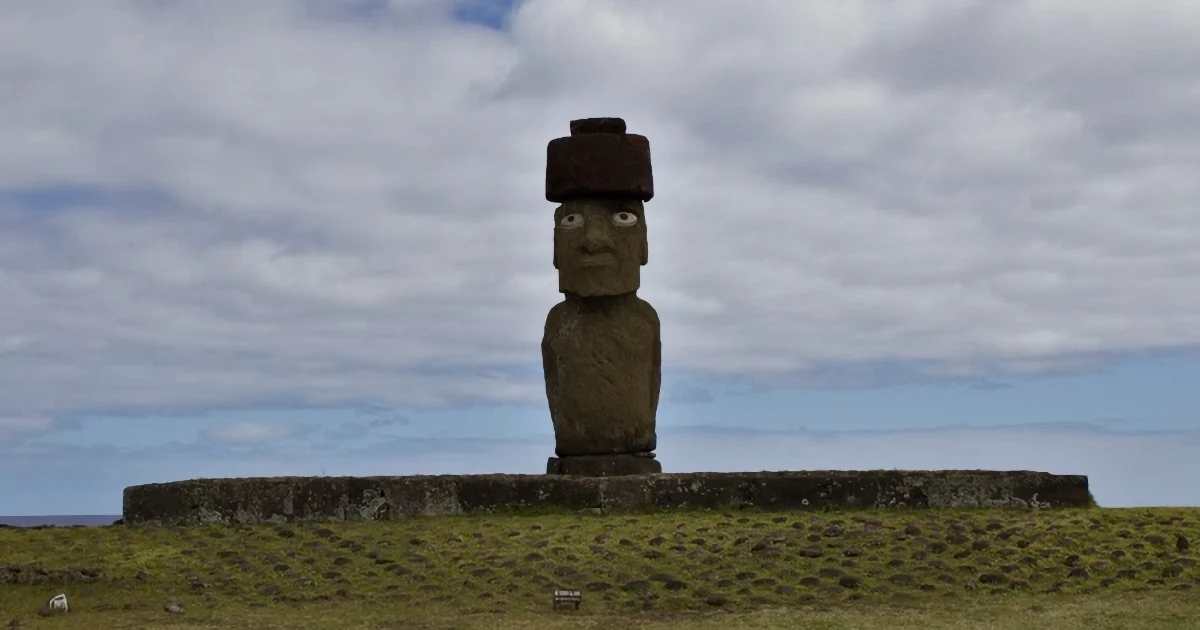
We were heading to the museum, but we turned one street to early, so we decided to visit Tahai first. This is an ahu where Ko Te Riku, the only moai on the island with eyes (although they are replicas) stands.
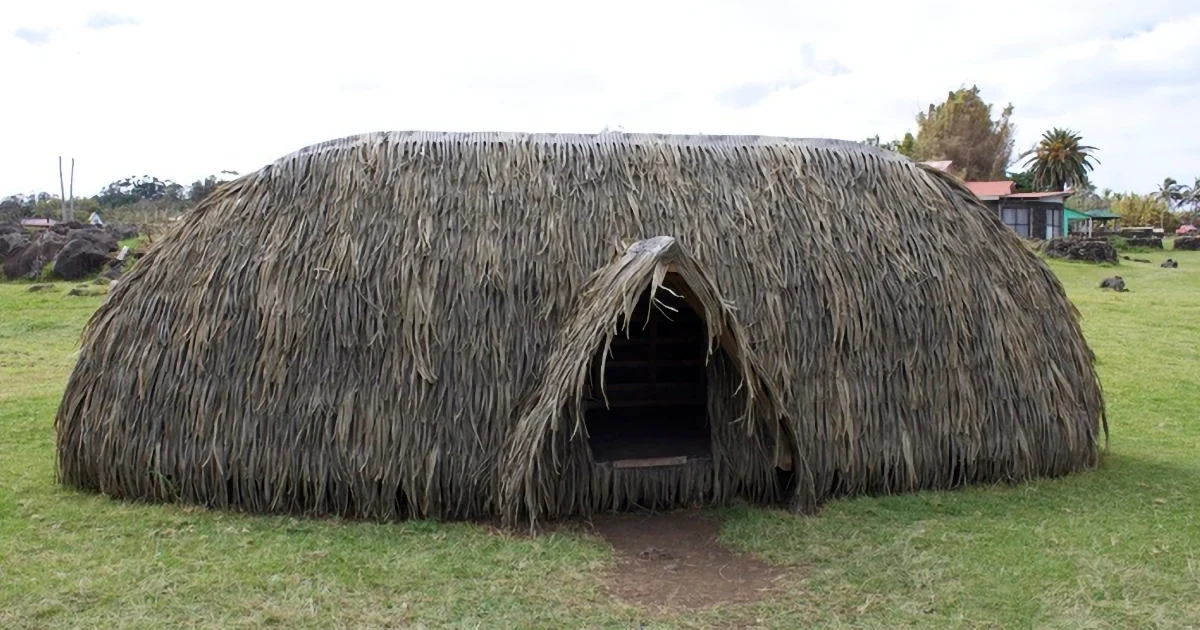
Adjacent to Tahai, there was another ahu with four moai, and nearby, a replica hare paenga, an aboriginal Rapa Nui dwelling. It's pretty small and cramped inside, but the people didn't use it for much more than sleeping.
Rapa Nui Museum
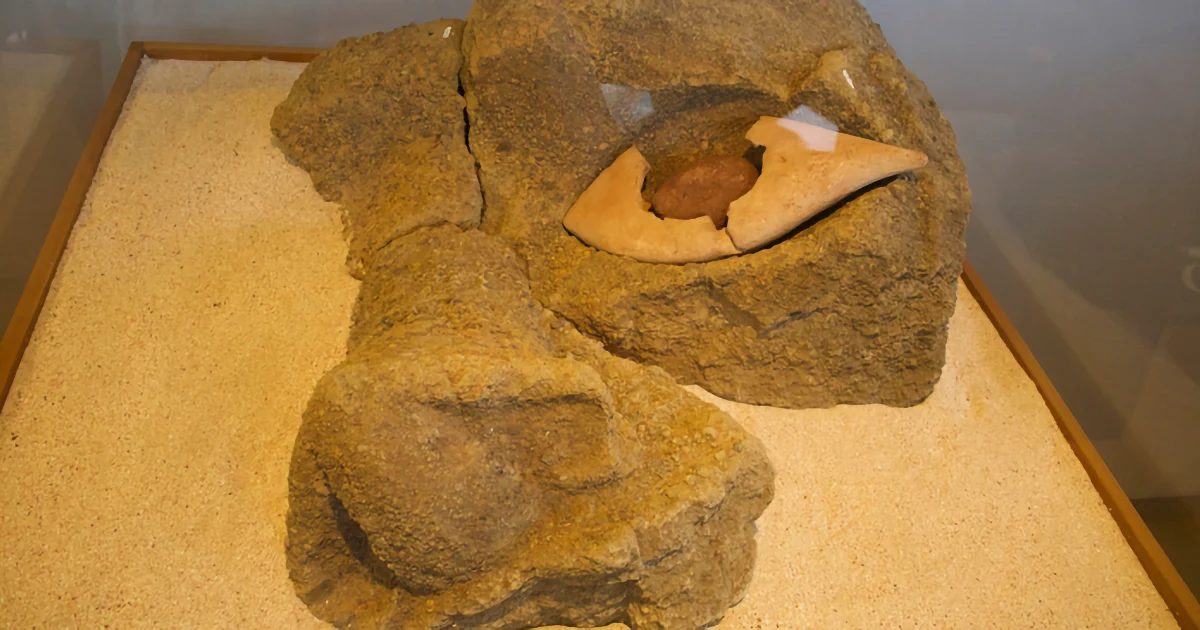
Then we visited the Rapa Nui Museum (now closed). It was small but fascinating, packed with information about the formation of the island, the Rapa Nui people, and both the moai culture and the so-called bird-man cult (more on this later). We made it through the exhibits in about an hour, and it helped to firm up some of the details Tiare had told us the day before.
Rano Kau
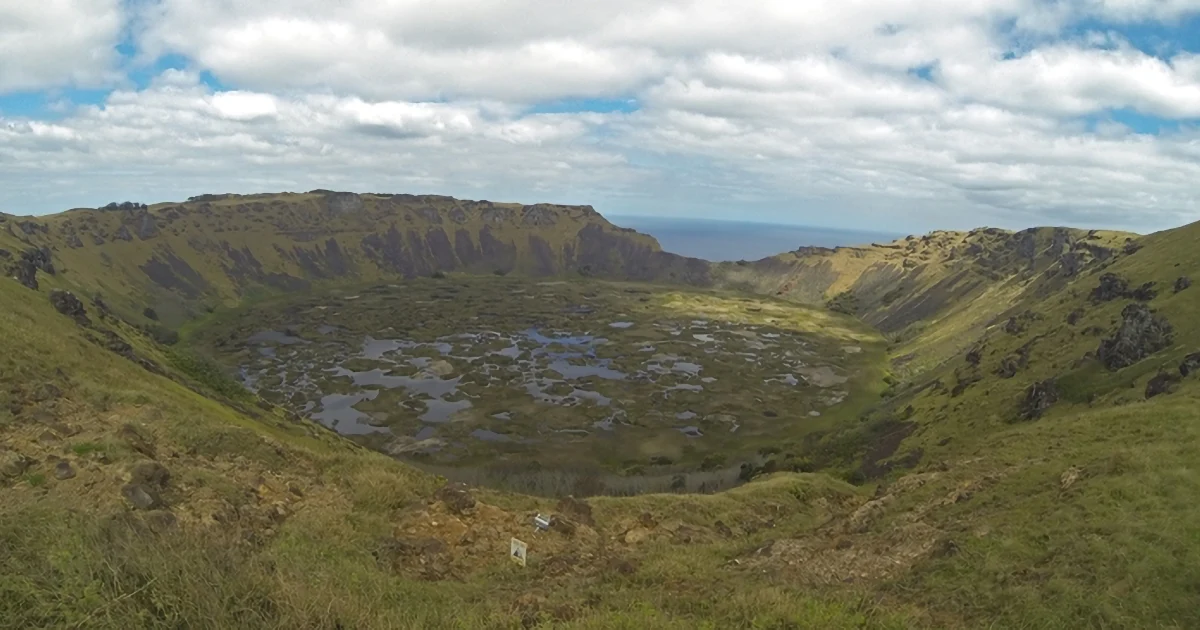
We still had a few sights to see, so we drove over to Rano Kau, another of the crater lakes on the island. This one was a lot deeper than the one at Rono Raraku we'd visited the day before.
We'd learned in the museum that this was the second volcano to erupt that helped form the island. The first was Poike on the other end of the island, and the third and largest was Terevaka, which dominates the northern side of the island (we didn't visit either of the last two).
Orongo
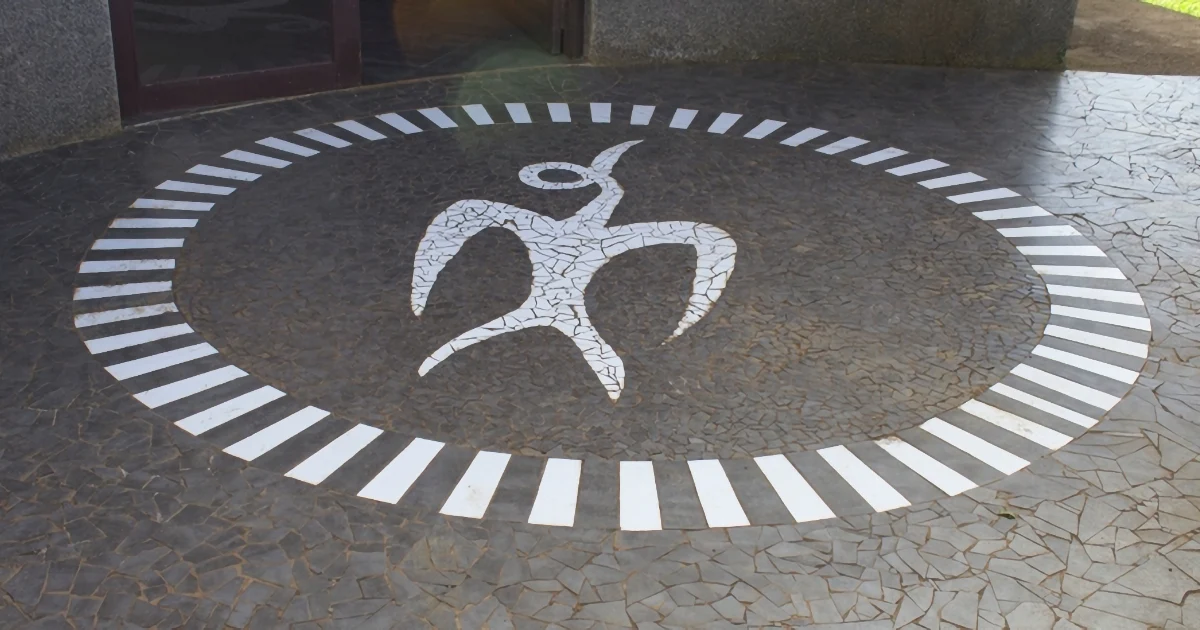
The road continued past Rano Kau, so we got back into Jimmy and drove until we ran out of road at Orongo (you need to show your tickets here, too; remember they're good for five days). This is the place where the bird-man cult lived, a culture that developed at the end of the moai era, possibly alongside it.
You hear a lot about the giant heads on Easter Island all the time, but not so much with the bird-man cult, which was at least as fascinating.
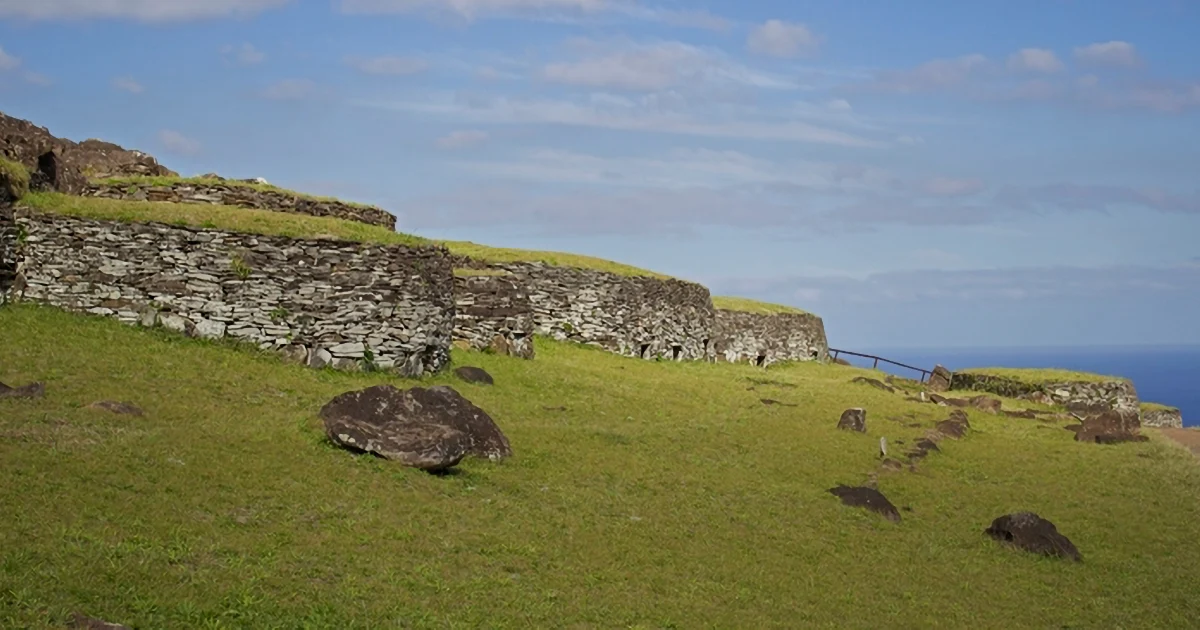
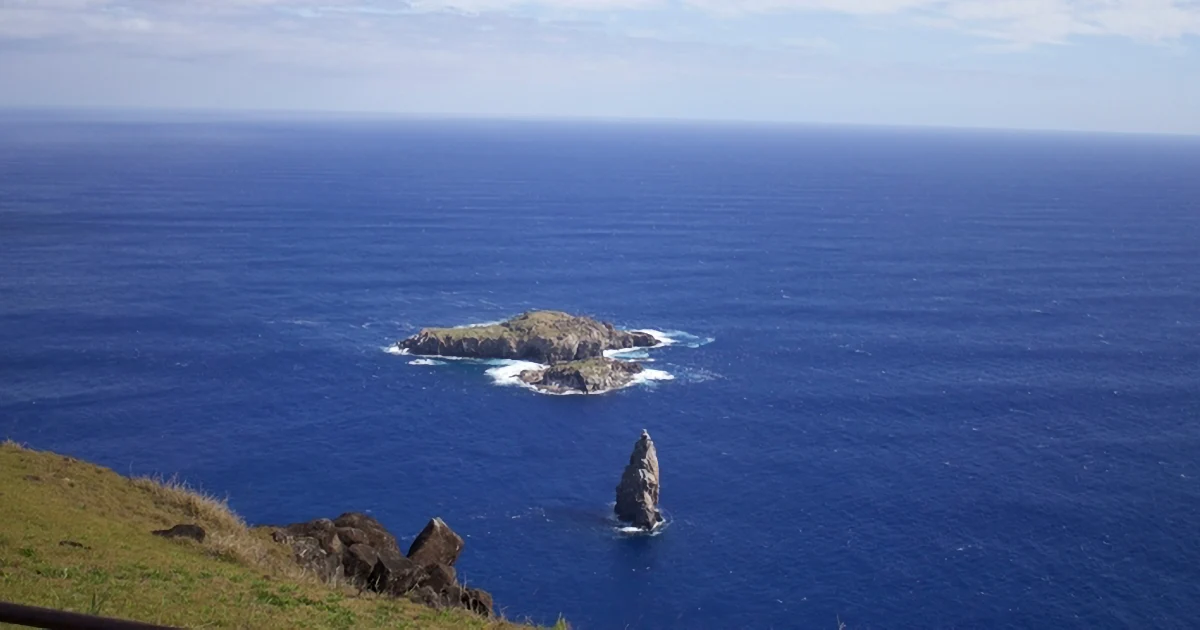
The bird-man cult, who worshiped Make-Make, their god of creation, had an annual ritual competition to see who could gather the egg of the Sooty tern from Moto Nui, a smaller island just off Easter Island. The winner of the competition was known as the Tangata-Manu, was considered sacred, and spent the next year in seclusion.
Ahu Akivi
Then we drove over to see Ahu Akivi, a group of moai who face outward toward the sea. We really liked the set of moai at Ahu Akivi We can't explain why, exactly, but this group felt a little more austere.
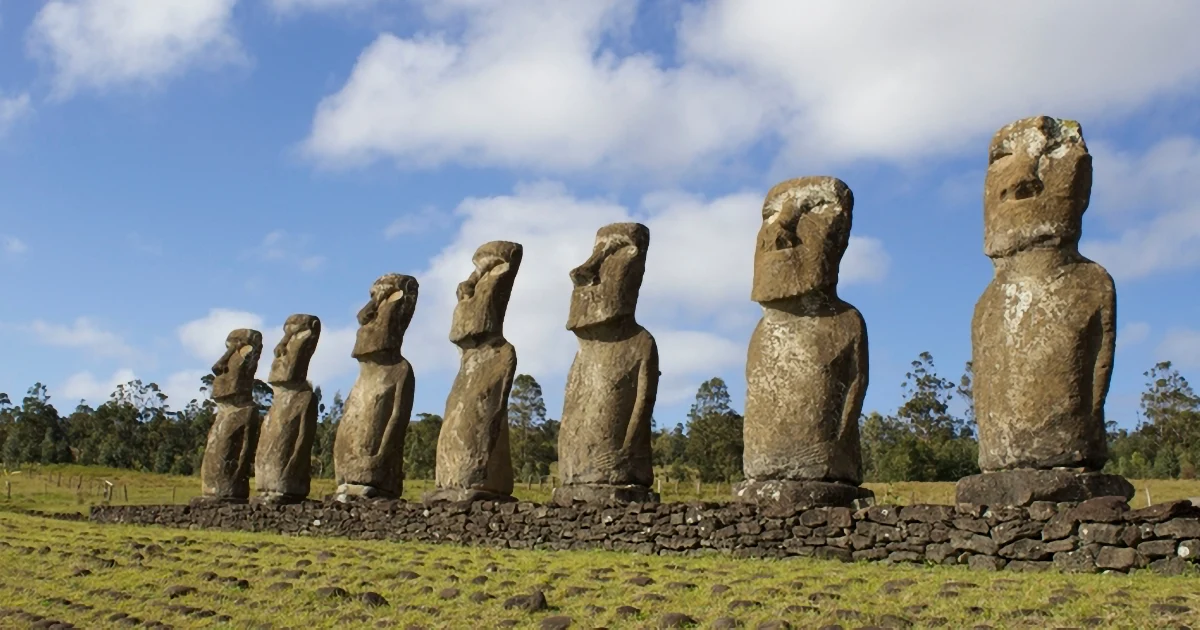
Maybe it was that they looked at the ocean, or maybe it was that they were a little further inland than many of the other moai. But whatever the reason, these are definitely worth seeing.
Also worth noting, the vendors here had some of the best crafted jewelry and replica statues we'd seen so far.
Before heading back to dinner, we made a brief stop to take a look at Puna Pau, where the red scoria that was used for the pukao was quarried.
We ate dinner at Haka Honu, a (now closed) restaurant Tiere recommended. It was pretty good, but pricey — a hamburger cost $22.
Leaving Easter Island from Mataveri International Airport
When it was time to leave Easter Island, we packed up and took a shuttle to the tiny Mataveri International Airport.
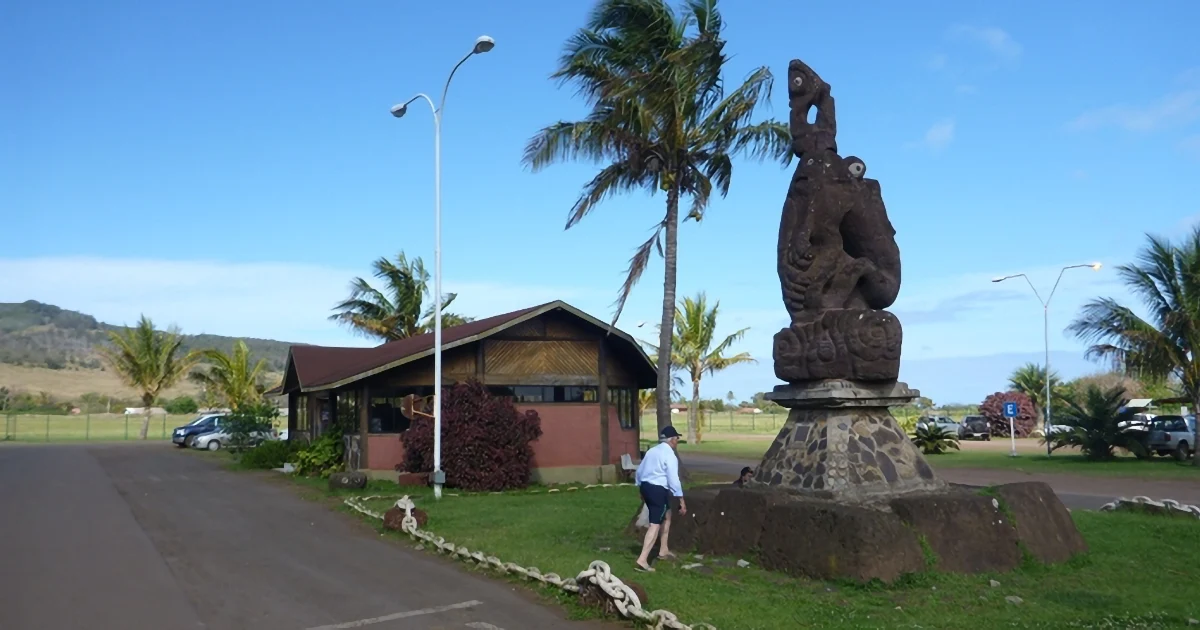
Fun Fact: The airport's runway was extended in 1987 as a possible abort landing site for the space shuttle. The shuttle never landed here, but there's an old NASA outpost on the island that Tiere showed us.
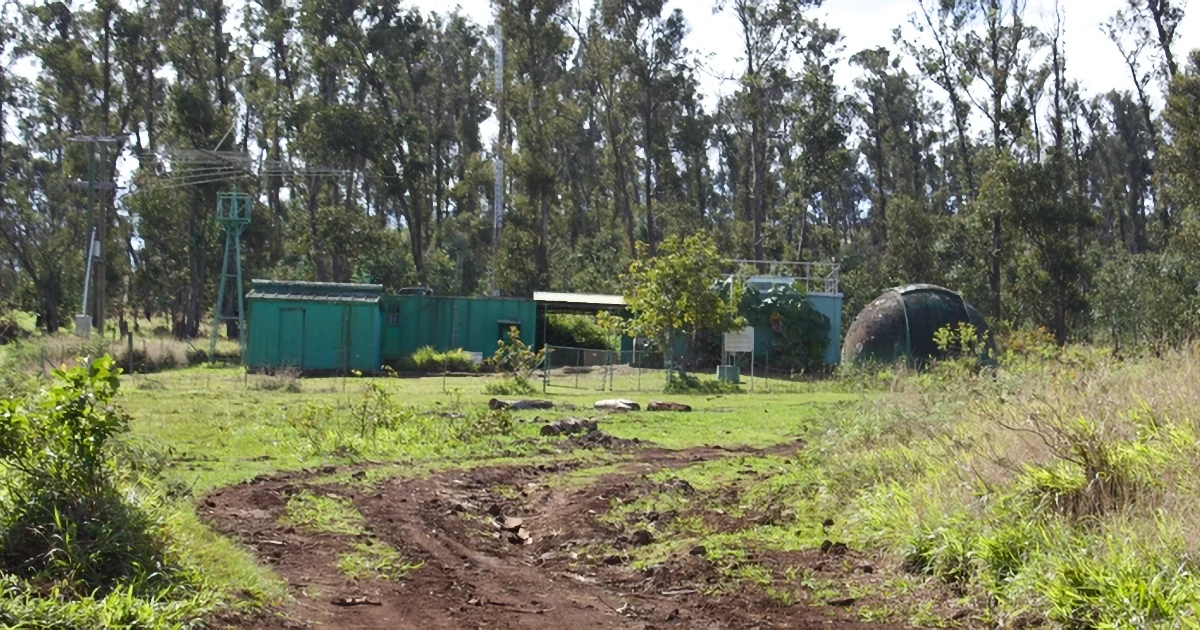
And Lee Correy wrote a book about the possibility of a forced landing on Easter Island in 1981. It was originally a four-part serial published in Analog Magazine in 1980-1981.
Taking on the World is an Amazon Associate and earns from qualifying purchases.
Visiting Easter Island
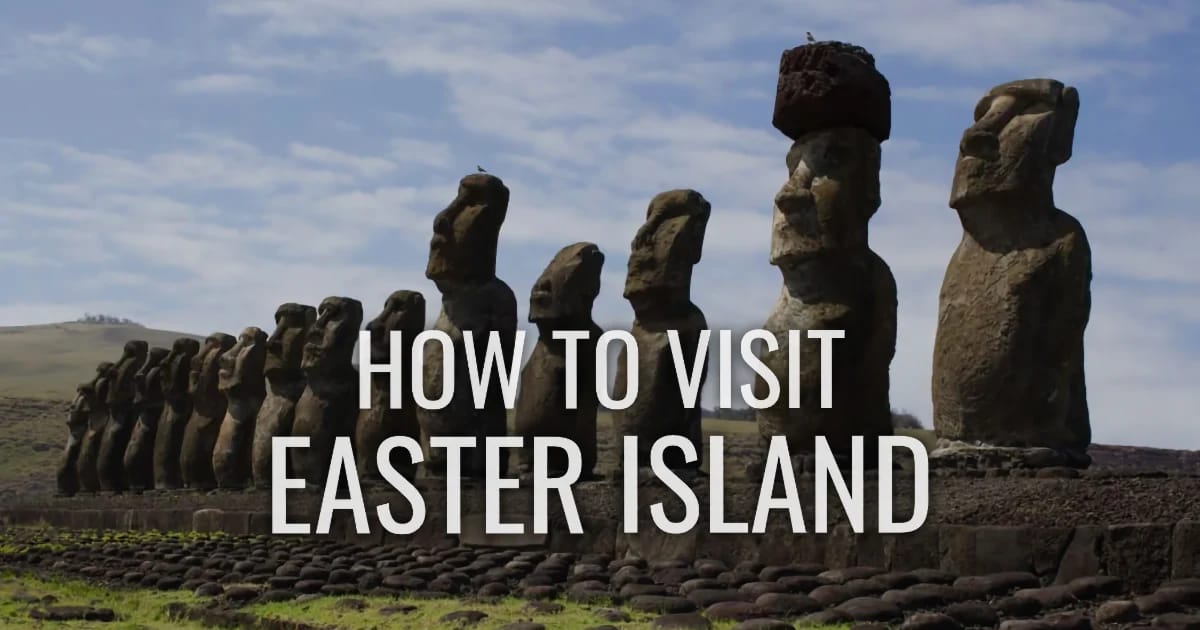
It's really hard to see everything there is to see on Easter Island in one day. If you were motivated, planned well, and moved fast, you could do it. But we think it would be much more enjoyable to take your time when visiting the moai. They're really quite awe-inspiring and deserve some of your time.
Header Image: Tongariki on Easter Island. Image from the author's collection.