Sacred Monkey Forest
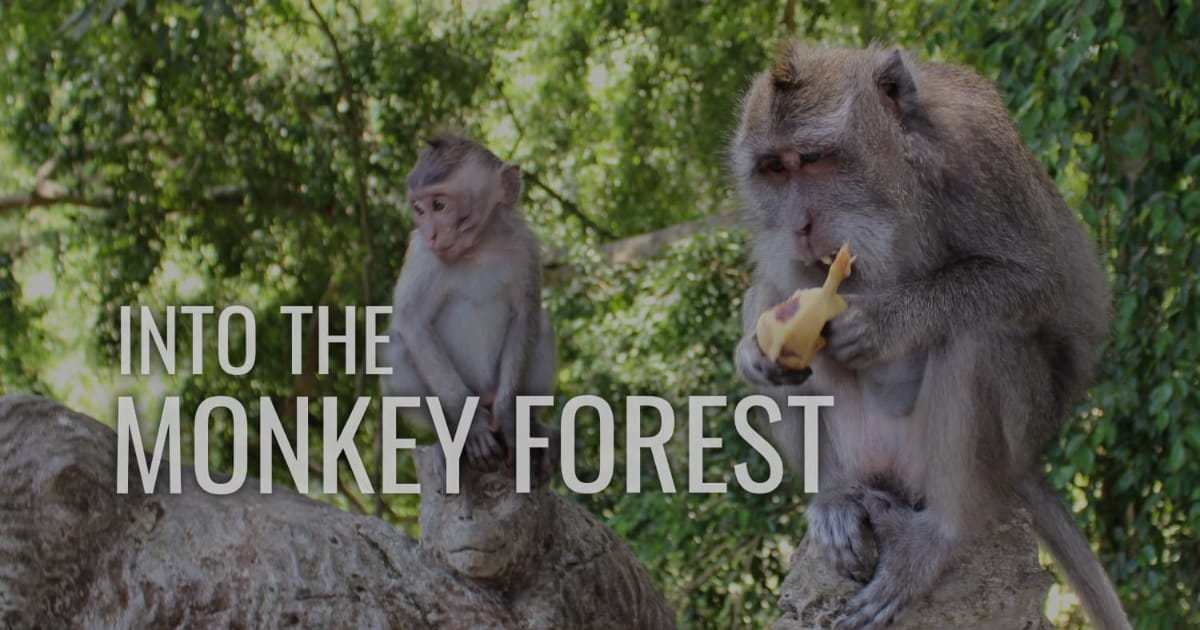
For a different monkey experience, check out our harrowing visit to Bali's Sacred Monkey Forest.
Read More
Despite the the early hour we arrived at the Albrook Bus Terminal, the place was bustling. We retrieved our luggage quickly and headed toward the bathroom. We needed a quarter (U.S. or Panamanian) to get into the bathrooms. But, coming from Costa Rica, the only coins we had were colónes.
The official currency of Panama is the Balboa, but it has the exact same value and size as U.S. currency — and all the Panamanian ATMs dispense dollars. While we were there, we never saw any paper Balboas, only coins.
Fortunately, I still had a few U.S. dollar notes, so I bought a bag of peanuts from a vending machine for 25 cents and got three bathroom admissions in return.
After being chased out of the bus terminal waiting area (for waiting, oddly enough) we moved to the food court. The options were limited and very Norteamericano: Burger King, Dairy Queen, KFC, Pizza Hut, McDonald's, Dunkin' Donuts. Despite this, and despite the dollar being the unit of currency, we found Panama to not be all that friendly to American tourists. This wasn't an outward hostility, just an overall disdain.
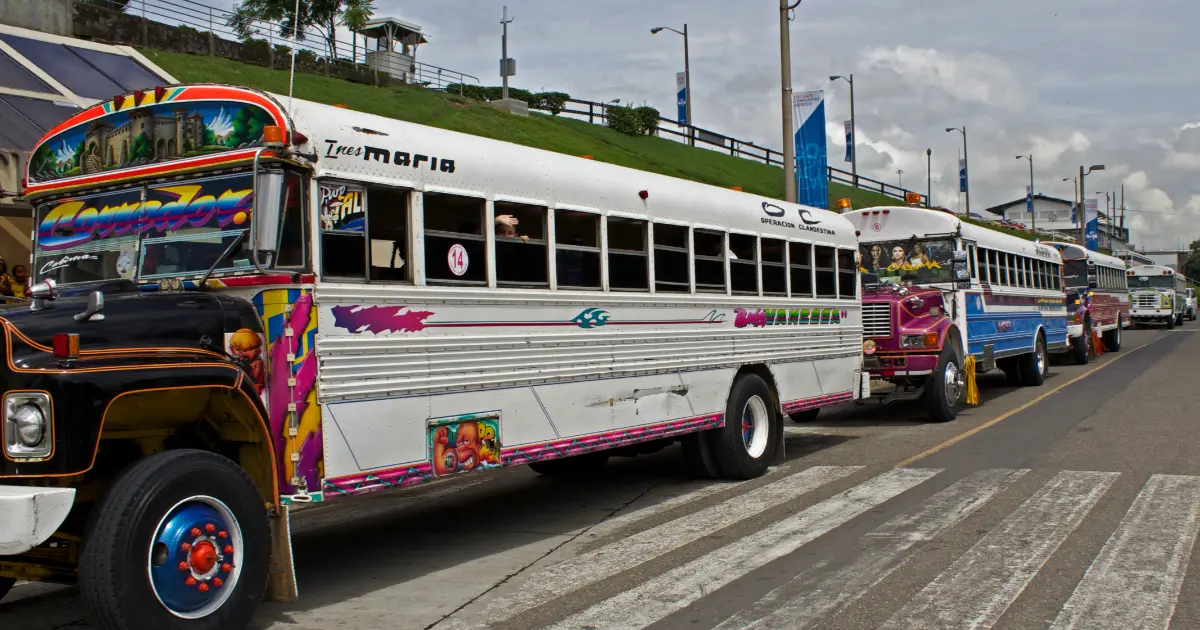
We sat (well, loitered, really) in the court until 8:30 when it was time to meet our tour guide. As we waited in the main concourse, we watched the colorful Panamanian buses drive in and out of the terminal, honking, showing off their fancy bus designs, and in general trying to drum up business.
Soon enough our tour guide found us and we headed off to the Miraflores Locks, part of the Panama Canal.
We got to the locks there just in time to see a ship, the Panamax ship Box Queen (she's now been decommissioned) pass through the Miraflores Locks from the Pacific side.
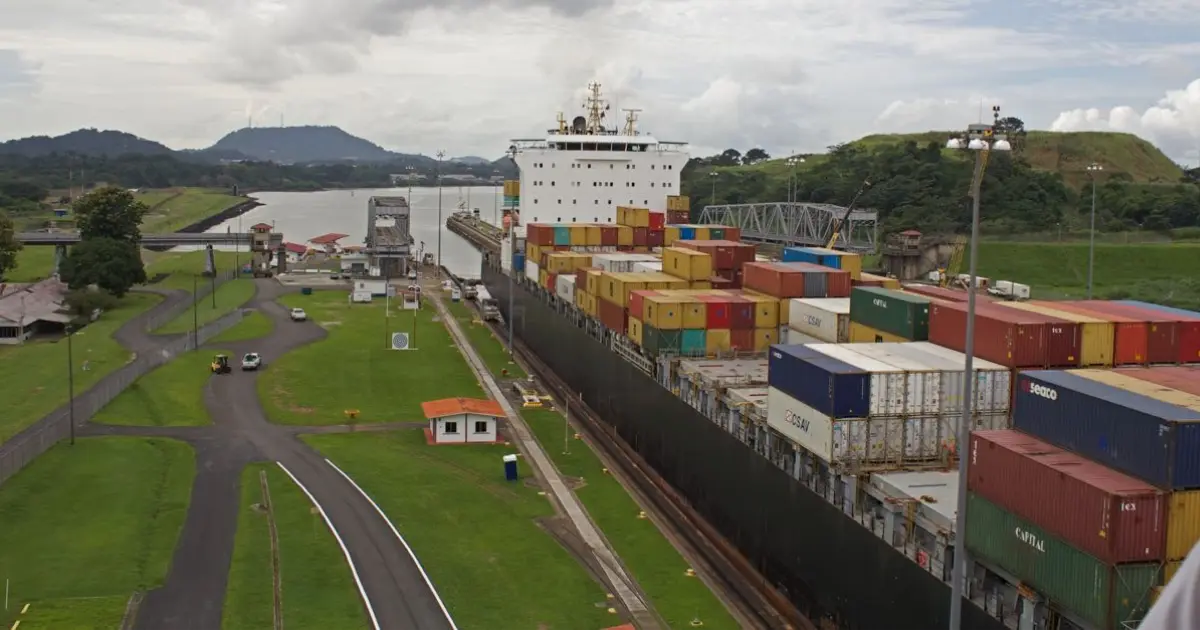
As a ship passes through the canal, each lock (there are three sets per side) fills with 26 million gallons of water that flows in from nearby Lake Gatún. This happens in the time it takes to fill a bathtub.
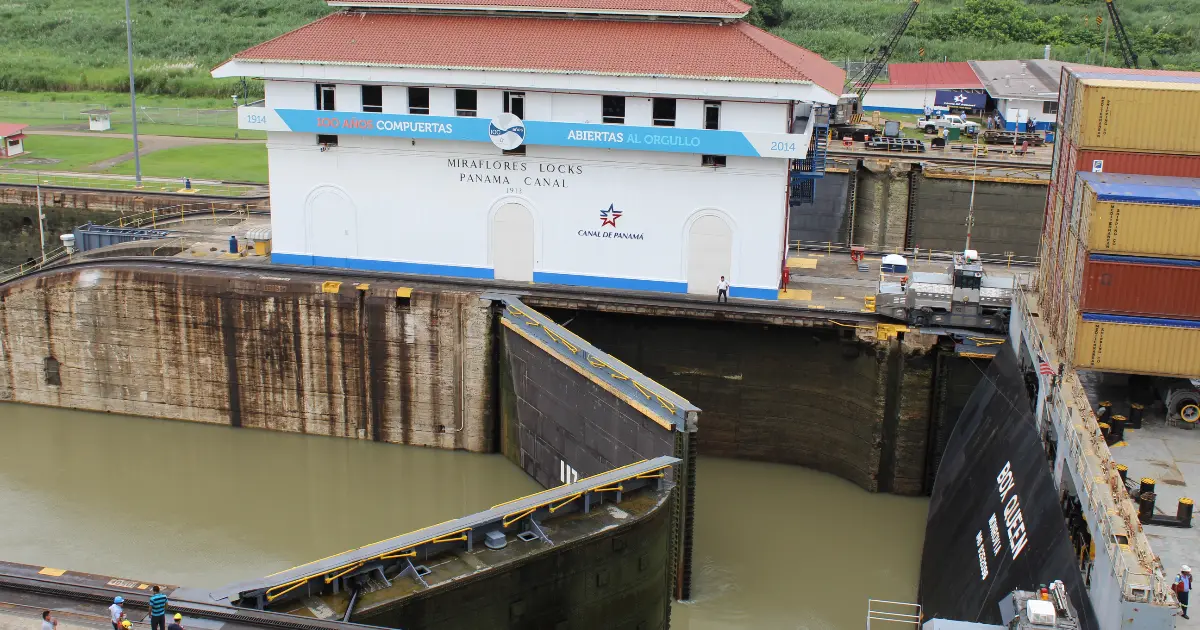
The locks are 110 feet wide, and the Box Queen had a mere 2 feet of clearance on each side as she moved through. To help keep her from sliding sideways and banging into the locks, she was held in place with the assistance of "mules," a pair of electric locomotives that move on rails along with the ship. They're called mules because this job used to be done by living mules.
It takes a ship between eight to 10 hours to pass through the locks, and only one ship can go at a time. This means that ships have to stop and wait in the ocean until their spot opens up. Some ships can wait up to 48 hours before they’re granted entry. Depending on the weight of their cargo, it costs ships between $200,000 and $500,000 in cash (wire transfer, really) before they can enter the locks.
The big talk at the time was about the new locks, which will allow for larger ships and faster crossings. These were supposed to have opened in time for the canal’s 100th anniversary on 16 August 2014 (a few weeks before we visited). But turns out it’s a lot of work moving that much earth, and the opening date didn't happen until on 26 June 2016.
After visiting the Canal, we toured Casco Viejo, the old part of Panama City. At the time of our visit, it was going under some serious renovation — the whole district is a mix of old, crumbling buildings and new, hip businesses.
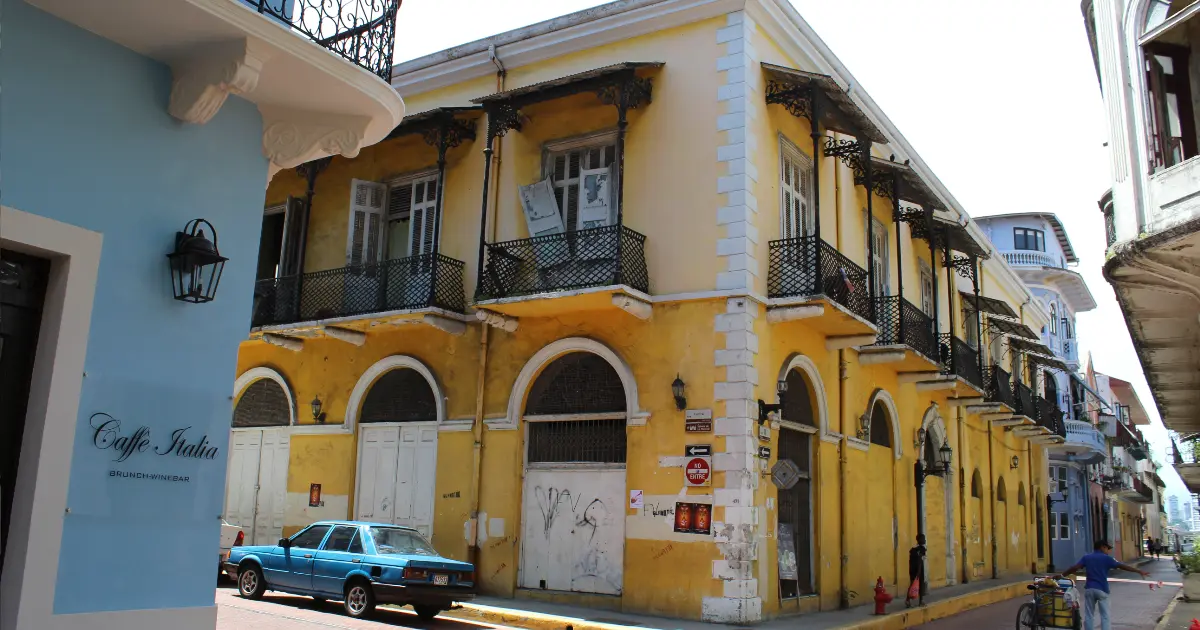
The central government is in Casco Viejo, and there were many state police in the area. You could tell them apart from the tourist police by their burgundy berets.
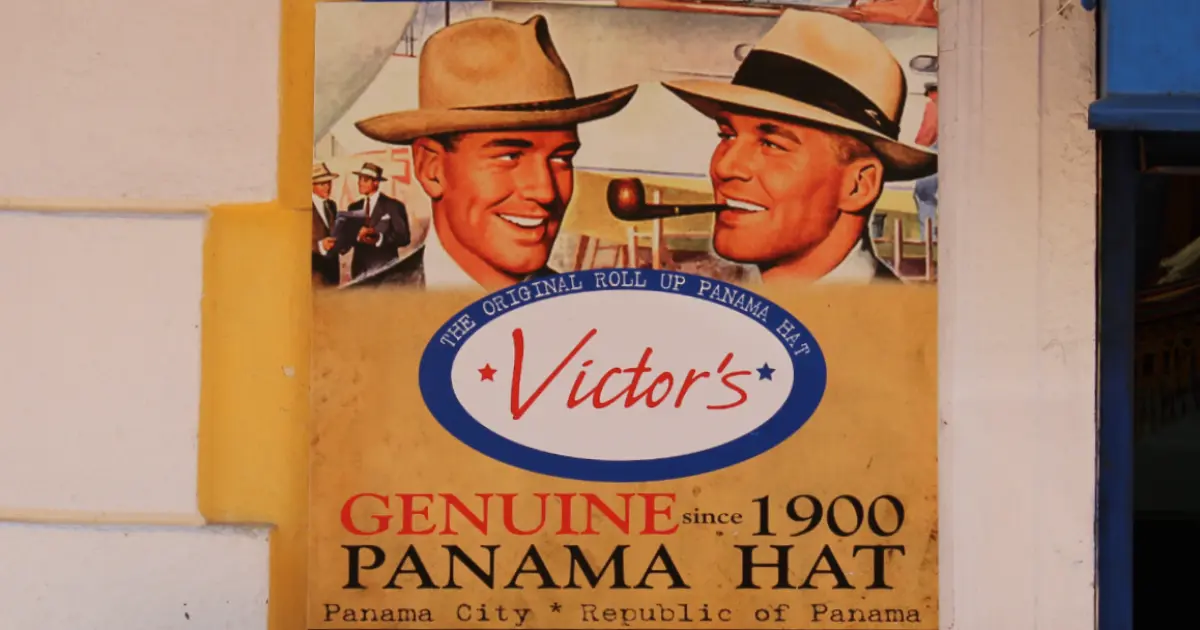
Of course you can't talk about Panama without talking about Panama Hats, which are actually Ecuadorian in design. But they're everywhere. And as far as we could tell, only tourists wore them.
The next day, after a frustrating taxi ride (because Panamanian taxi drivers don't use meters ... you have to haggle for the price in advance ... I got this fellow down to $5) we visited the seafood market near Casco Viejo.
This place is indeed a market full of seafood. It was very busy and loaded with fresh seafood of all sorts: octopus, shrimp, lobster, all sorts of fish, and many other creatures of the sea.
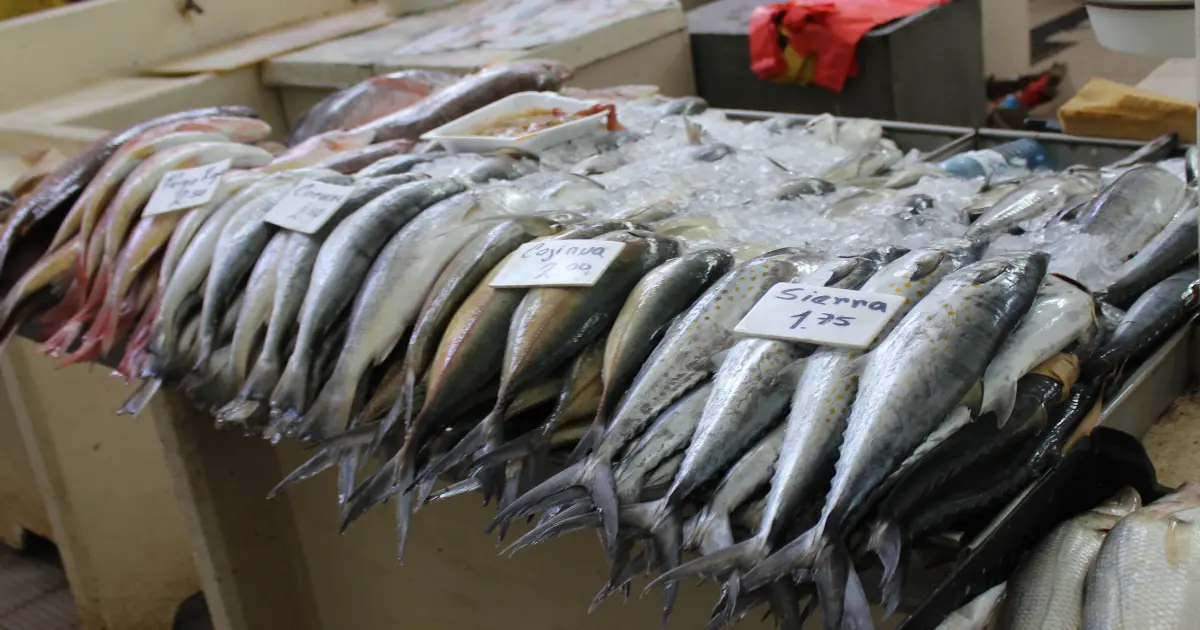
We decided to try one of the many restaurants selling fish adjacent to the market. We ordered some fried fish with plantains, and that's exactly what we got.
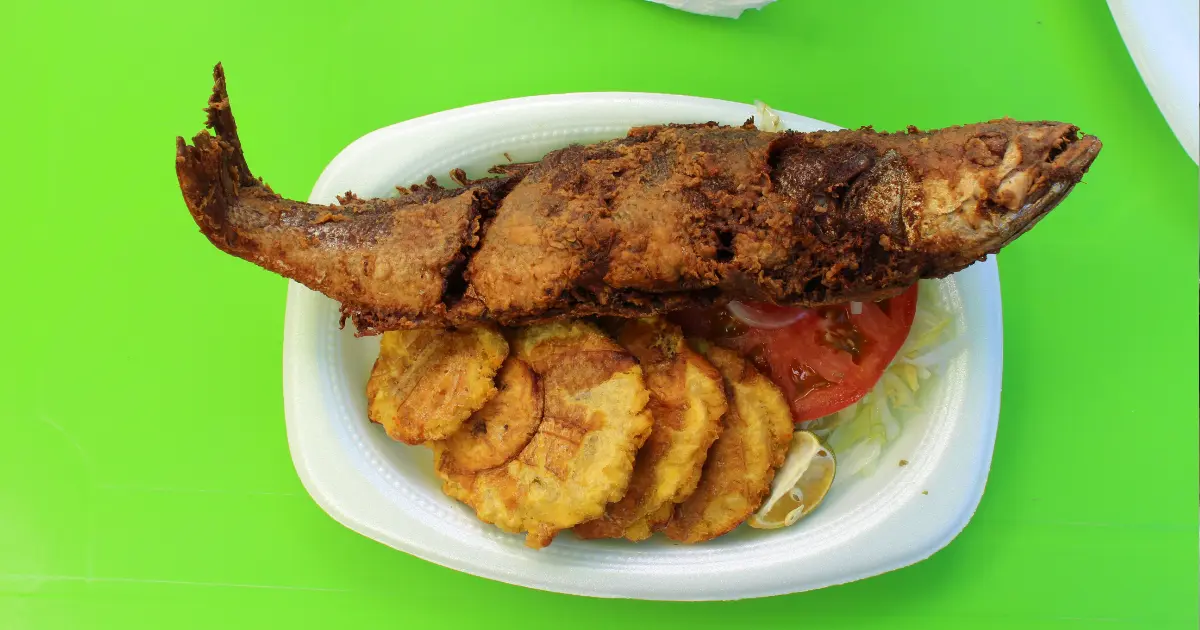
While we ate our lunch, some guy wearing a “Not in My Town Scumbag” T-shirt walked from table to table selling Colgate (yes, the toothpaste) and decorated Bowie-style knives to restaurant-goers. It seemed an odd combination.
After lunch we had plans to visit Panamá Viejo, the ruins of the first old city that was destroyed when the dread pirate Captain Morgan (you might know him best as the spiced rum guy) sacked the city in 1671.
We hopped in a cab, negotiated down to $15 (which seemed a little high after that morning’s $5) and drove across town to Panamá Viejo, a UNESCO World Heritage site with the unwieldy name of the Archaeological Site of Panamá Viejo and Historic District of Panamá.
At least it was in 2014. Now it like now it's been folded (as of 2025) into The Colonial Transisthmian Route of Panamá. This change seems to be a result to the fact that Panama's high-rise tower developments sully the skyline views from the historical sites, as well as newer development happening close to Panamá Viejo. Anyway, it's still a UNESCO World Heritage site, just not quite as implicitly as when we visited in 2014.
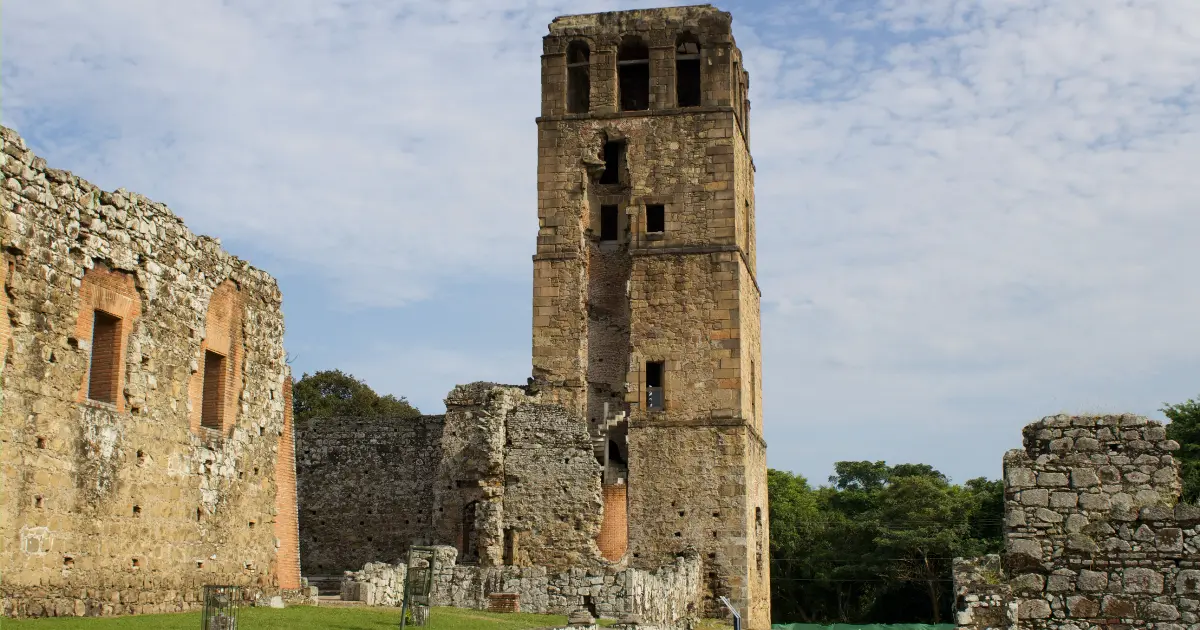
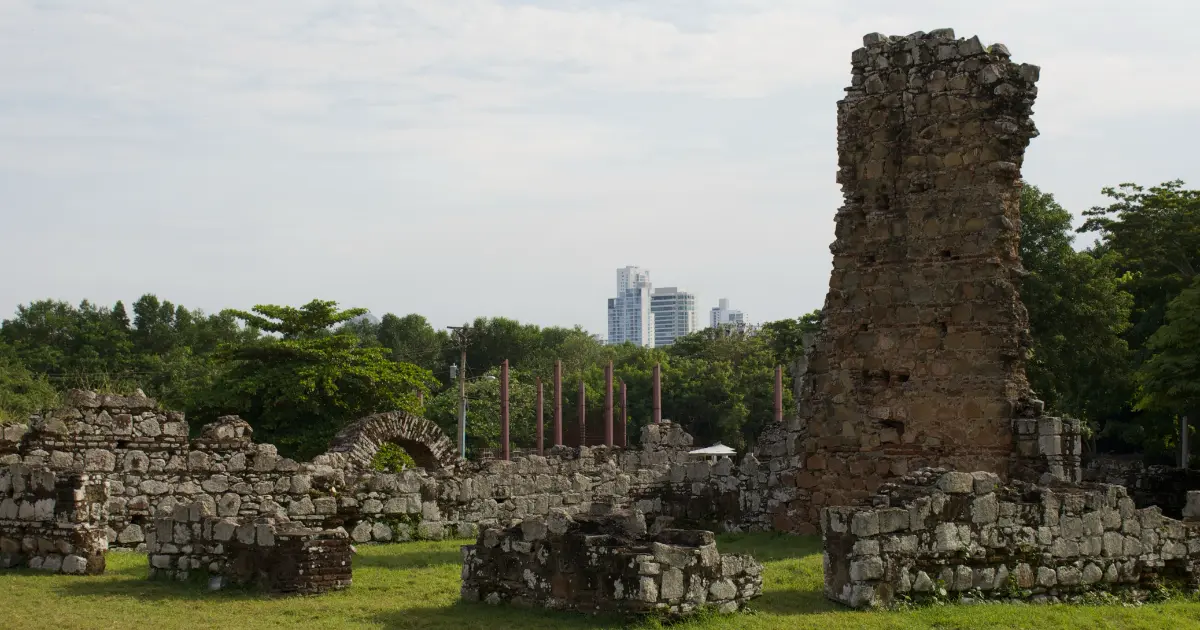
We climbed up to the top of the city hall and look out over the old city. It was really cool to see the old, ruined buildings with the new high rise towers of the new city in the background.
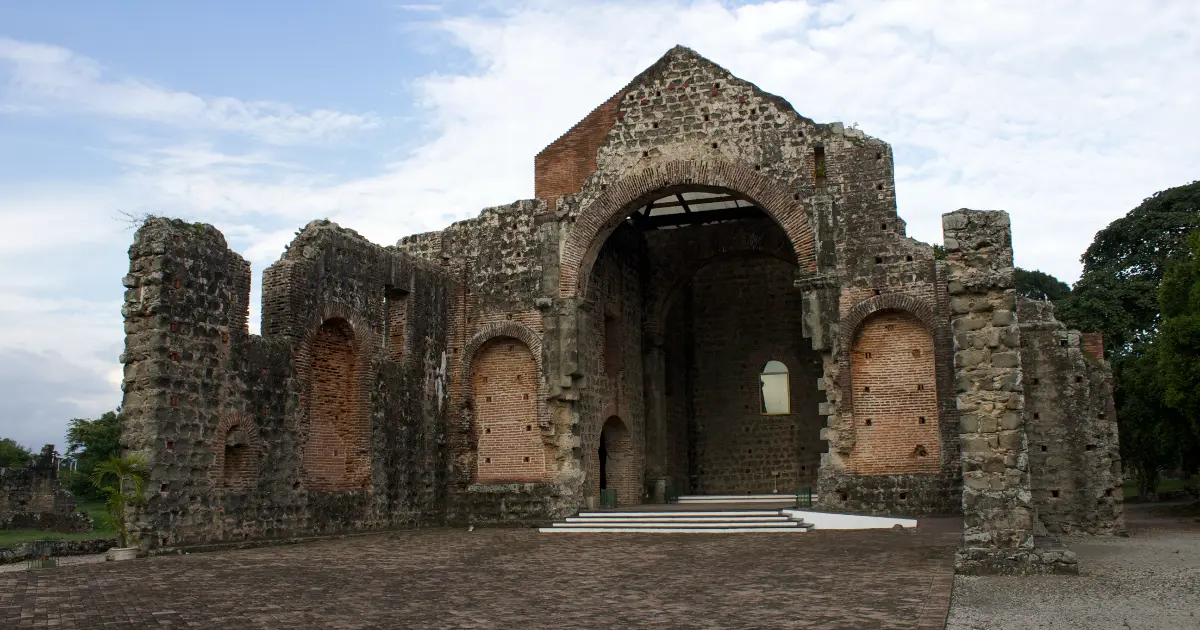
We explored the ruins as far as the Convent of the Order of the Immaculate Conception, one of the largest (somewhat) intact buildings on the site, then we turned around and walked back to the beginning.
Before heading back to the apartment, we decided to pick up some ingredients to make some dinner at home, so we stopped in at the local Supermercado Riba Smith.
It was pretty much like any market we'd been to in the U.S. with a few differences. For instance, if you wanted to buy fresh fruit or vegetables, there was one employee who stood by a scale and weighed everything and put a price tag on it. The line to get our clove of garlic and two plums was really long.
Another weird thing: the carts. After you put all your goodies on the conveyor belt, instead of pulling your cart through with you, you push it back into the aisle behind you. An employee would come and take them away, but usually before this happened a good number of carts would build up in the aisle, blocking the entrance to the checkout stand.
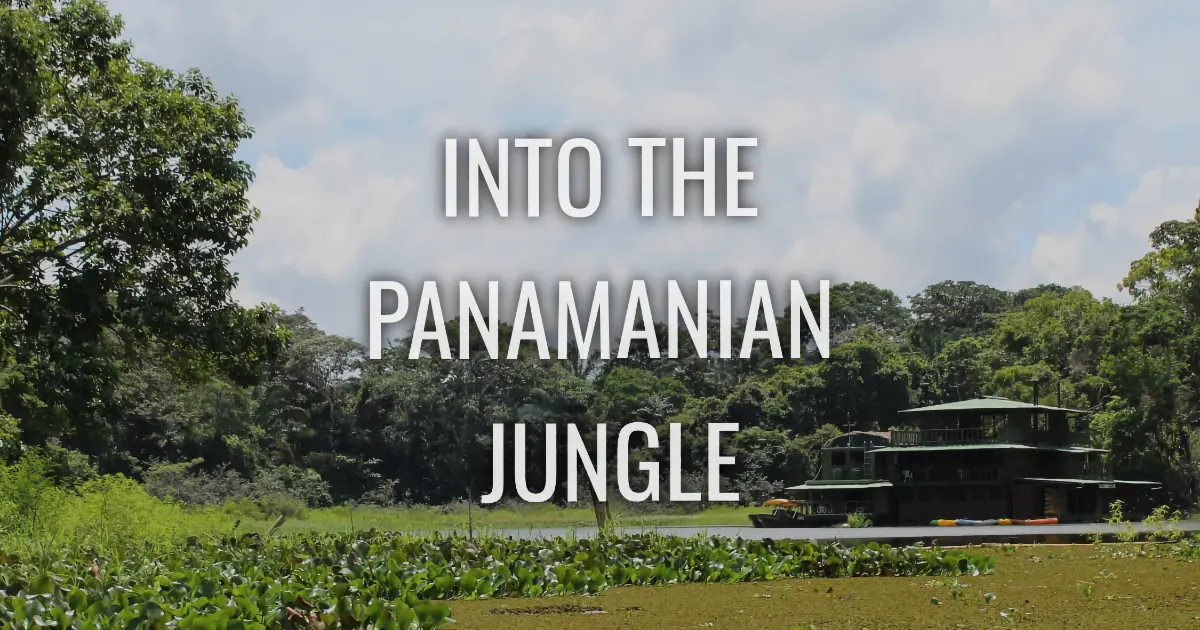
We hadn't really planned Panama all that well. We had one more day to spend there and we'd already hit the highlights. We weren't sure what to do, until we found out about Jungleland Panama, a tour across Lake Gatún and deep into the Panamanian Jungle.
The next day we caught the Jungleland shuttle bus promptly at 8:00 a.m. We picked up a few other people along the way — a couple from Montreal, a long-distance couple (he was from Brazil, she lived in the U.S.), and then a group of four friends from different places who were traveling together (they weren’t on time; it was pretty apparent they’d had a good time the night before).
Then we drove about an hour to Gamboa, where we got out and met Captain Carl. He turned out to be quite a character. He told the group to tinkle in the bushes if we had to, but if we didn’t grab a lifejacket and get in the boat.
We sped across Lake Gatún, the body of water that provides all the water that makes the Panama Canal function.
Along the way, Captain Carl showed us where they were digging the new canal and many of the the different types of heavy floating machines that worked on keeping the canal in operation.
He turned the boat off into a side channel along a little island and started yelling “Pablo!” A white-headed capuchin monkey popped out from atop one of the trees and started screeching at us. Captain Carl threw a few peanuts onto the shore and Pablo, reluctantly, left the shelter of his tree, scampered across the beach to grab the treasure, then scurried back.
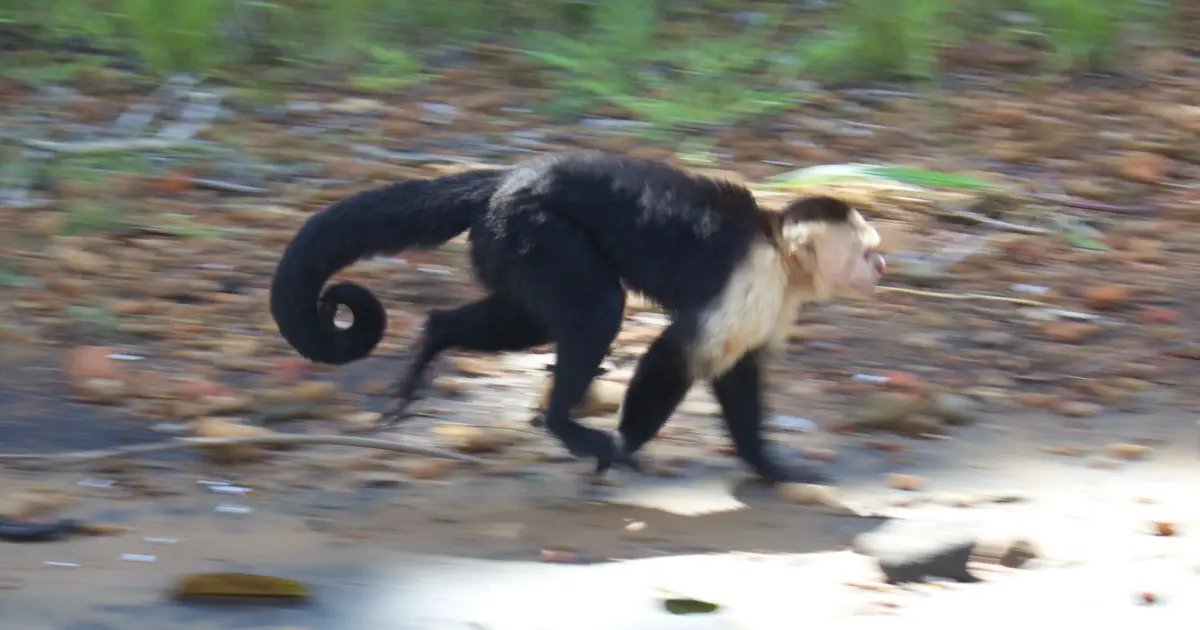
We continued a tour of the canal area. Captain Carl, handed everyone two peanuts. Then he warned us that pirates would try to board as he he pulled the boat up close to shore under some overhanging trees.
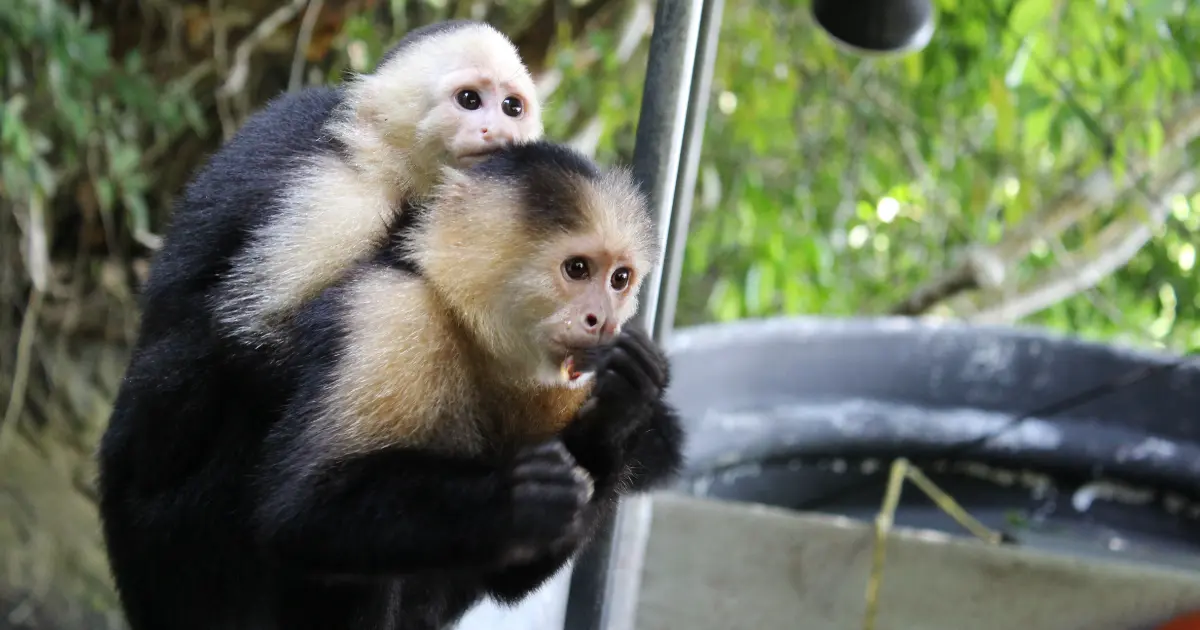
A whole clan of capuchin monkeys came out of the jungle and jumped onto the boat, looking for peanuts. One was a mother with a baby on her back.
For a different monkey experience, check out our harrowing visit to Bali's Sacred Monkey Forest.
Read MoreAfter we were done with the monkeys, we continued the tour around the lake and saw a wide variety of wildlife before speeding along the lake until we got to a narrow outlet.
Captain Carl steered the boat through narrow channels that wound through thick beds of weeds and toward a houseboat lashed to a barge. We had, at last, arrived at Jungleland.
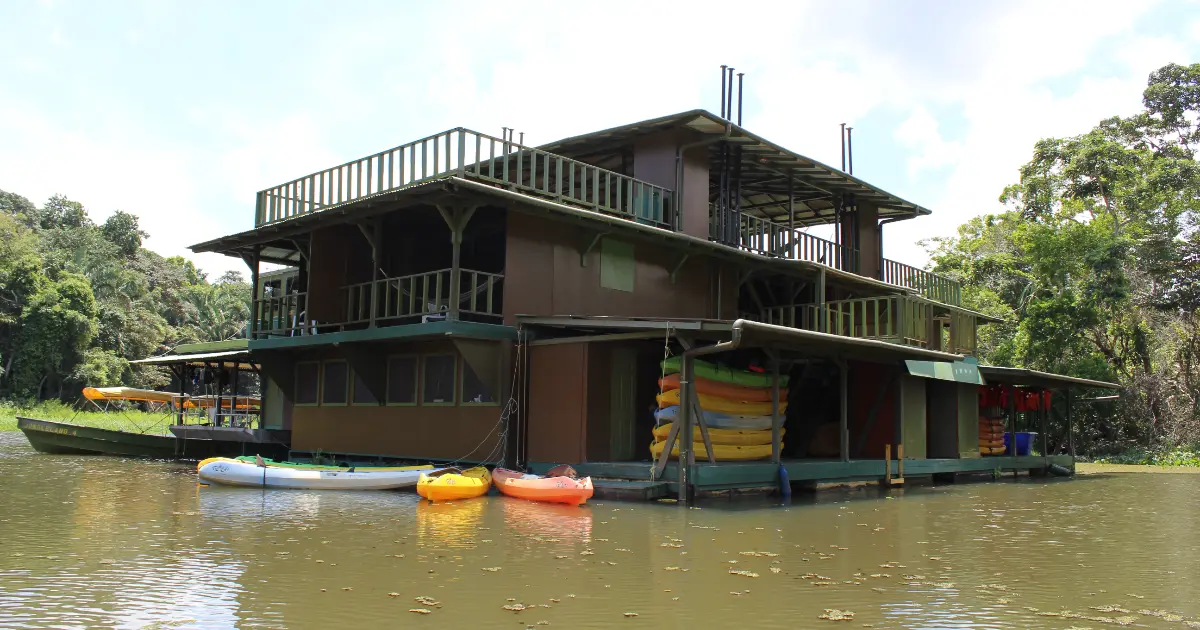
Before we docked, Captain Carl gave us each a piece of banana, and the boat was once again invaded ... this time by rufous-naped tamarins (which were mighty cute).
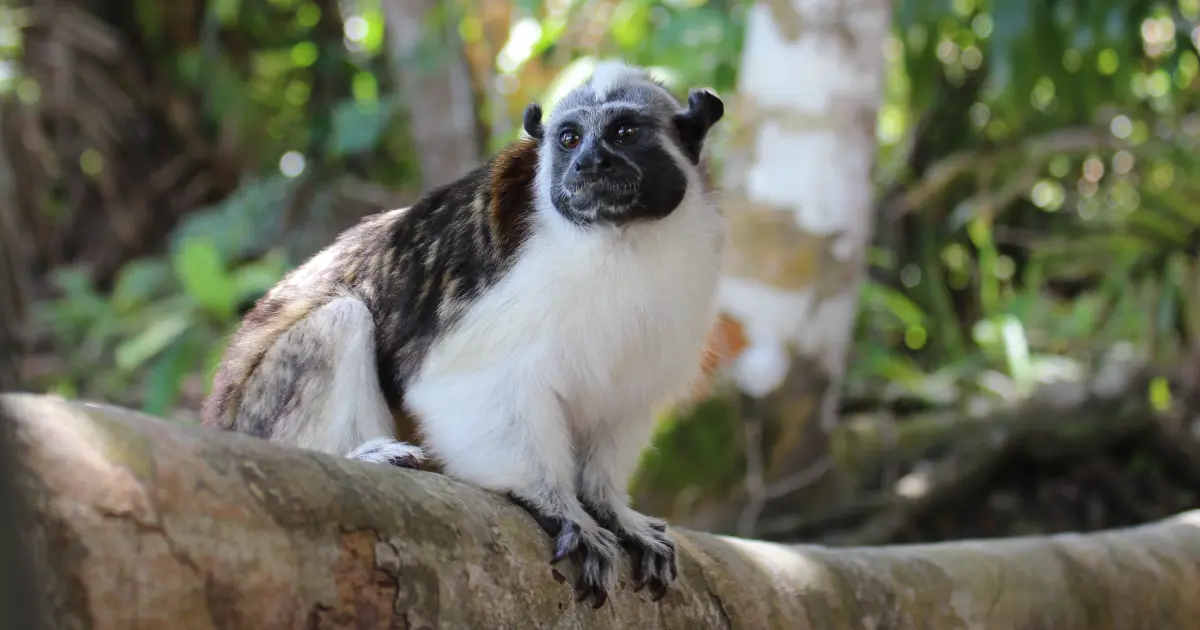
Then we docked, disembarked from the boat, and had lunch, which was, as Captain Carl described, "traditional but bland Panamanian fare."
After lunch, Captain Carl rallied us and we all got into two-person kayaks and paddled across the lagoon where the barge was moored, then across a body of water dense with weeds (it was like paddling in mud), and down a curving stream into the jungle.
We dragged our kayaks up on a narrow spit and hiked about half a kilometer into the jungle along a path. but not before the good captain warned us about the venomous snakes in the area. The trail ended at a small waterfall, about three meters high.
Captain Carl swam across the pool and climbed up the rocks on the far side, then eased down the rocks of the falls, and jumped into the pool. Everyone was invited to jump, so a few of us took him up on the invitation.
After the plunge, we kayaked back to Jungleland, handled a baby crocodile, and lounged on the hammocks there until it was time to take the boat back to Gamboa.
Recounts the events of August 27–30, 2014. Days 8–11 of continuous travel.
► Continue the Journey ► Easter Island
Taking on the World is an Amazon Associate and earns from qualifying purchases.
Header Image: The Panamax Box Queen transiting the Miraflores Locks of the Panama Canal. Image from the author's collection.