
A Devilishly Delightful Island
The flight to Tasmania from Melbourne was only an hour, so for seasoned air travelers like us, it felt like it was over as soon as it started. We'd considered taking the Spirit of Tasmania ferry across the Bass Strait, but flying was actually cheaper (and the boat took 12 hours).
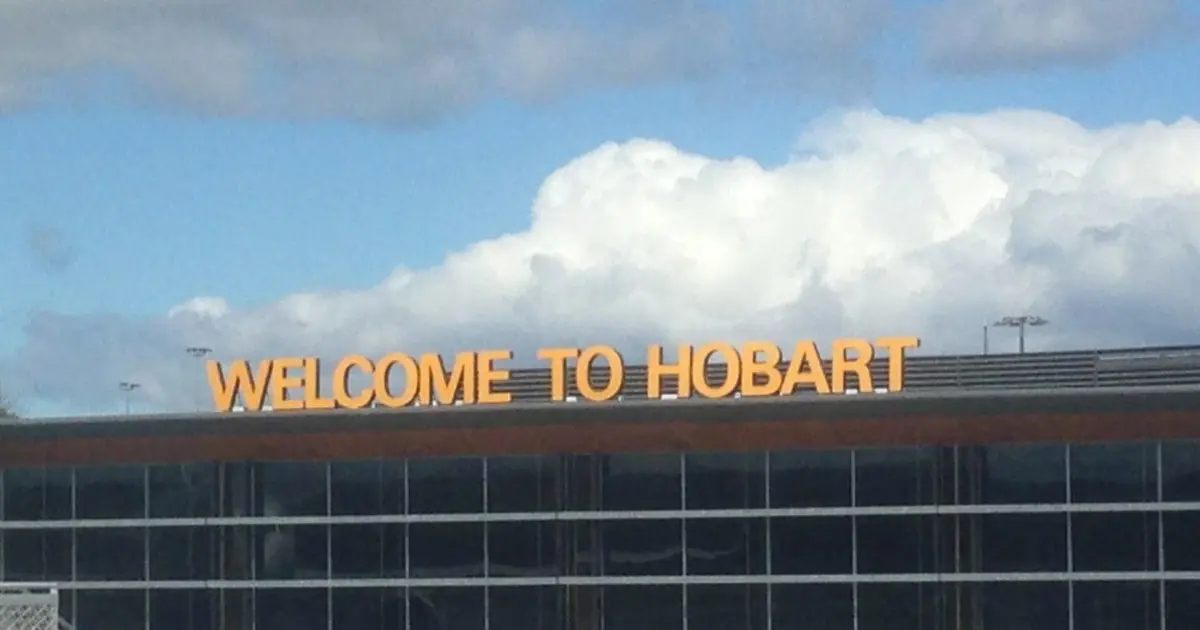
After arriving in Hobart, we checked in to the hotel and got our bearings, only to find that there's not much to do in Hobart on a Sunday night, even when that Sunday is the first day Daylight Savings Time was in effect.
Museum of Old and New Art
We did find one place that was open — the Museum of Old and New Art (MONA), a pet project of Tasmanian gambler millionaire philanthropist David Walsh. It's a groovy, contemporary museum and about the last thing we expected to find in Tasmania.
The tour of the museum starts at the bottom of four levels, and you can either ride down a science-fictiony glass elevator or walk down a circular staircase to the beginning. When we checked in, each of us was given an iPhone on a lanyard that has a red O on it (they called it the o), which was our tour guide. None of the exhibits were labelled. Instead, when you were standing in front of an exhibit, you simply pressed the button on the o to get all manner of information about what you're looking at.
For 2014, it was a reasonably high tech experience. It would be interesting to re-visit and see how the museum operates today.
Cloaca Professional
As you might expect, MONA has a lot of contemporary art installations, including Cloaca Professional by Belgian artist Wim Delvoye, a functioning mechanical replica of the human digestive system. It’s fed twice a day and excretes (yes, indeed it does) once a day. We were lucky (?) enough to be there when it was being fed.
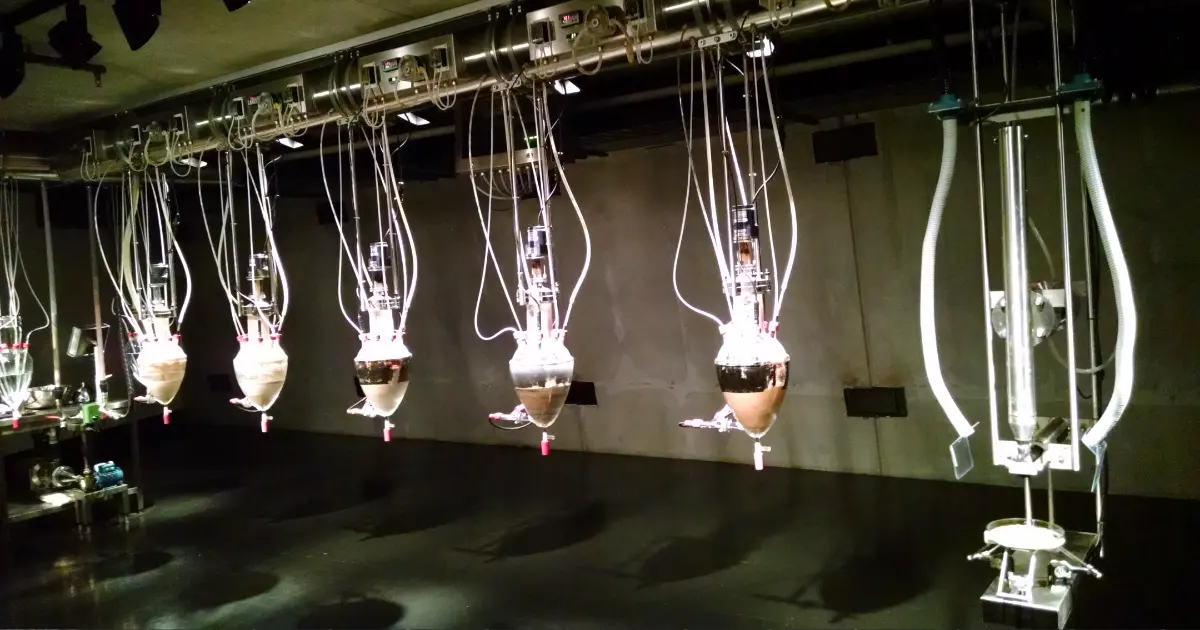
We watched as the guide cut up a burrito and some other bits of food and dropped them into the eating end of Cloaca as he discussed what would be happening as the food passed through the system (and it's pretty much the same thing that happens to food that passes through your system). He even showed us what the poop looks like when it came out of the business end of Cloaca because it was just sitting there, on a petri dish. And yes, the room really smelled bad.
The New Art
Some of the other exhibits at MONA were pretty interesting, as well:
- A room where the lights turn on and off every five seconds
- bit.fall, sheets of cascading, timed water displaying random words from Internet news sites
- Queen: A Portrait of Madonna, a giant wall of 30 televisions stacked up Hollywood Squares style in a sound-dampening room, each featuring a different person all singing Madonna songs a cappella, in unison
- Tell Me a Story, the results of one artist's social experiment of wearing a sign that said "Tell Me a Story, I'll Pay You $1" in downtown Los Angeles
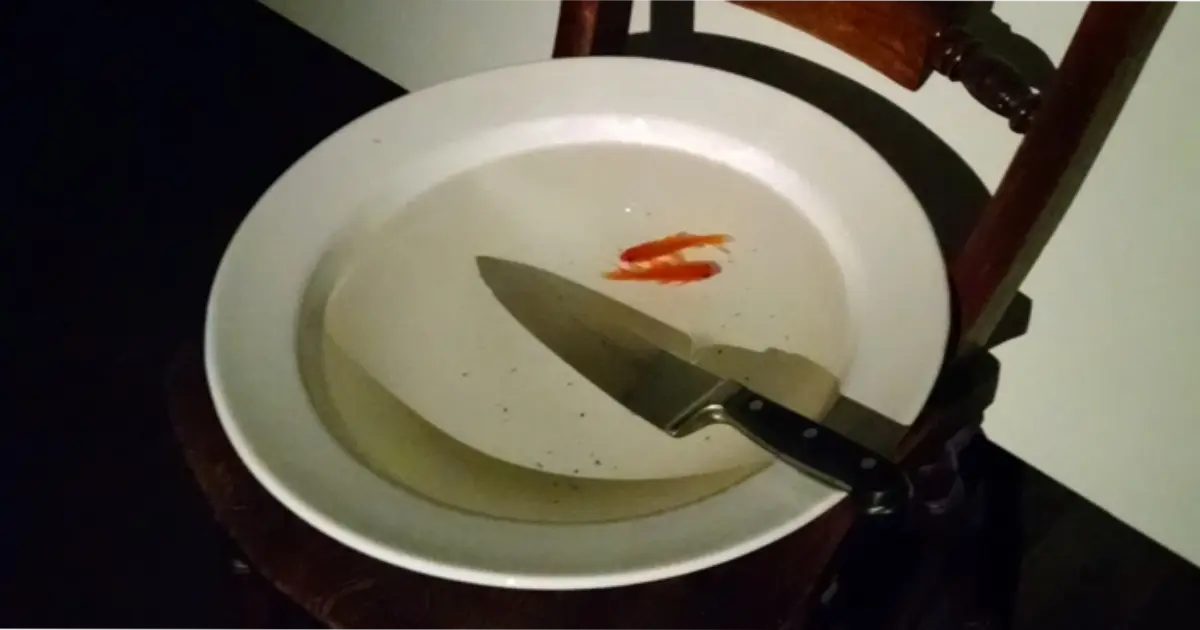
- untitled, a bowl filled with water, two goldfish (living) and a chef's knife, sitting on a chair and illuminated by an overhead light
- A long row of plaster-cast vaginas hanging on the wall (as a bonus, they sell fragrant soap (lavender! jasmine! honeysuckle!) reproductions in the gift shop)
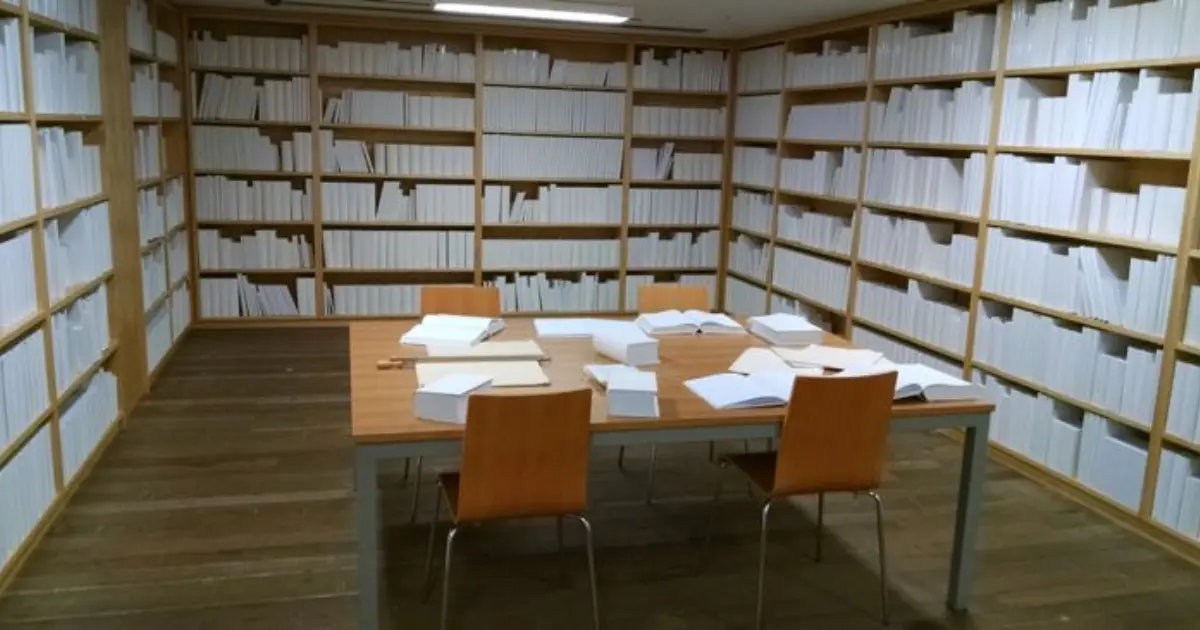
One of our favorite exhibits was also untitled (kind of anyway — artist Wifredo Prieto apparently named it ' '). But it carried the descriptive nickname of White Library, an apt nickname because it was an entire room filled with blank books all bound in stark white covers.
The Old Art
In addition to the contemporary art, there are a few old art pieces (the old in Old and New Art), like a pair of Egyptian sarcophagi and the Death Room, a dark room with stepping stones across a water that lead to a mummy. Only two people at a time are allowed in the exhibit, and the line was long, so we didn't see this one.
Port Arthur
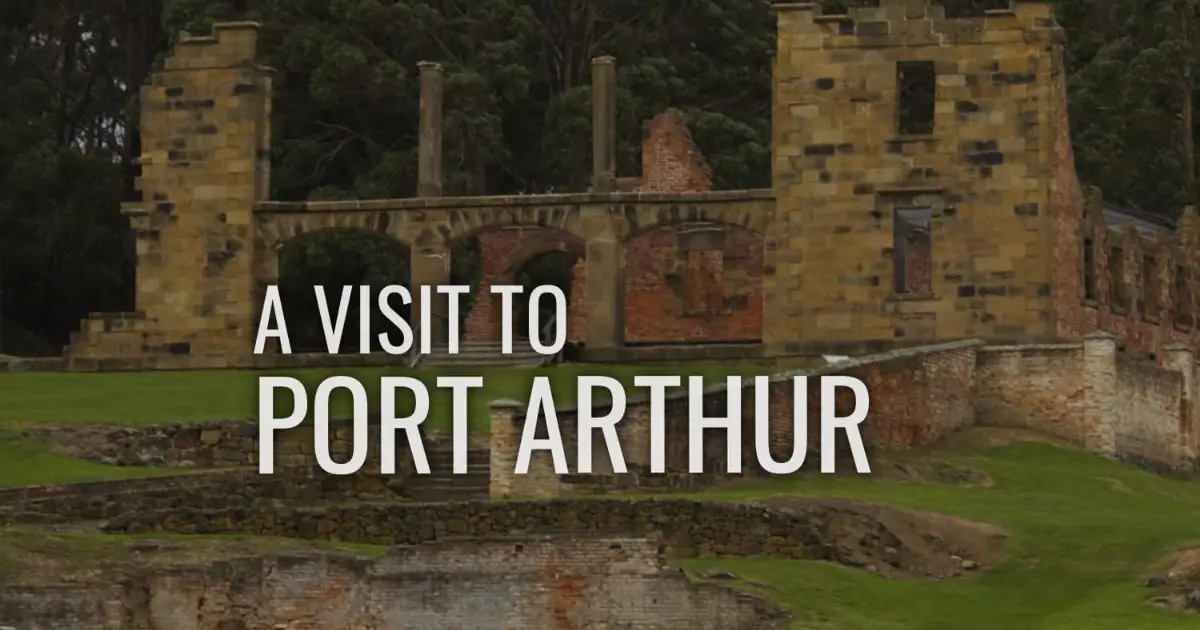
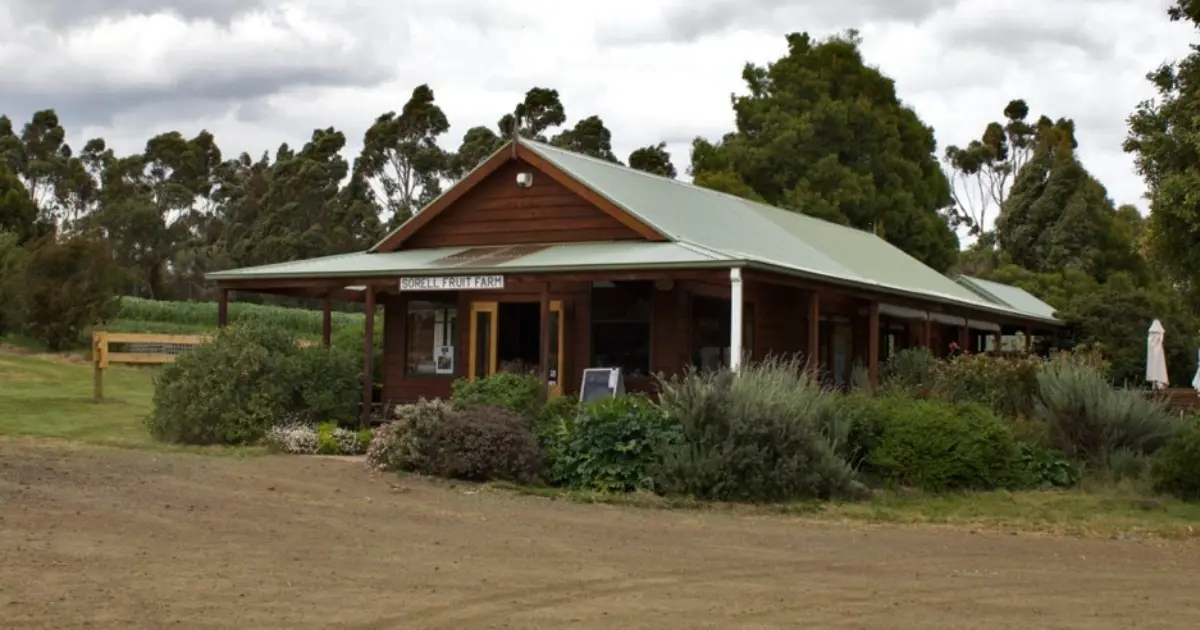
The next day, after a brief morning diversion picking strawberries at the now-closed Sorell Fruit Farm, we made our way down to Port Arthur.
Port Arthur (a UNESCO World Heritage Site as part of the Australian Convict Sites), was a second-offense penal colony (meaning when you screwed up at some other penal colony you got shipped off to Port Arthur) that operated from 1833 to 1877.
It's notable because it's located on a peninsula on the southern end of Tasmania. There were no fences or walls surrounding the grounds; the only way in or out was by boat or across Eaglehawk Neck, a 30-meter-wide isthmus that connects the peninsula to the rest of Tasmania. Back in the day, this area was patrolled by dogs and armed human guards, which made escape challenging.
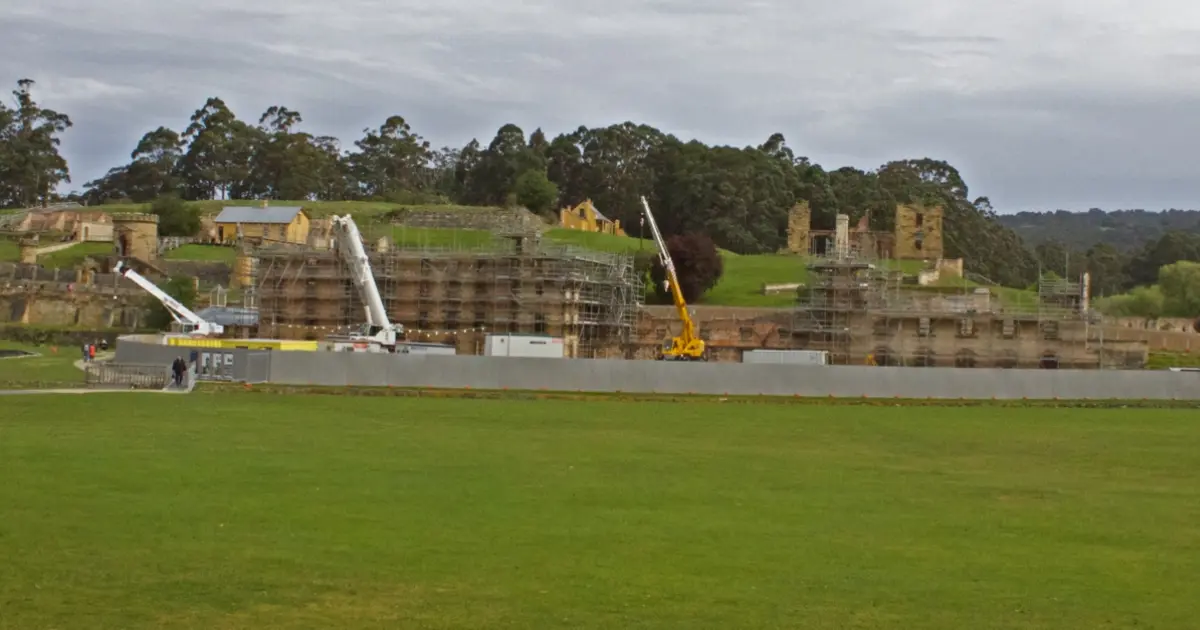
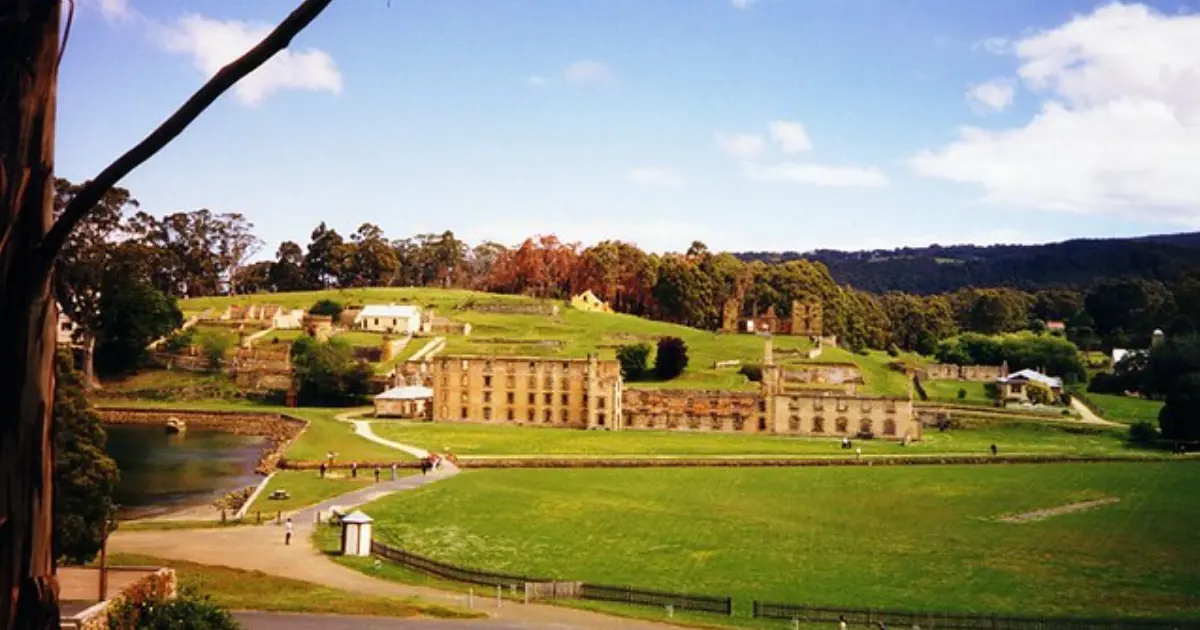
On our visit, the main building was under repair. It had been damaged by salt water during a particularly energetic winter storm a few years prior, and they were reinforcing it. This sort of dampened the photographic allure of the grounds. Other than that, the rest of the place was pretty much like we'd remembered from another visit 15 years before.
What Port Arthur looked like 15 years prior:
We first toured the bay on the free boat, going past the Isle of the Dead (where many convicts were buried), then checked out a few of the buildings, like the Commandant's House, before we headed back to the visitor center for the free walking tour at 4:30 p.m.
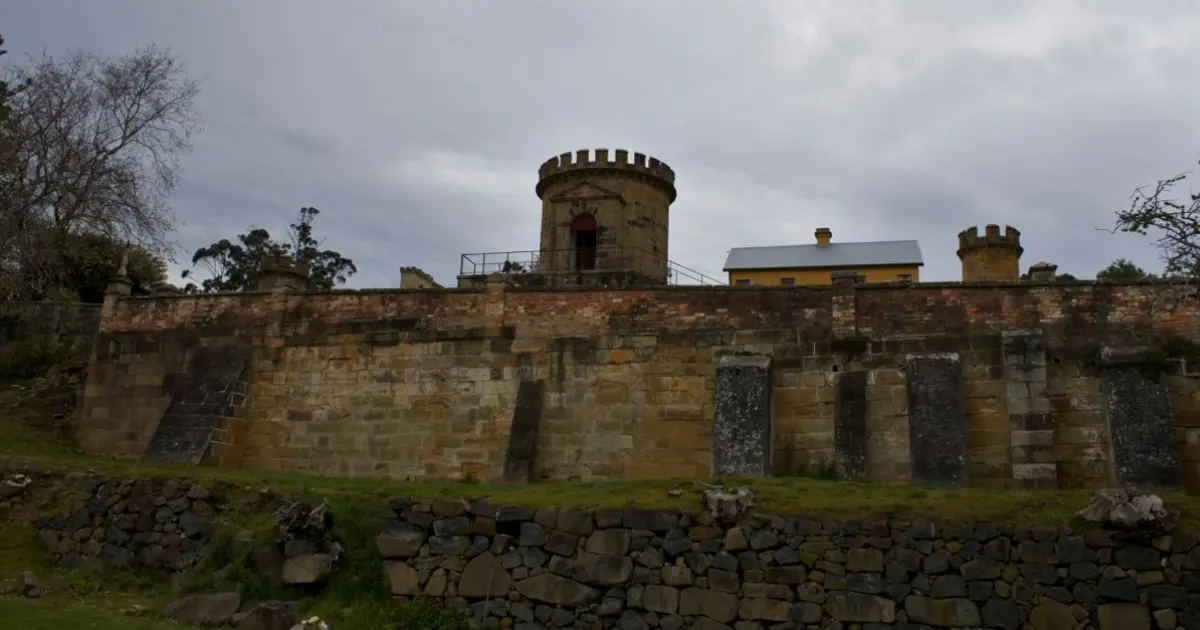
As we met our guide, it started to rain, so we didn't walk around as much as we would have in a less damp situation, but she told us a lot about the history of the place (her father was a ranger here, and she'd grown up near the grounds), talked about what the life of a convict was like, and told us some tales about prisoners who'd escaped or tried to escape.
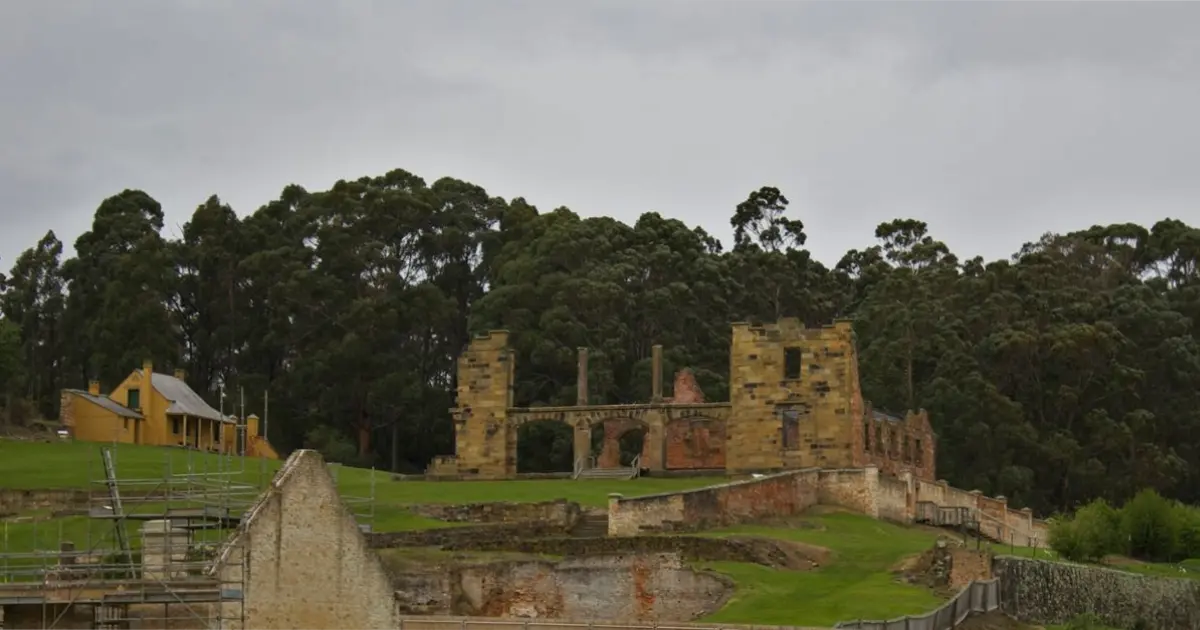
After the tour was over, we walked around for a little bit, but the rain started coming down with more vigor, so we escaped to the dry confines of our car.
A Day in Freycinet
We were staying a few days at Wind Song B&B in Little Swanport, in the delightful (and sadly, closed) bed & breakfast which offered easy access to Freycinet National Park.
On our drive to the park along the Tasman Highway, we passed through the Moulting Lagoon Game Reserve, a large wetland area at the north end of the Great Oyster Bay.
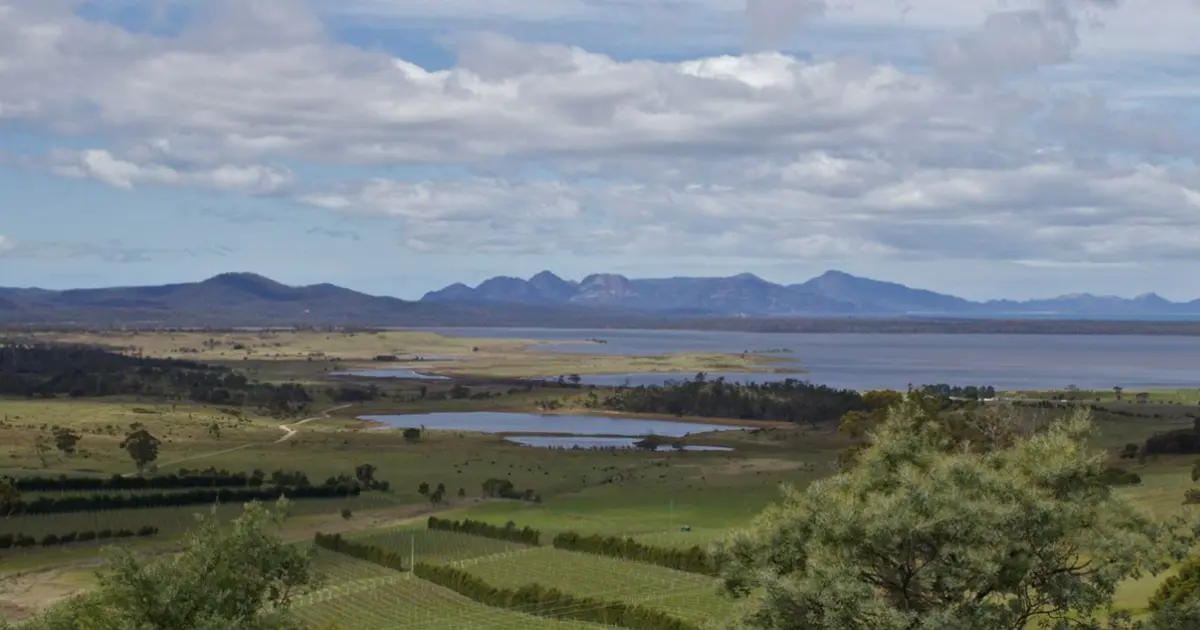
This area is home to a great many waterfowl and a stop-off for migratory birds. As we looked out and read the plaque there, about five other cars pulled in along this narrow turnout. It seemed to be a popular place.
We drove on to the small town of Coles Bay, the last stop before we entered the park to pick up some food from the IGA for a picnic lunch. The hardest part about shopping for groceries here was selecting which chips and candy bars we want to try. There were so many things we'd never seen before. It was a real challenge narrowing down the options.
Freycinet National Park
Freycinet National Park, named by French navigator Louis de Freycinet after himself, occupies most of the Freycinet peninsula (ditto) on the east coast of Tasmania.
We drove deeper into the park, heading toward the Wineglass Bay Lookout car park. Right before we got to the trail head, we saw an echidna just snuffling along at the edge of the forest on the side of the road. We couldn't get out and take a picture because of all the cars around, but it was a cool thing to see, even if all we saw was its butt.
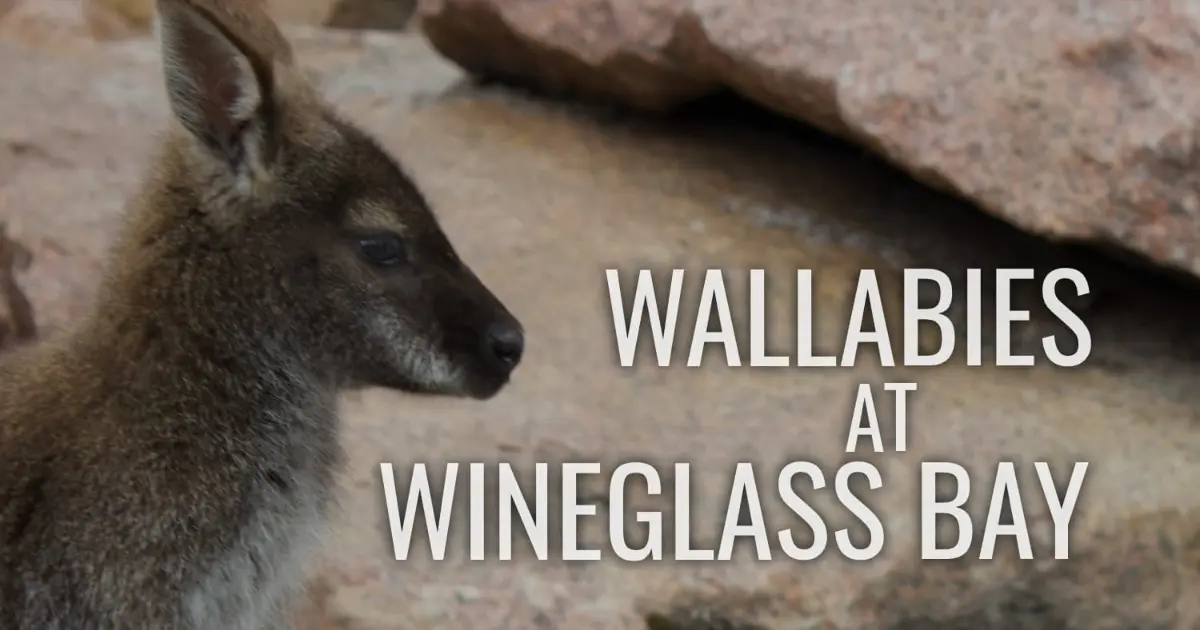
A few moments later, we pulled into the car park ... and this is where the cuteness overload began. This is something of a gathering spot for wallabies. The animals here have become inured to human presence and stand around the car park, being all photogenic and stuff.
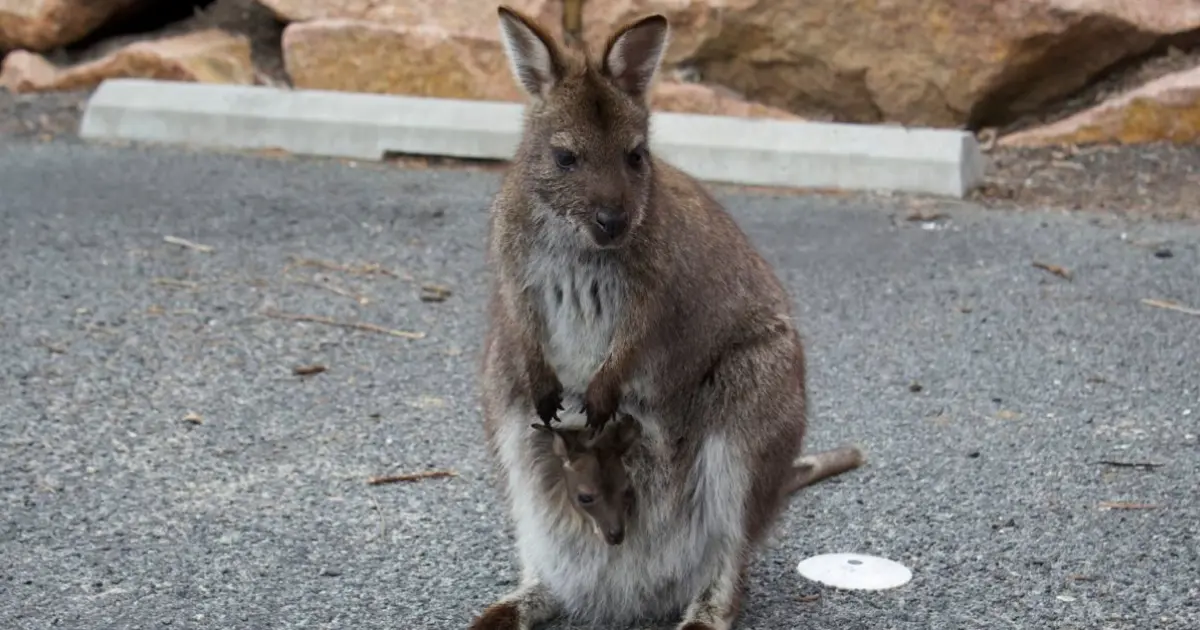
These seemingly tame critters congregate here in good numbers to beg food off the tourists that are hiking to Wineglass Bay. Here are some of the things we saw people feeding the wallabies while we were there:
- udon noodles
- bread
- crackers
This is bad, mainly because if they don't eat their regular diet (mostly grasses and leaves), they can get a disease called "lumpy jaw." Yes, a silly name, but quite serious — it can cause them to starve. So we didn't feed them or pet them. We got pretty close to them, though.
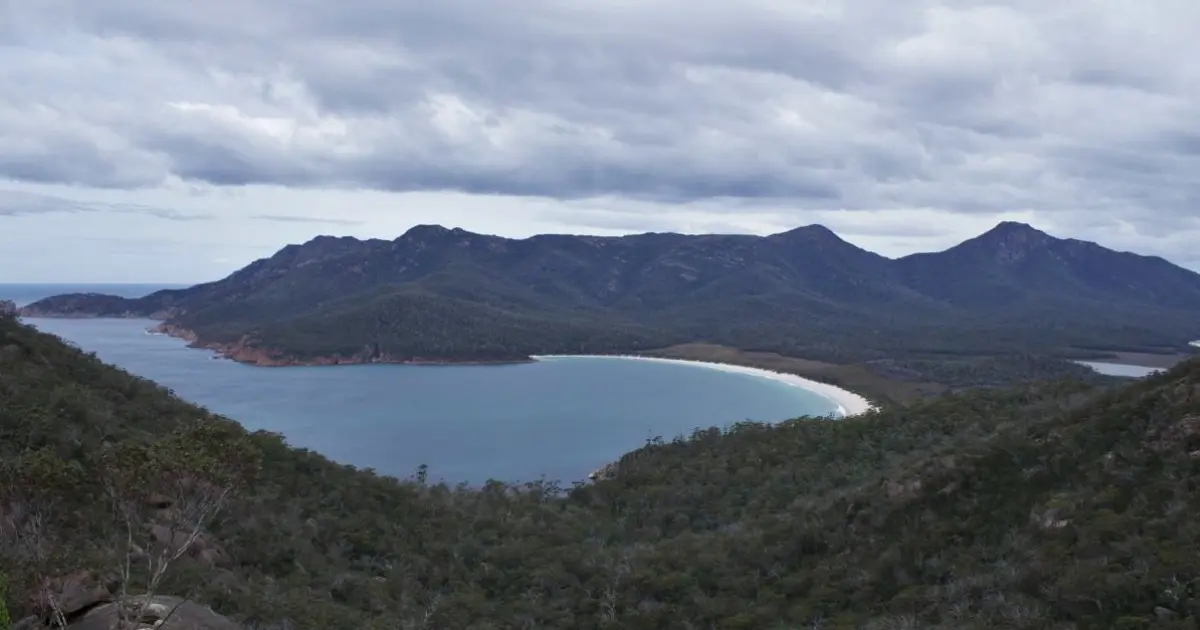
We hiked up to the Wineglass Bay lookout and enjoyed our lunch. It wasn't a long hike, maybe three kilometers, but it was quite enjoyable. There are a lot of stone steps along the trail, but theview from the top is worth the hike.
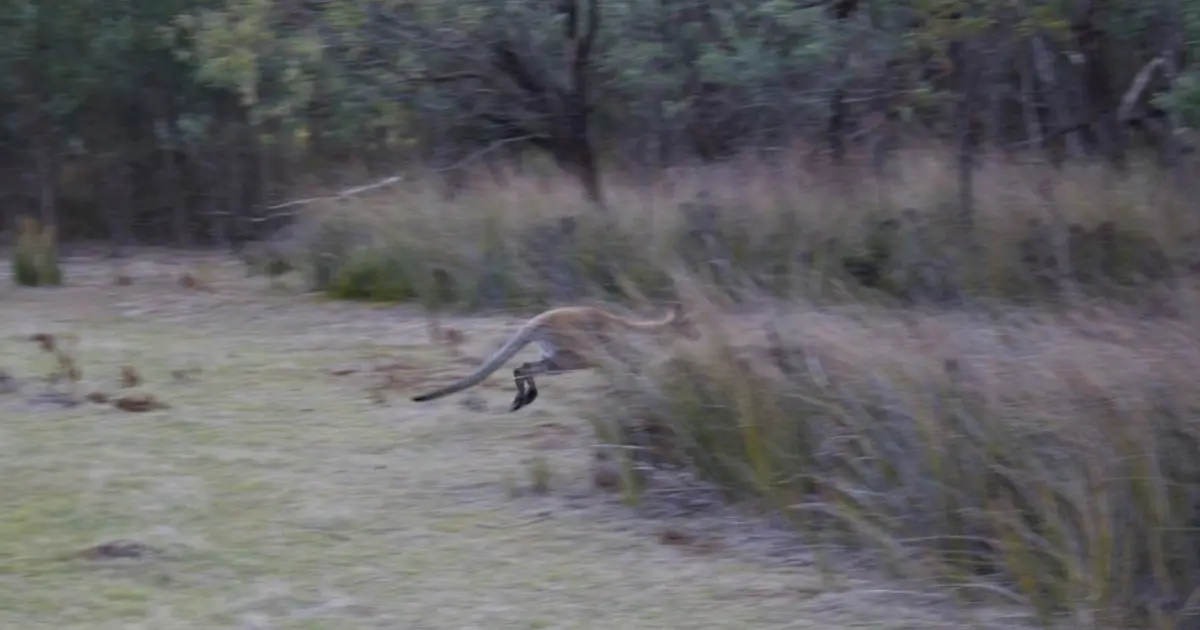
We got back to The Lodge and noticed that our table had been set for dinner. As Jane (one of our hosts) brought out our dinner, she told us there were a lot of wallabies on their property beyond the garden. After we finished eating, we took a walk back there and scared up a herd of the things. They move pretty quickly when they have to.
Tasmanian Devils
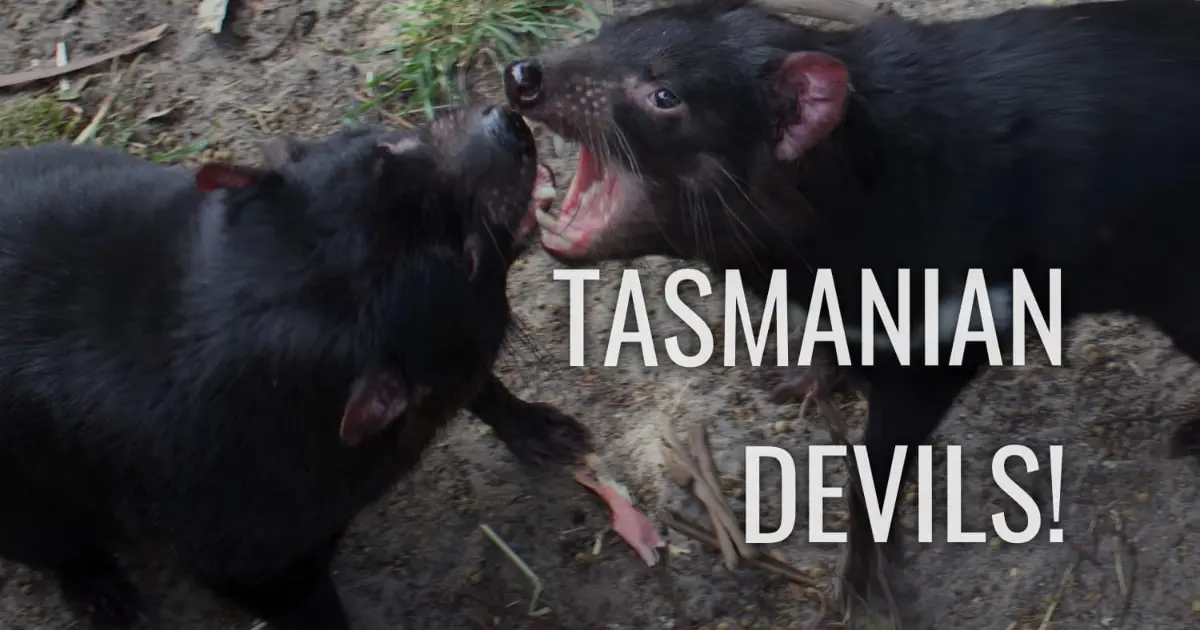
When people go to Tasmania, they want to see Tasmanian devils. There are quite a few different places that promise the Tasmanian devil experience, and Natureworld, a wild animal sanctuary that offers a 100% guarantee to see a Tasmanian Devil, was just a short drive up the east coast of Tasmania.
At Natureworld, we bought a couple of small bags full of food to hand-feed the free-roaming creatures, and set off to see some crazy marsupials. We immediately met some kangaroos, not the big red ones that get all the press, but the smaller eastern gray kangaroos (Forester kangaroos) that looked a lot like big wallabies.
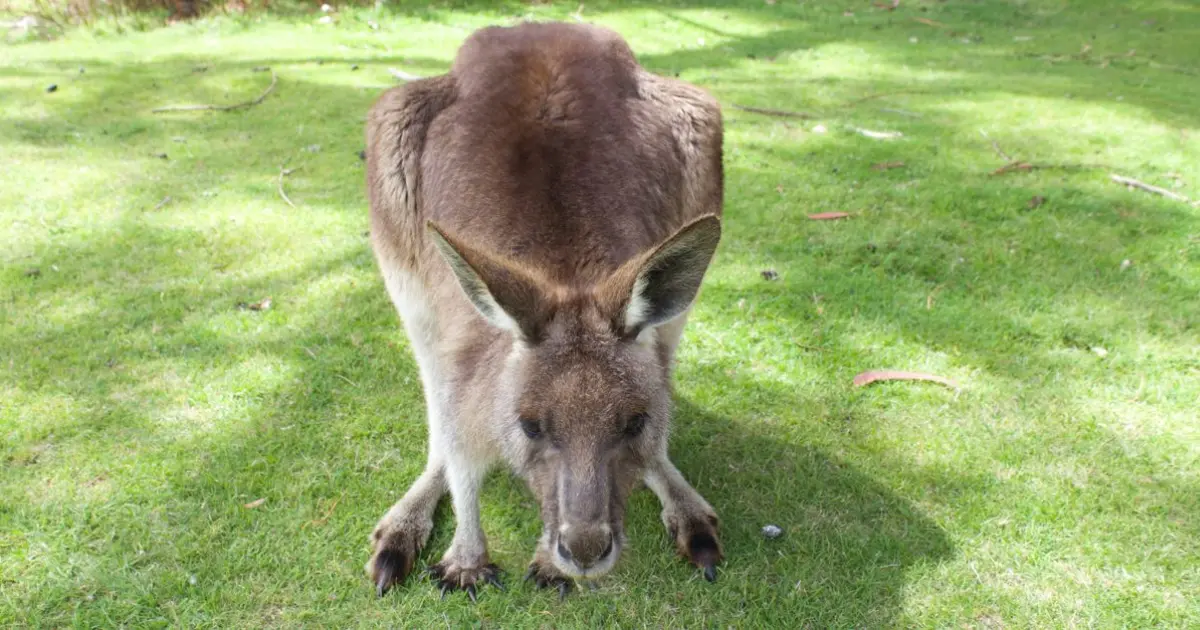
These things lounged all over the park and acted a lot like dogs. They'd come right up to you, especially if you're holding a white bag full of food.
We walked around the place for a little while before the Tasmanian devils were scheduled to be fed. The amiable, loquacious biologist on duty told us a little bit about the spotted quoll, better known as the tiger cat, the closest living relative of the Tasmanian devil.
Soon enough, though, it was time for the main attraction.
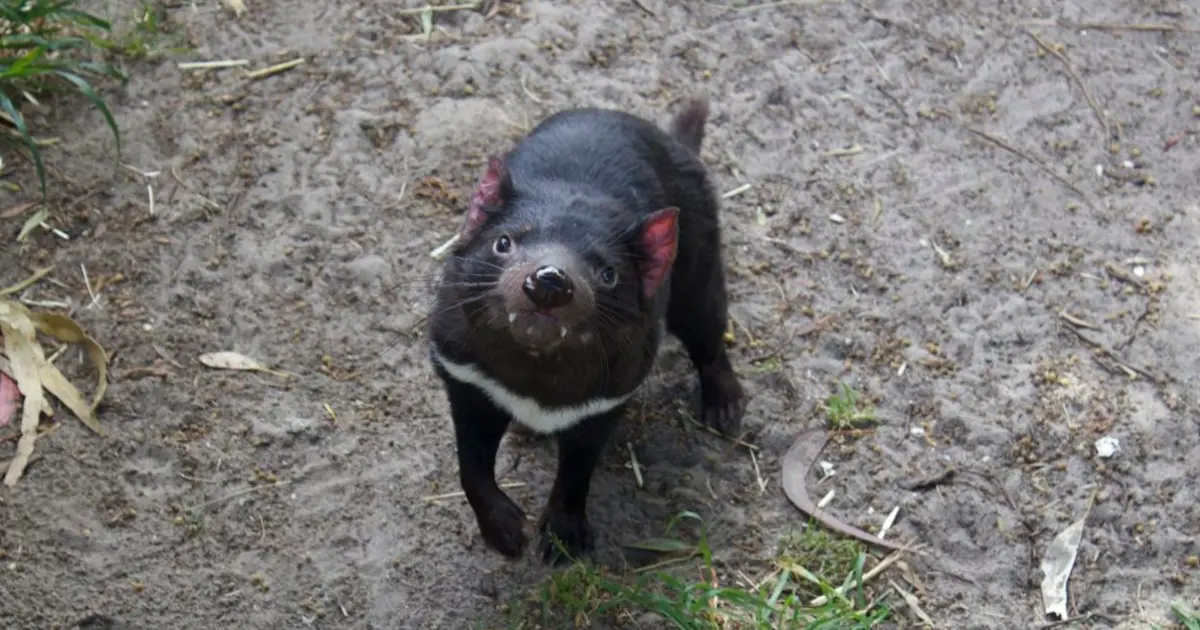
As cute as Tasmanian Devils are, they're also violent little things. They fight, bite, and scratch each other with much vigor, especially during feeding and mating. They're pretty noisy, too — growling, screeching, snuffling, and making all sorts of other noises that would unnerve most people if heard in the wild. Our biologist friend feeding the devils told us they have 20 different vocalizations.
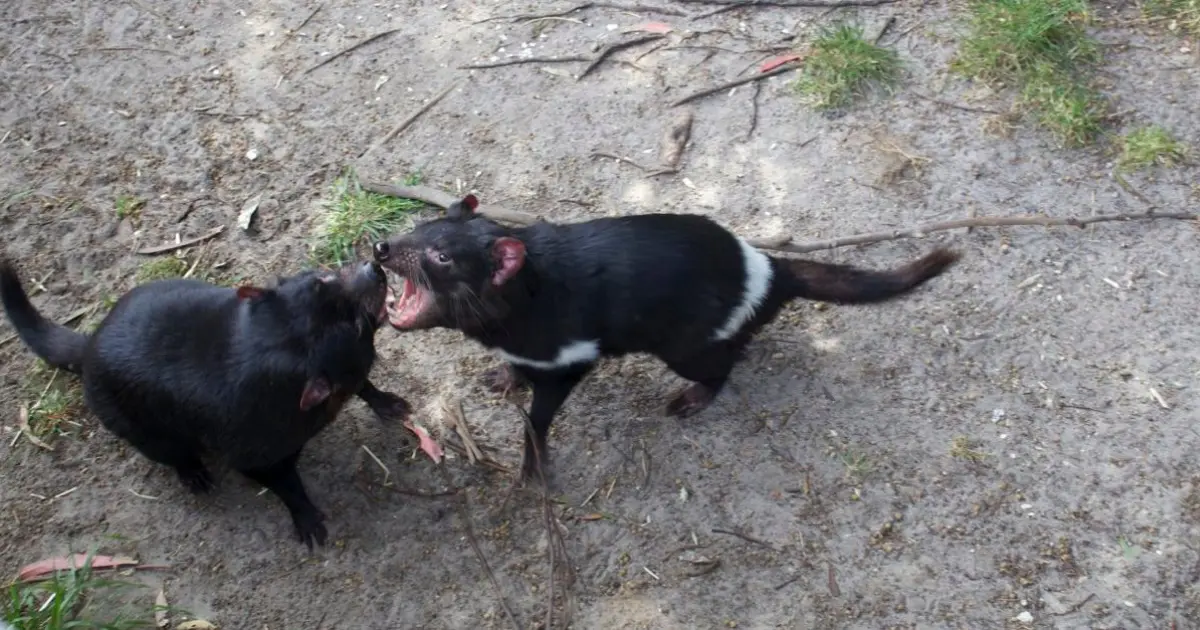
Because of their combative behavior, the devils are very susceptible to spreading devil facial tumor disease, a contagious cancer that causes boils and lesions appear on the devil's face, eventually leading to death from starvation. It doesn't yet have a cure and has drastically reduced the number of devils in the wild, so places like Natureworld are working hard to build a population of healthy devils in captivity and keep them isolated them from the disease.
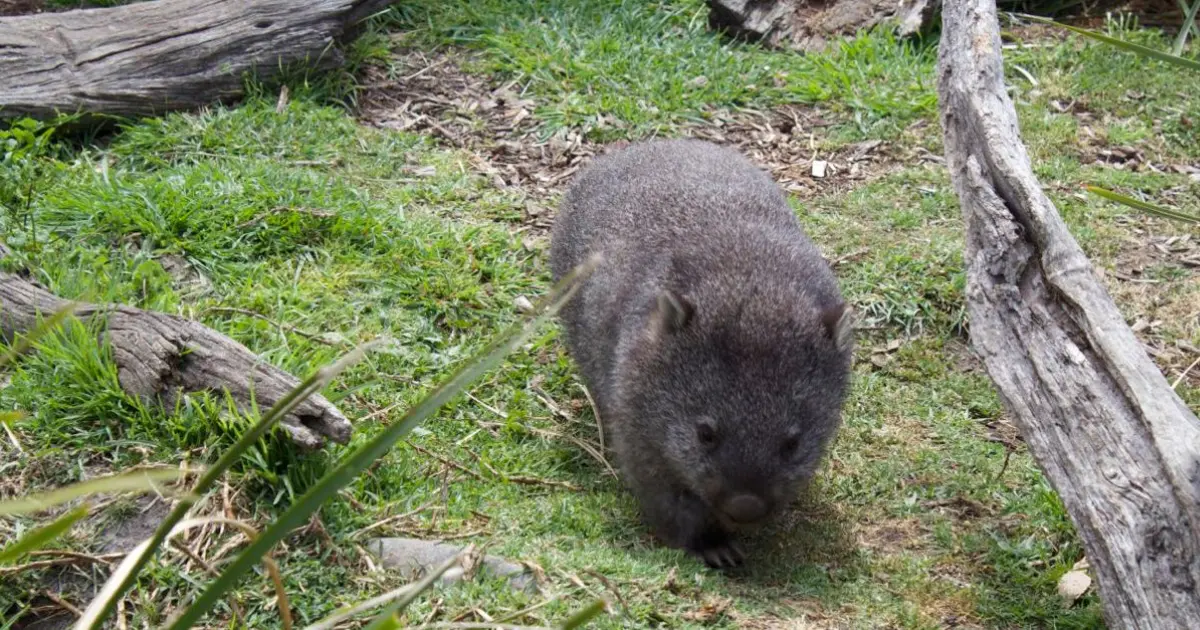
We also met Mabel, a wombat that had been brought to the park as a baby. She was growing and getting more aggressive in her behavior, which meant she was nearly ready to be released back to the wild. The kids still got the chance to pet her.
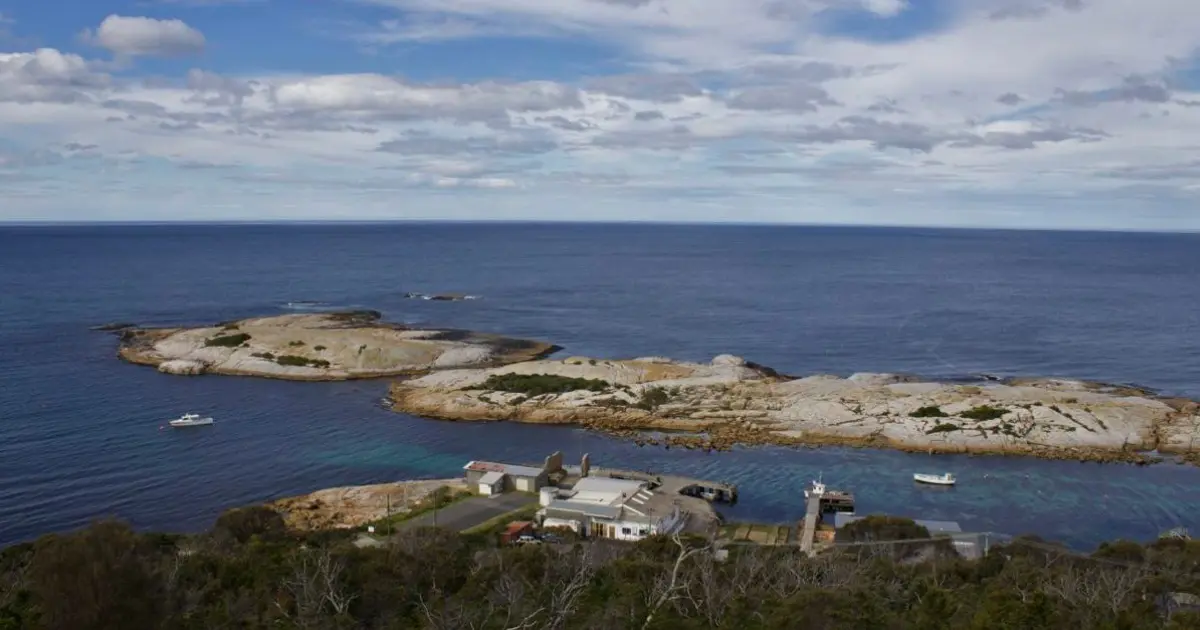
After leaving naturewold, we headed to that evening accomodations (Bicheno by the Bay) and took a short walk up to Whaler's Lookout, a hill of granite which offered great views of the town of Bicheno and the surrounding coast, including the Governor Island Marine Reserve.
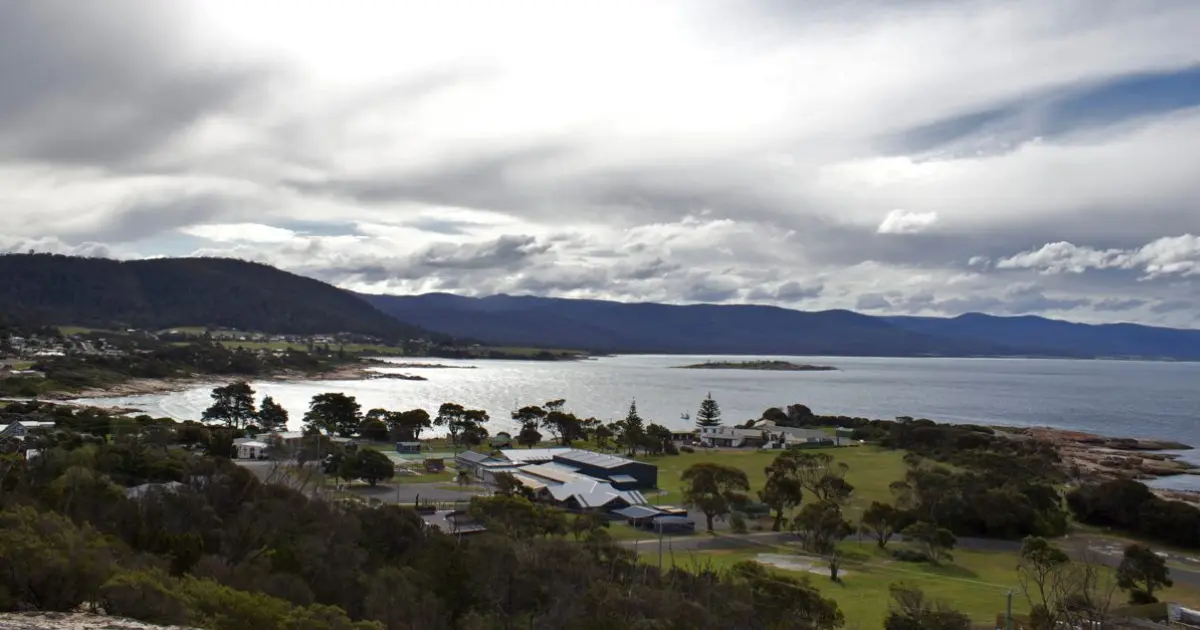
This surf-side hill was originally used to spot whales (of course), and one tree at the top of the hill still has iron spikes nailed into it that allowed whale spotters a place to climb to get an even better view.
Bay of Fires
One of the main destinations we had planned on visiting in Tasmania was the Bay of Fires, named the world's second best beach (by Condé Nast Traveler in 2009) and the hottest travel destination (by Lonely Planet, also 2009), which was about a 90-minute drive north of Bicheno.
It got its name way back in 1773 when Tobias Furneaux (who sailed with explorer James Cook) saw burning fires set by Aboriginal people from the deck of his ship.
It's challenging to see the whole Bay of Fires in one day (and that wasn't our intention). It runs for 29 kilometers between Binalong Bay and Eddystone Point and is made up of a lot of different beaches, some of which are pretty isolated. You can't reach certain sections or certain beaches from certain roads, so we picked a few likely, easy-to-travel-to spots.
We made the short drive up the road from St. Helens to to Binalong Bay, the gateway to the Bay of Fires, and had a picnic at Boat Harbour Point. It was a warm, sunny day — the first we'd seen in some time — and a great day to be at the beach.
After lunch we walked along Binalong Bay Beach, which is about a mile in length. As far as beaches go, this one was pretty fantastic — bright white sand against a cerulean blue ocean.
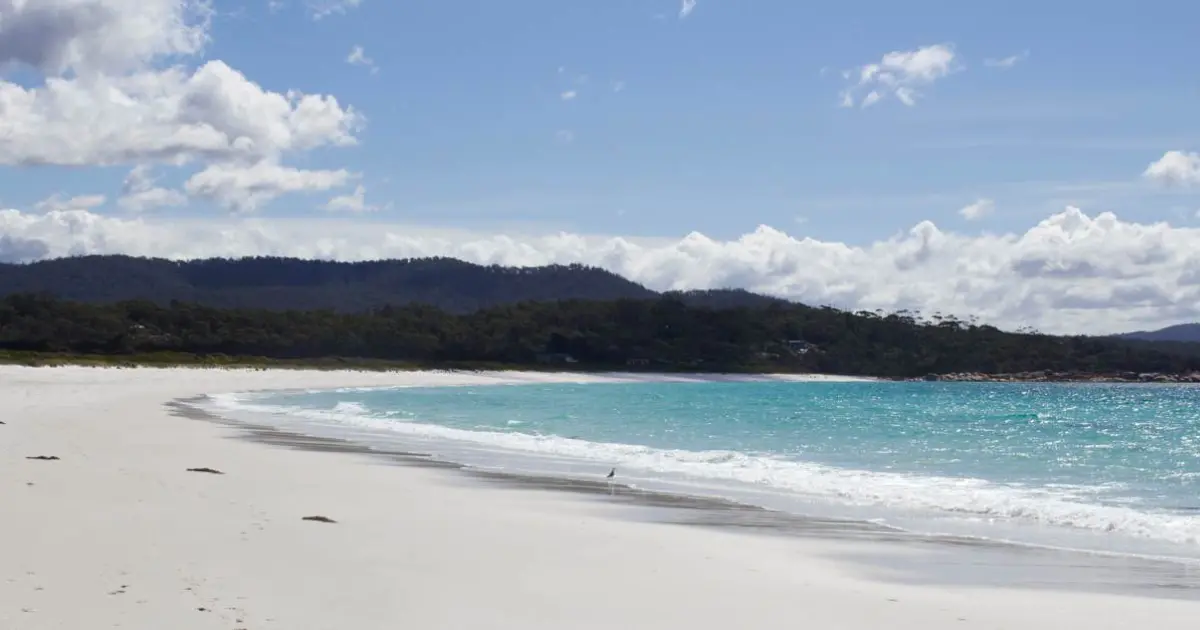
The water was very clear and there was very little, if any, junk washed up on the beach. My photos couldn't really capture the majesty here, so take my word for it, this is a beautiful beach.
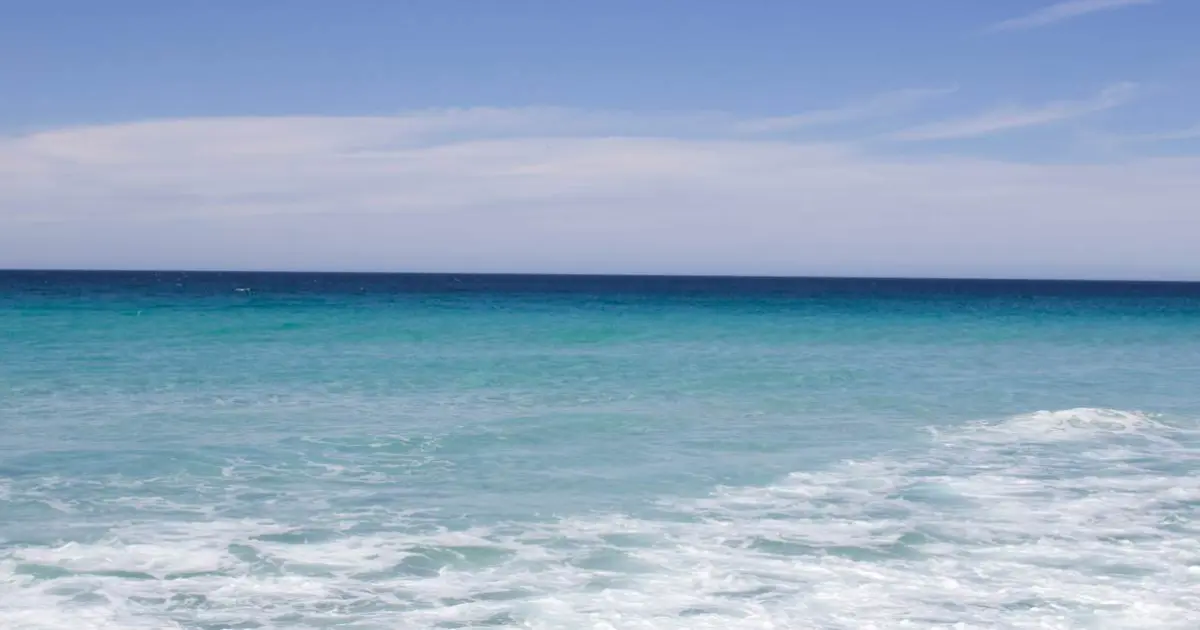
Driving north from Binalong Bay, the road from ended in another 10 kilometers or so, and visiting the end of the road was an appealing idea. So we got back in the car and drove past homes and farms until we couldn't drive anymore to a place called The Gardens.
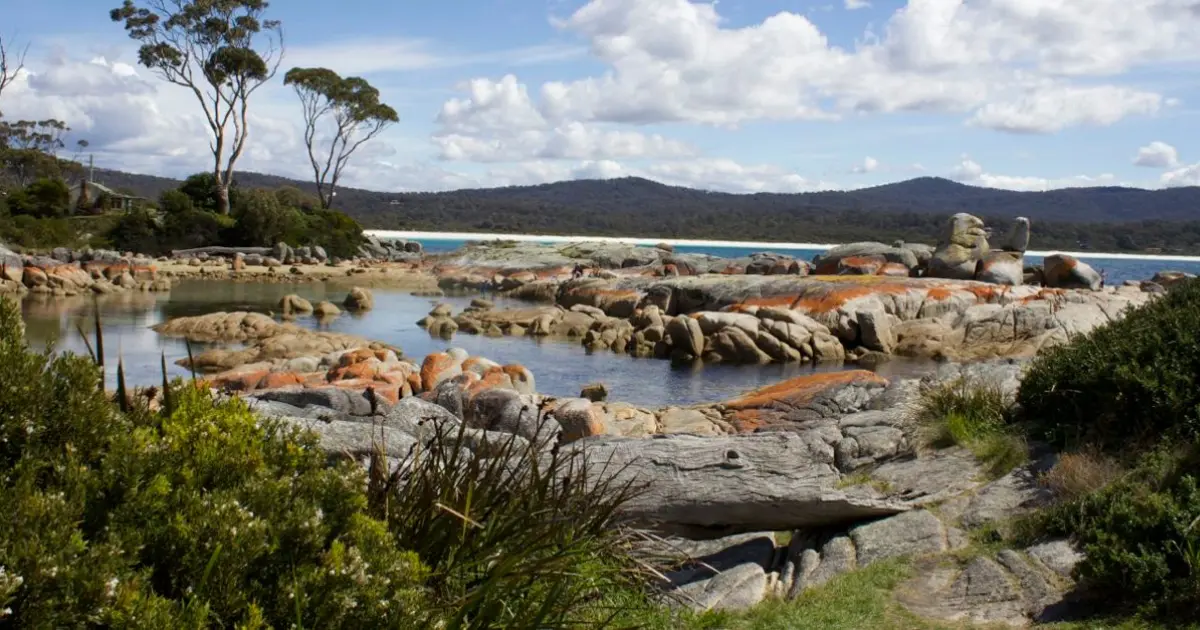
We parked and walked out along a beach that was surrounded by granite boulders covered in orange lichen. The color contrast of the white sand, blue ocean, and brown/gray/orange rocks was quite stunning.
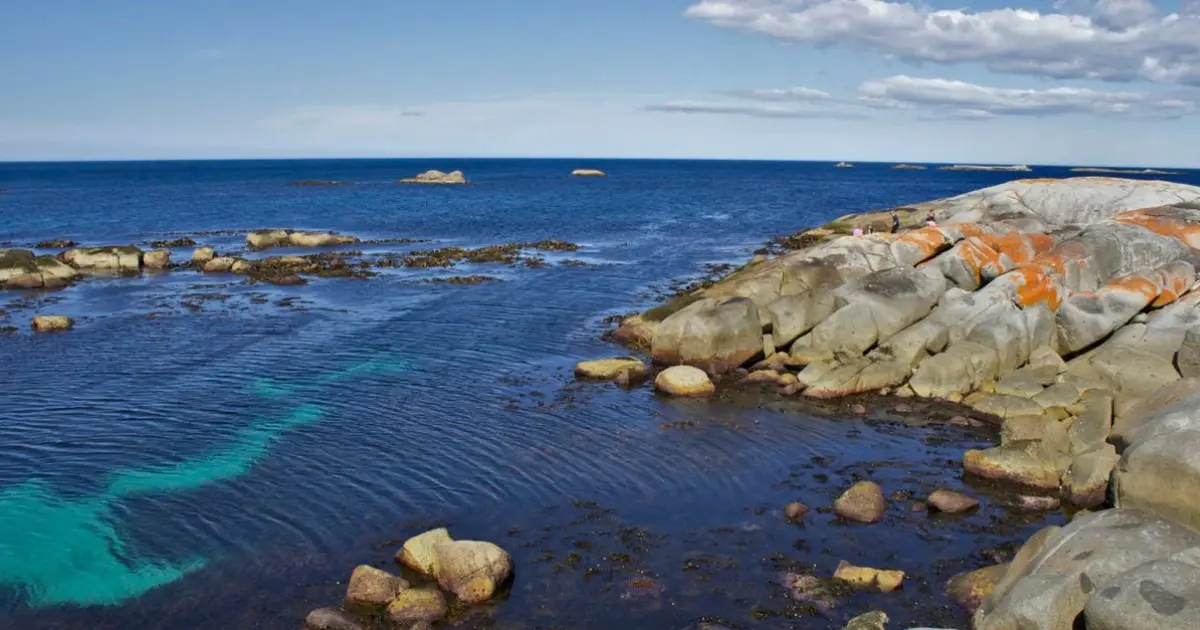
We found this spot to be quite relaxing — except for the strong winds that threatened to blow us off the rocks.
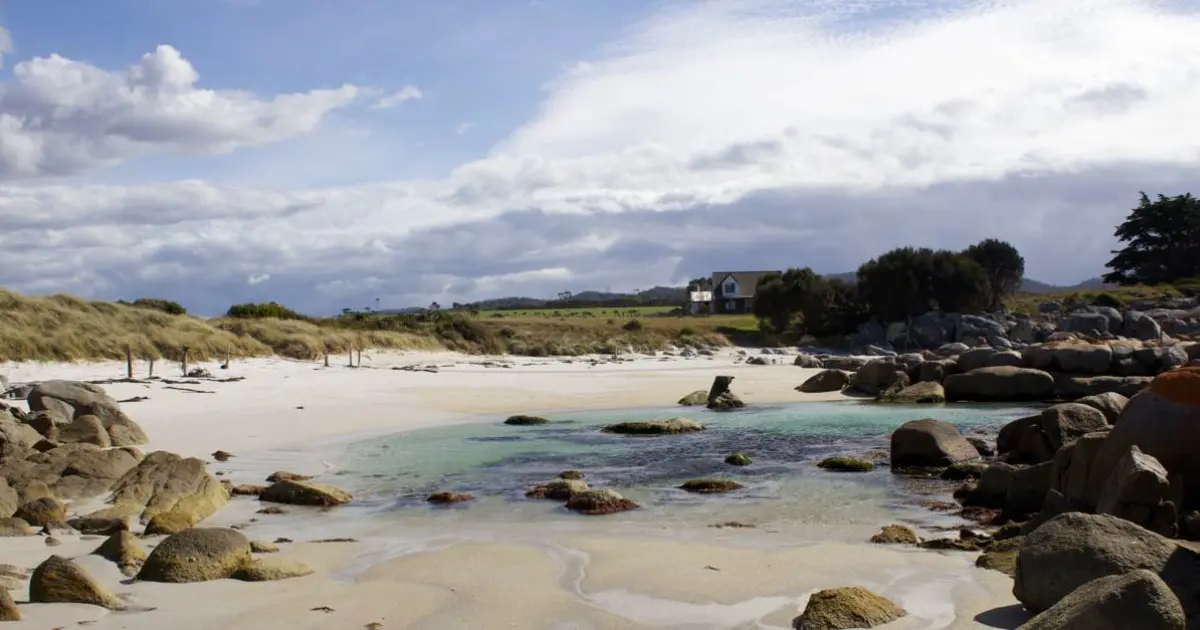
A Quick Stop at Ross
On our last full day in Tasmnia, our final destination for the day was Launceston. This set us up for flying out of the Launceston airport the next afternoon. But before we got there, we had to drive through Ross, the only town in the whole world that's (allegedly) within a few kilometers of the southern 42nd parallel.
Ross Village Bakery
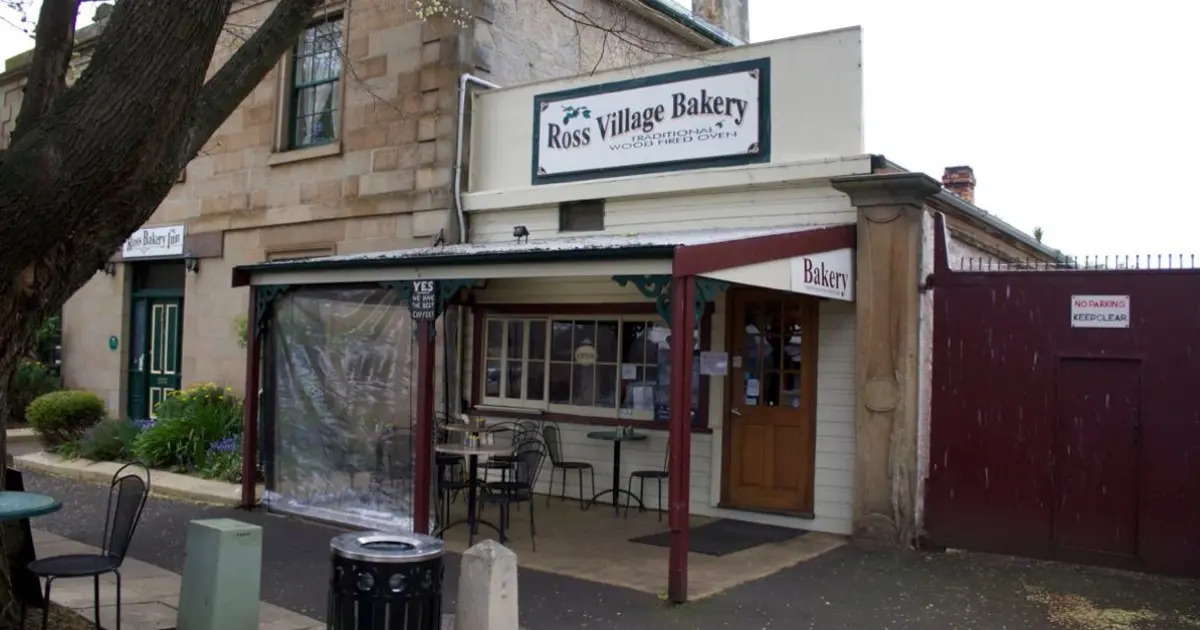
Ross is home to the Ross Village Bakery, an old stone building first built in 1832. It's main claim to fame is that it is thought to be the inspiration for the bakery in the Miyazaki classic Kiki's Delivery Service.
The sign on the front door doesn't make this claim as fact, but the the flyer available inside does claim to get thousands of Japanese tourists visiting each year.
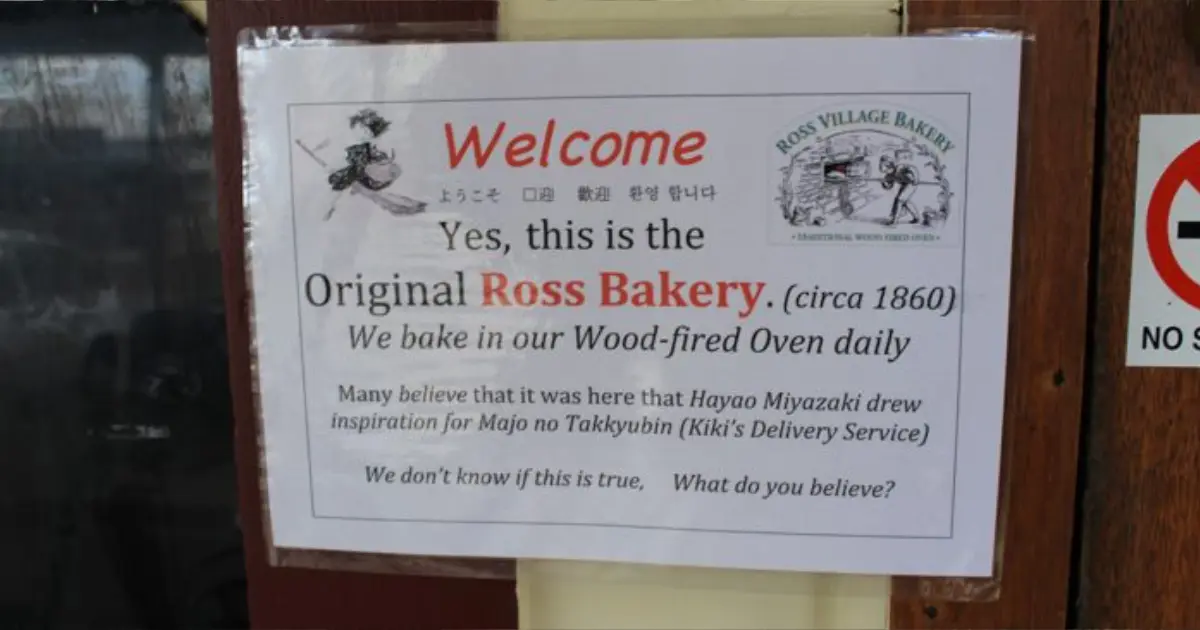
Also inside the bakery, there are plenty of pictures of fans dressed up as Kiki posing in the bakery, and they even have a room called Kiki's Room in the adjacent Ross Village Inn where fans of the movie can sleep right over the bakery.
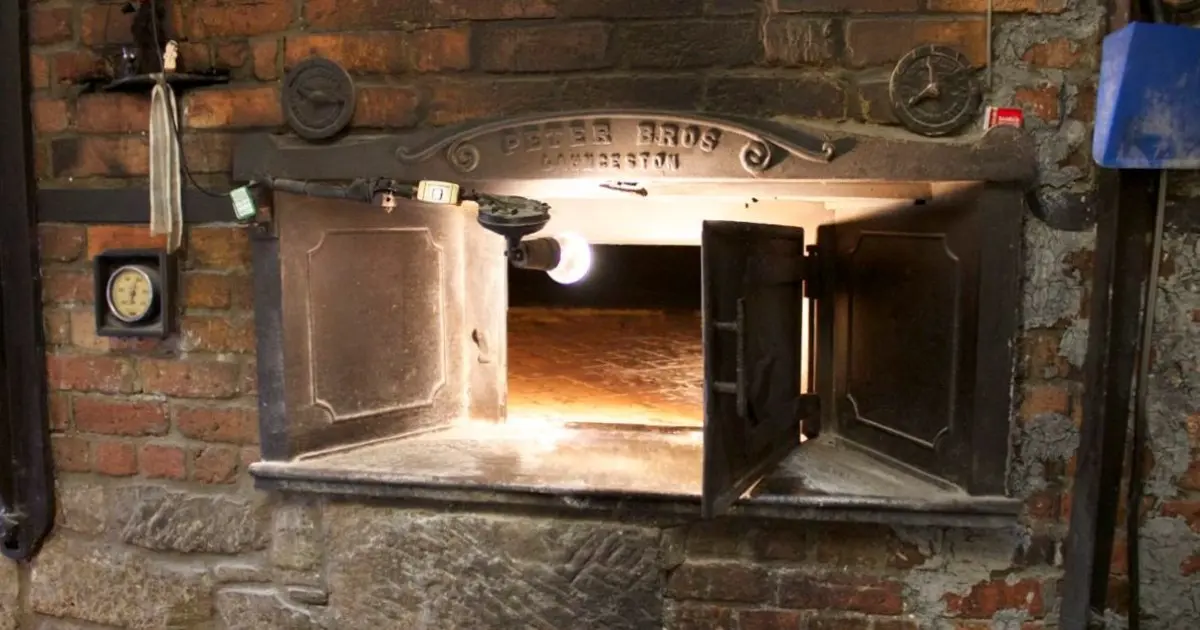
In addition to this potential pop culture connection, the bakery is notable for having a nearly 200-year-old wood-fired oven that can bake 300 loaves of bread at once. The bakery has been rebuilt around this oven at least three times.
Ross Female Factory
The kids were interested in visiting the nearby Ross Female Factory, which might sound funny, but was one of the places where female convicts were held in Tasmania.
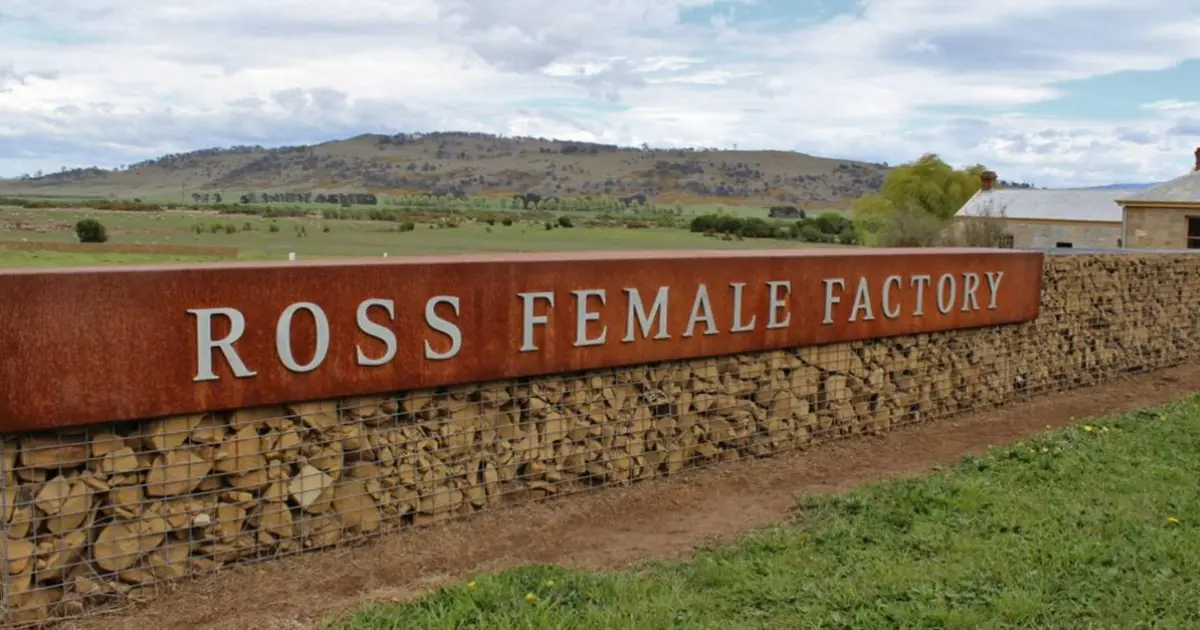
It's called a factory because the incarcerated ladies were expected to work during the term of their sentence. There's only one building left standing here that serves as a self-guided museum telling the story of the Female Factory and the experience of women convicts in Tasmania. It's not a happy tale.
Ross Bridge
Ross is most famous for the Ross Bridge, which was built by convicts (like many of the structures still standing in Tasmania) and completed in 1836 after 23 years of work.
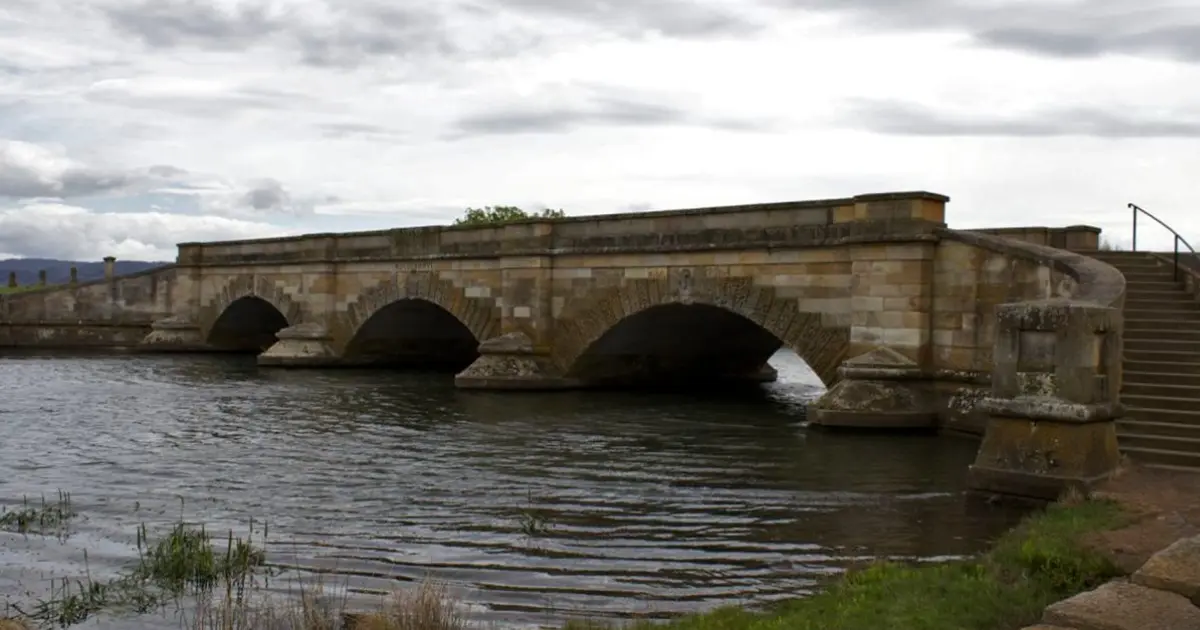
It took so long because the townspeople kept "stealing" the convict labor in order to build their own dwellings (including the Ross Bakery Inn), but when it was done the two (convict) overseers earned full pardons for their efforts. The bridge, which features numerous Celtic-inspired carvings on its arches, finally provided travelers a safe, direct route between Hobart to the south and Launceston to the north.
Onward to Launceston
After we finished with Ross, we headed up the Heritage Highway (built by convict road gangs) toward Launceston, but it was more like the dead wallaby highway — every few kilometers there was a dead wallaby on the side of the road.
We drove right through the heart of Launceston to the Tamar Valley Resort (and Spa), a hotel with adjacent cabins (although they call them villas) located in the suburb of Grindelwald. The less said about this place, the better.
This was just a quick one-night stay, chosen for its proximity to the Launceston airport, where the next day we'd board a plane back to Melbourne and the Great Ocean Road.
Recounts the events of October 5–10, 2014. Days 46–51 of continuous travel.
Taking on the World is an Amazon Associate and earns from qualifying purchases.
Header Image: You know that's a Tasmanian devil. All images from the author's collection.